Cape Race
The wireless station that took the Titanic's distress call, on a headland ringed by wrecks.
Updated 19 October 2026
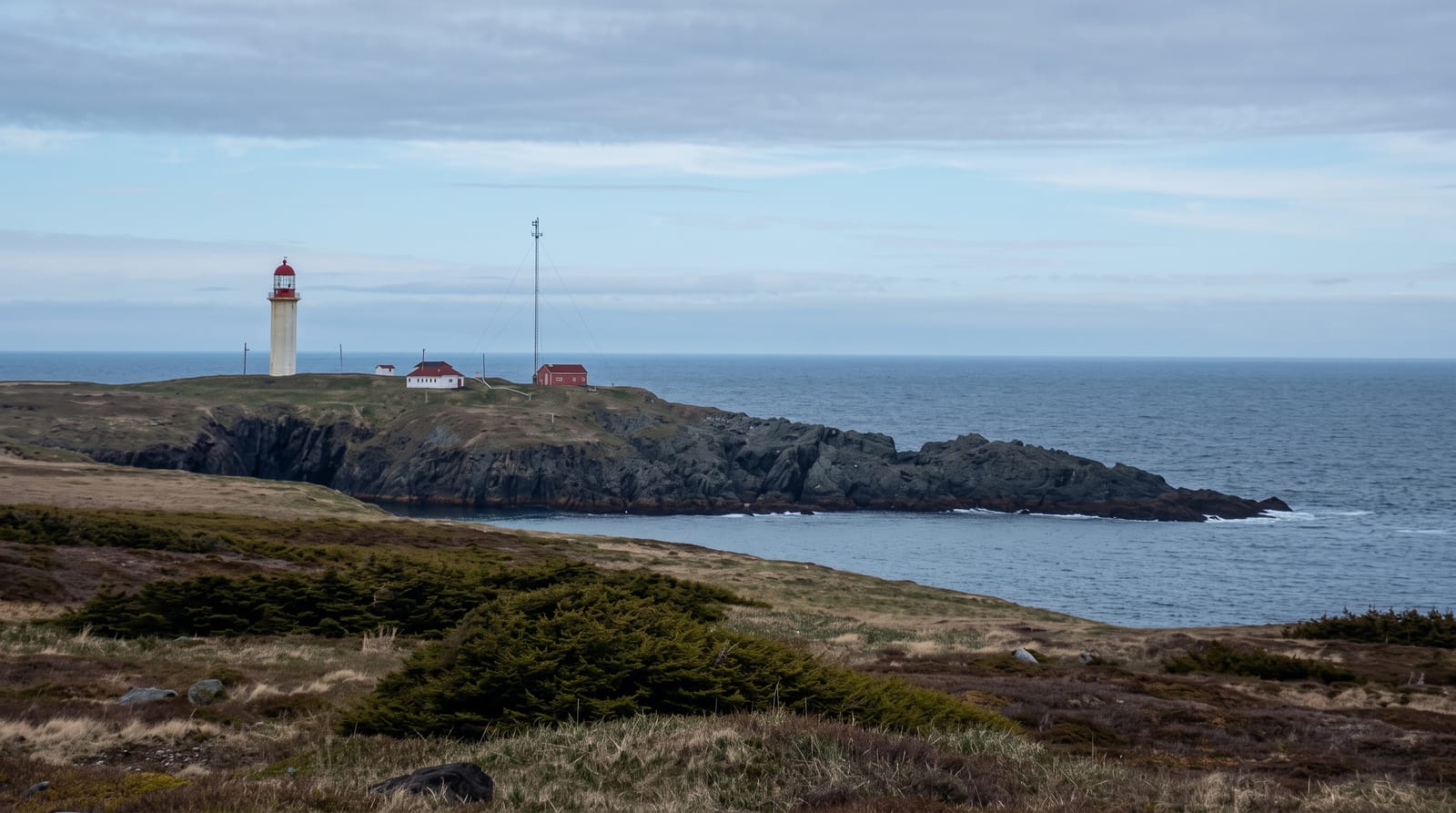
AI illustration
On the night of 14 April 1912 the Marconi operator at Cape Race, Jim Myrick, received the Titanic's distress traffic and relayed it; the station was the North American landfall for wireless traffic from ships and the news of the sinking reached the world through it. A reconstruction of the wireless room stands beside the lighthouse, with period equipment. The lighthouse itself, a cast iron tower of 1907, carries a lens of some seven tonnes. The headland has wrecked dozens of ships in fog and the seas around it are notorious. Mistaken Point, a UNESCO site with fossils of the earliest complex life, is a few kilometres away.
History
The name probably comes from the Portuguese Cabo Raso, flat cape, on maps of the early 16th century, and Sir Humphrey Gilbert sailed past it in 1583 on his way home after claiming St John's for Elizabeth I. From 1859 to 1866 the Associated Press kept a news boat here to meet liners from Europe and telegraph their news to New York, the first wireless station in Newfoundland was built here in 1904, and on the night the Titanic sank it was the last land station to pick up her distress calls and relayed the news to the world (Wikipedia, Cape Race).
Highlights
- The wireless room - a reconstruction of the station that took the Titanic call.
- The 1907 lighthouse - a cast iron tower with a seven-tonne lens.
- The wreck coast - a headland that has claimed dozens of ships in fog.
- Mistaken Point nearby - UNESCO fossils of the earliest complex organisms.
When to go
June to September; the site is seasonal and the gravel road is rough. Fog is extremely frequent here, which is precisely why the wrecks happened. Mistaken Point requires a guided hike.
Good to know
The access road is twenty kilometres of gravel. Fog can hide everything. Mistaken Point is a separate booked guided walk with limited places and its own long approach.
Nearby
Mistaken Point lies close; Ferryland is north.
What to pack for Cape Race
Chosen from what this place is for. Tap a kit for the full checklist.
- Broken-in walking shoes or boots - Grip and ankle support matter more than looks; never hike in brand-new boots. Find on Amazon
- Comfortable walking shoes - Sightseeing means kilometres of pavement and cobbles daily. Find on Amazon
- Layers + a waterproof shell - Mountain weather turns fast; a packable rain jacket saves the day. Find on Amazon
- A slim anti-theft daypack - Zips that close properly; keep it in front in crowds and on transit. Find on Amazon
Some links on this page are Amazon affiliate links - if you buy through them we may earn a small commission at no extra cost to you.
All packing kitsPlan your trip
Where to start if Cape Race is going on the list.
Booking links on this page are affiliate links - if you book through them we may earn a small commission at no extra cost to you. It never changes what we write about a place.
Opening times, ticket prices and seasonal closures change - check the official source before you go: official site.


