L'Anse aux Meadows
A UNESCO-listed Norse settlement on the tip of Newfoundland, the only confirmed Viking site in the Americas beyond Greenland, five centuries before Columbus.
Updated 18 October 2026

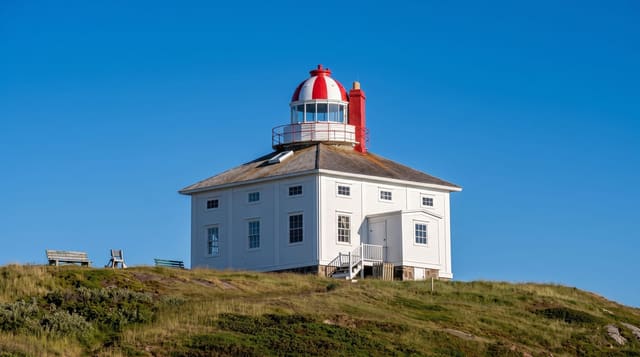
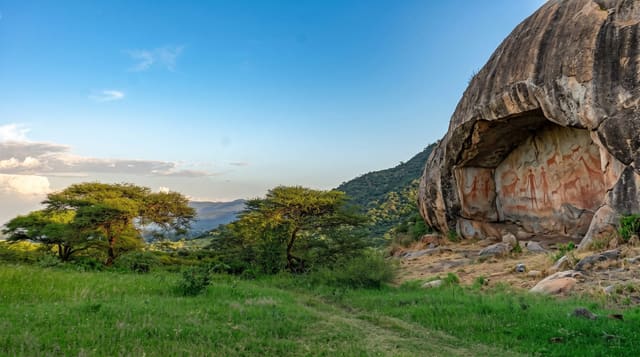
AI illustration
UNESCO World Heritage
In 1960 a local resident, George Decker, led the Norwegian explorer Helge Ingstad, who was following the sagas, to the outlines of turf buildings on a windswept meadow at the far tip of Newfoundland, and the excavations he and the archaeologist Anne Stine Ingstad led from 1961 to 1968 confirmed what nobody had been able to prove: Norse people crossed the Atlantic and built here around the year 1000, roughly five centuries before Columbus. Eight turf-walled structures were identified, including a smithy where bog iron was worked, and the finds, a bronze cloak pin and a spindle whorl among them, settled the argument. The original outlines are preserved as low grassy mounds, with reconstructed sod longhouses beside them where interpreters in period dress work. It is bleak, treeless and often blowing, which makes the achievement land harder than any museum could.
History
Five Indigenous groups lived at the site before the Norse, the oldest about 6,000 years ago, and the Dorset people were here some 300 years before them. The Norse settlement is dated by radiocarbon to between 990 and 1050, and a 2021 study of tree rings pinpointed Norse activity here in 1021; the eight buildings, of sod over wooden frames, included dwellings, an iron smithy and a carpentry workshop, and the site may have been a base camp for Norse exploration further south, used at least sporadically for perhaps 20 years. In 1960 George Decker, a resident of the fishing hamlet, led the Norwegian explorer Helge Ingstad to a group of mounds the locals called the old Indian camp, and Helge and the archaeologist Anne Stine Ingstad excavated them from 1961 to 1968 (Wikipedia, L'Anse aux Meadows).
The main sights
- The original house outlines - low turf mounds where the Norse buildings stood.
- The reconstructed longhouses - sod buildings with fires and interpreters at work.
- The finds - the cloak pin and spindle whorl that proved the case.
- The setting - the treeless meadow above a grey sea at the tip of the island.
When to go
June to September only, as the site closes for the long winter. Even in summer it is cold, wet and windy, so proper layers matter. Icebergs drift past this coast in late spring and early summer, and whales feed offshore through the season.
Good to know
It is a very long way from anywhere, a full day's drive up the Great Northern Peninsula from Deer Lake, and the site is closed for most of the year. Physically there is little to see beyond grass outlines and reconstructions; the significance is intellectual rather than visual. The weather is genuinely raw even in July.
Nearby
St Anthony has the services and iceberg tours; Gros Morne is a long drive south.
Key facts
Source: Wikidata, item Q189113, read on 18 October 2026.
What to pack for L'Anse aux Meadows
Chosen from what this place is for. Tap a kit for the full checklist.
- Travel rod + reel - A packable multi-piece rod fits in a case and covers most holiday fishing. Find on Amazon
- Binoculars - The single best wildlife tool - even a compact pair transforms a sighting. Find on Amazon
- Warm base layers - Merino or synthetic against the skin - never cotton, which chills when damp. Find on Amazon
- Comfortable walking shoes - Sightseeing means kilometres of pavement and cobbles daily. Find on Amazon
Some links on this page are Amazon affiliate links - if you buy through them we may earn a small commission at no extra cost to you.
All packing kitsPlan your trip
Where to start if L'Anse aux Meadows is going on the list.
Booking links on this page are affiliate links - if you book through them we may earn a small commission at no extra cost to you. It never changes what we write about a place.
Opening times, ticket prices and seasonal closures change - check the official source before you go: official site.