Bonnechere Caves
Caves formed under a tropical sea, whose walls hold fossils of creatures that lived before fish.
Updated 14 October 2026

AI illustration
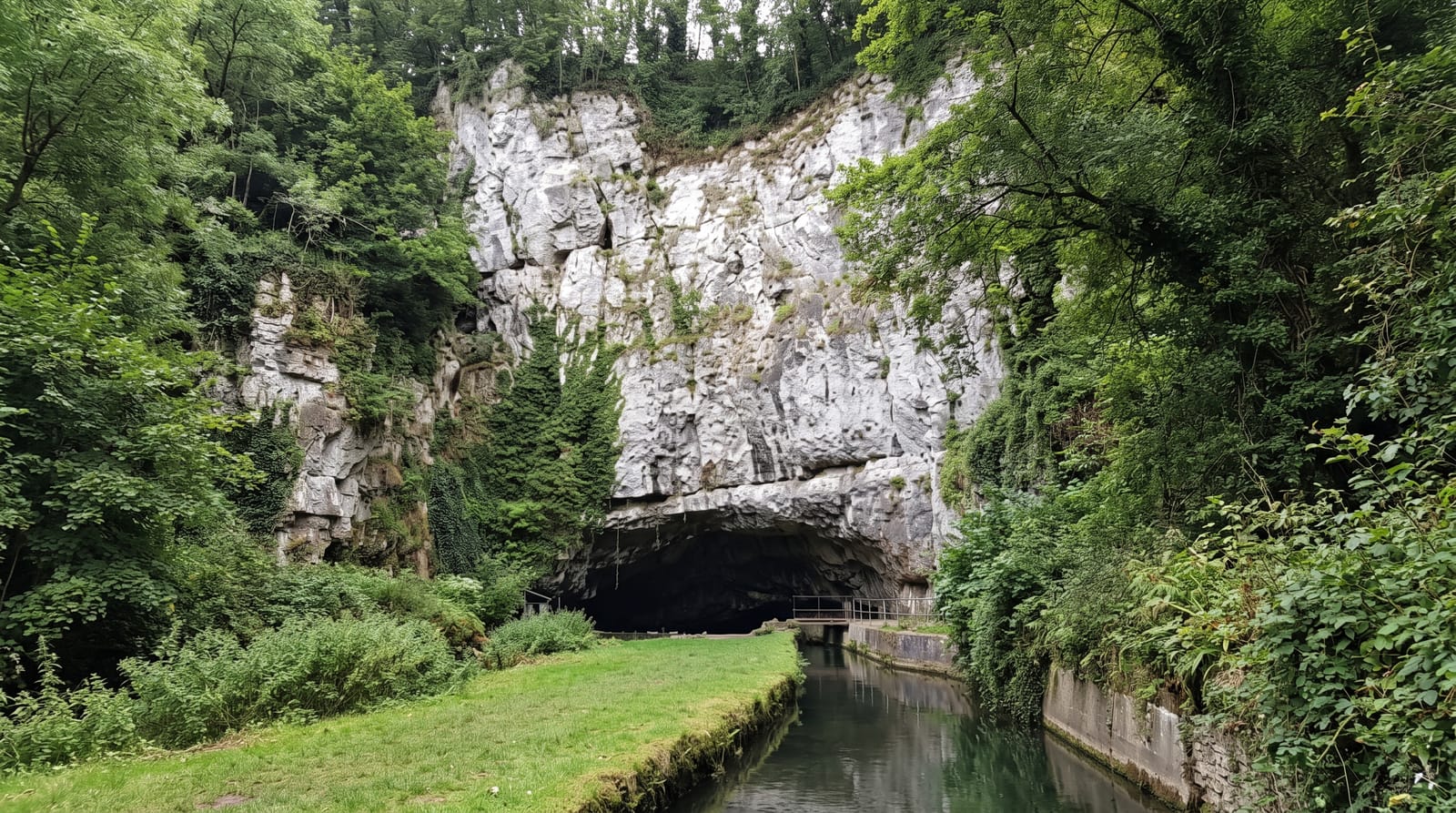
The limestone here formed on the floor of a tropical sea around five hundred million years ago, in the Ordovician, and the caves were dissolved out of it later by groundwater. What makes the tour distinctive is the fossils in the walls and ceiling: cephalopods, crinoids, gastropods and corals from a period before fish existed, exposed in cross-section by the dissolving water so they read like a cut specimen. Tom Woodward found the caves in the 1950s, pumped out the water and opened them in 1955; they were and are a family operation. The passages are cool, damp and lit, with a river running through the lower level.
The landscape
- The wall fossils - Ordovician sea creatures cut in cross-section by the rock.
- The dissolved passages - limestone chambers formed by groundwater.
- The underground river - water still running through the lower level.
- The guided route - a family-run tour explaining the geology and the fossils.
When to go
May to October; the caves close for winter and can flood in spring melt, delaying opening. They hold about ten degrees year-round.
Practical notes
Closed for winter and opening can be delayed by high water. The tour is guided and timed with limited places. The passages are damp, low in places and cool.
Nearby
Eganville lies east; Algonquin Park is southwest.
Key facts
Source: Wikidata, item Q22580442, read on 18 October 2026.
What to pack for Bonnechere Caves
Chosen from what this place is for. Tap a kit for the full checklist.
- Broken-in walking shoes or boots - Grip and ankle support matter more than looks; never hike in brand-new boots. Find on Amazon
- Head torch + spare batteries - Hands-free light is essential; caves are truly dark. Find on Amazon
- Layers + a waterproof shell - Mountain weather turns fast; a packable rain jacket saves the day. Find on Amazon
- Grippy closed shoes - Cave floors are wet, muddy and slick with formations. Find on Amazon
Some links on this page are Amazon affiliate links - if you buy through them we may earn a small commission at no extra cost to you.
All packing kitsPlan your trip
Where to start if Bonnechere Caves is going on the list.
Booking links on this page are affiliate links - if you book through them we may earn a small commission at no extra cost to you. It never changes what we write about a place.
Opening times, ticket prices and seasonal closures change - check the official source before you go: official site.