Waza National Park
The floodplain classic of the far north - giraffes and elephants on Sahelian plains, lion country and waterbird clouds in the dry-season gatherings.
Updated 16 October 2026
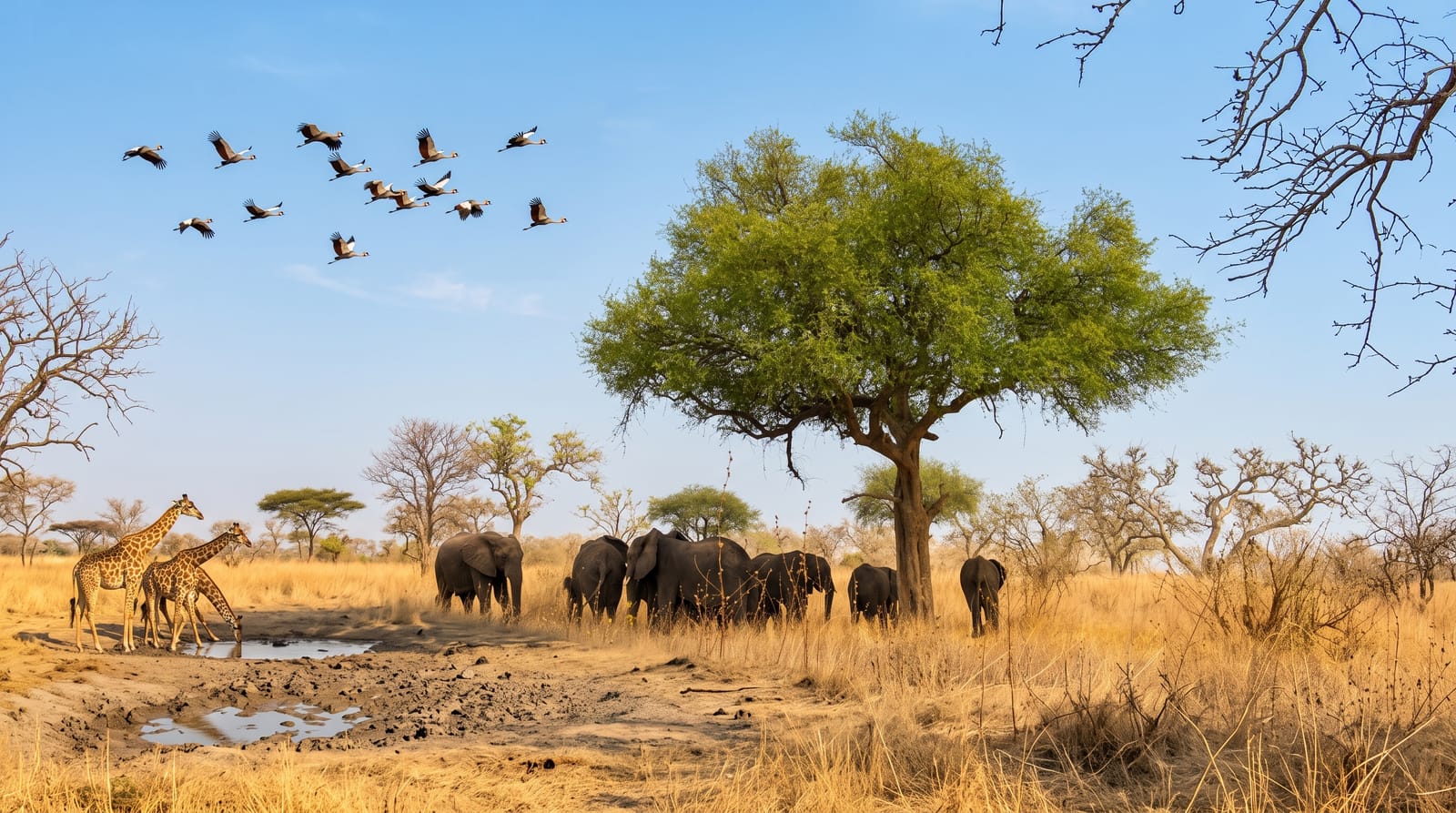
AI illustration
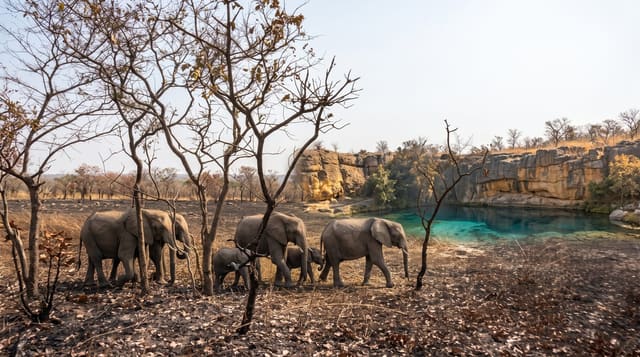
Waza is Cameroon's slice of the great Sahelian floodplain ecosystem: acacia savanna and seasonal yaere grasslands where the far north's wildlife tradition holds - western giraffes in loose towers, elephant herds working the waterholes, antelope from korrigum to gazelle, and lions whose roars carry across the flats at dawn. The dry months squeeze life toward the remaining water, stacking game and clouds of waterbirds - crowned cranes, storks, pelicans - into concentrated theatre. Visits run with park guides from the gate villages, and the park's story, like the region's, is one of resilience through hard seasons - supporting it is part of the point.
Background
Waza began in 1934 as a hunting reserve, became a national park in 1968 and a UNESCO biosphere reserve in 1979. It covers 1,700 km2 in the Logone-et-Chari department and borders Nigeria's Chad Basin National Park at its Chingurmi-Duguma sector. Most of it lies in the Chad depression at 300 to 320 metres, rising to 500 metres near Waza village. Rain averages only 700 mm a year, and in April, before the rains, the mean maximum reaches 41 C. Records list 30 mammal species and, with the Logone floodplain included, 379 bird species. Lying 120 kilometres north of Maroua, the park has paved roads, and visitors may enter only between 15 November and 15 June, always with a guide.
Source: Wikipedia, "Waza National Park"
What's there
- The giraffe towers - the floodplain's signature silhouettes.
- Dry-season waterholes - elephants and antelope concentrated at the pools.
- Lion mornings - the flats' apex voices at dawn.
- The waterbird clouds - cranes and pelicans over the yaere.
When to go
February to May, late dry season, concentrates everything at the water and keeps tracks passable; the rains flood the yaere and close the park's heart to vehicles.
Practical notes
Trips run through operators and the park authorities. Infrastructure is basic and the heat formidable. Wildlife densities reflect hard decades - sightings reward patience and fund recovery.
Nearby
Maroua's crafts and the Mandara Mountains' Rhumsiki westward.
Key facts
Source: Wikidata, item Q1751924, read on 18 October 2026.
What to pack for Waza National Park
Chosen from what this place is for. Tap a kit for the full checklist.
- Broken-in walking shoes or boots - Grip and ankle support matter more than looks; never hike in brand-new boots. Find on Amazon
- Binoculars - The single best wildlife tool - even a compact pair transforms a sighting. Find on Amazon
- Layers + a waterproof shell - Mountain weather turns fast; a packable rain jacket saves the day. Find on Amazon
- A zoom camera or long lens - Animals rarely come close; reach beats megapixels. Find on Amazon
Some links on this page are Amazon affiliate links - if you buy through them we may earn a small commission at no extra cost to you.
All packing kitsPlan your trip
Where to start if Waza National Park is going on the list.
Booking links on this page are affiliate links - if you book through them we may earn a small commission at no extra cost to you. It never changes what we write about a place.
Opening times, ticket prices and seasonal closures change - check the official source before you go: official site.