Lake Oku
The sacred crater in the cloud forest - a blue-green lake ringed by the Kilum-Ijim forest, endemic birds and frogs, and Oku custom keeping it whole.
Saved in this browser only - no account, nothing sent anywhere. See your map
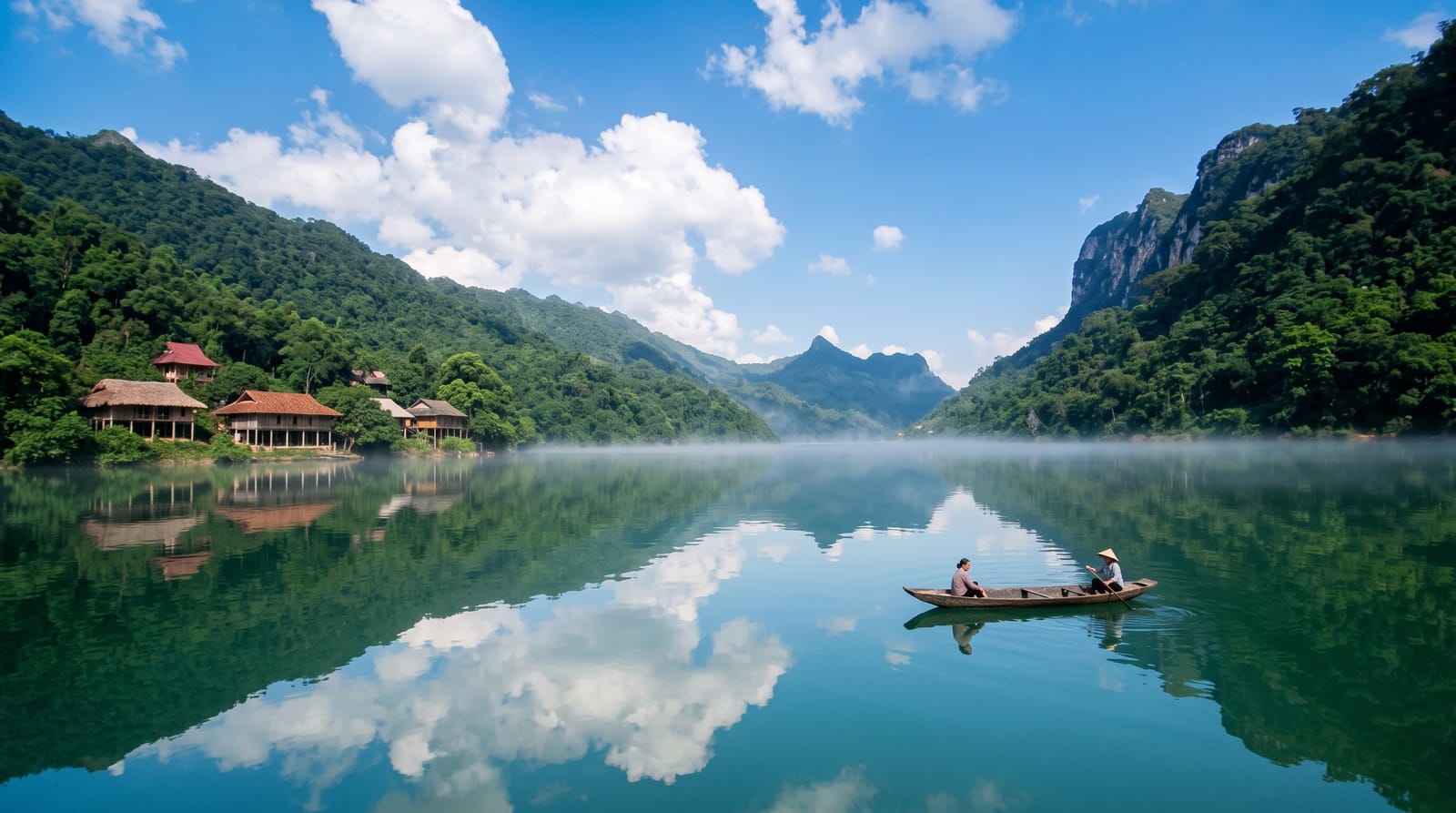
High on Mount Oku, the second summit of Cameroon's volcanic line, a crater holds a lake the colour of bottle glass - and around it survives the largest remaining patch of Afromontane forest in West-Central Africa, the Kilum-Ijim, kept standing by an alliance of conservation and Oku custom that declares the lake sacred and its forest fon-protected. The walking is the reward: mossy trails under giant lobelias and orchid-hung trees to the crater rim, Bannerman's turaco - the region's crimson-winged endemic - calling through the mist, and the lake below in its perfect green bowl, swum by nobody, by rule and by respect.
What you actually see
- The crater lake - the bottle-green bowl from the rim paths.
- Bannerman's turaco - the endemic's crimson flash in the canopy.
- The Kilum-Ijim forest - montane giants, lobelias and orchid mist.
- Oku village life - the honey and carving traditions of the mountain.
When to go
November to February gives the driest trails and clearest rims - mist is resident in all seasons and part of the mountain's character. Oku's white honey harvest adds a sweet excuse in season.
Honest expectations
The lake is sacred: no swimming, no fishing, conduct as guides direct - the rules are the reason the place survives. Paths are steep, muddy and cold-wet by tropical standards; layers earn their weight. Check current Northwest travel guidance when planning and arrange locally - conditions vary, and Oku's community hosts know the picture best.
Nearby
Kumbo's hill town, the ring-road highlands and Bamenda's grassfields.
What to pack for Lake Oku
Chosen from what this place is for. Tap a kit for the full checklist.
Opening times, ticket prices and seasonal closures change - check the official source before you go: official site.