Cambodian Cuisine
The subtle, aromatic food of the Khmers - the beloved fish amok, fragrant curries and fresh herbs, milder than its neighbours and built on rice, freshwater fish and the tang of fermented flavours.
Updated 31 August 2026
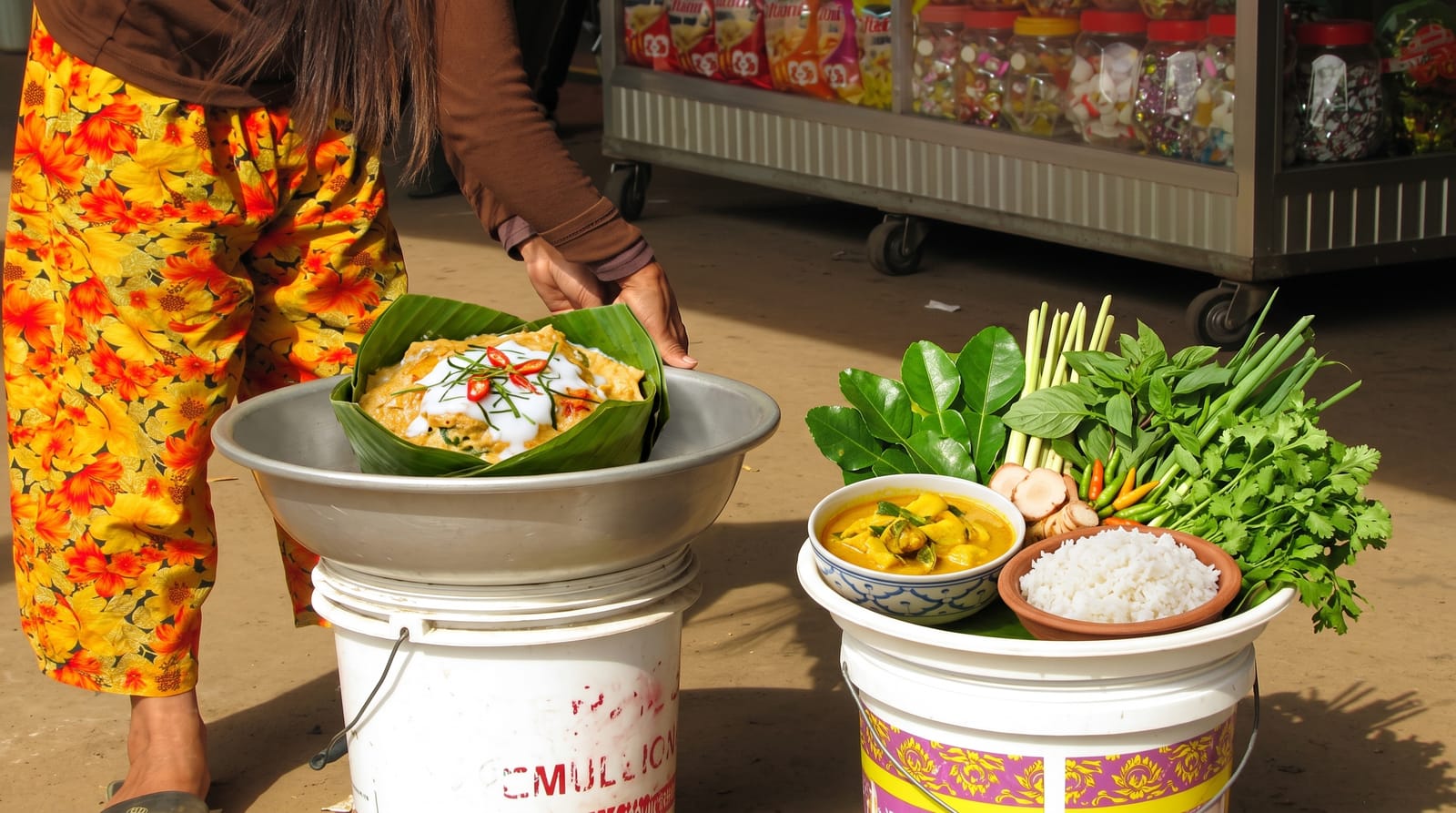
AI illustration
Cambodian, or Khmer, cuisine is the subtle and often overlooked cousin of its famous neighbours, aromatic and fragrant rather than fiery, built on rice, freshwater fish, fresh herbs and the distinctive tang of fermented fish paste. Its signature dish is fish amok, a delicate mousse of fish steamed in coconut and lemongrass, alongside fragrant kroeung curries, the noodle soup nom banh chok eaten for breakfast, and a wealth of tropical fruit.
What you'll find
- Fish amok - the delicate coconut-and-lemongrass fish mousse.
- Kroeung curries - the fragrant curries built on herb-and-spice pastes.
- Nom banh chok - the fresh rice-noodle dish eaten for breakfast.
- The markets - the street food and tropical fruit.
When to go
Year-round; the best food is at busy local restaurants, markets and street stalls, and a cooking class is a fine way to get to know the subtle flavours. Regional and coastal specialities reward seeking out.
What to expect
Khmer food is milder and more subtle than Thai or Vietnamese, which some find gentle and others less exciting; the tang of fermented fish paste, prahok, is an acquired taste. Street food is cheap and good from busy stalls, though take the usual care with water and ice. It is an underrated cuisine worth exploring beyond the tourist menus.
Nearby
Phnom Penh and Siem Reap have the widest range; the coast adds fresh seafood.
What to pack for Cambodian Cuisine
Chosen from what this place is for. Tap a kit for the full checklist.
- A reusable bag or container - For market produce and cutting down on packaging. Find on Amazon
- Wet wipes + hand sanitiser - Street food and washbasins do not always go together. Find on Amazon
Some links on this page are Amazon affiliate links - if you buy through them we may earn a small commission at no extra cost to you.
All packing kitsPlan your trip
Where to start if Cambodian Cuisine is going on the list.
Booking links on this page are affiliate links - if you book through them we may earn a small commission at no extra cost to you. It never changes what we write about a place.
Opening times, ticket prices and seasonal closures change - check the official source before you go: official site.