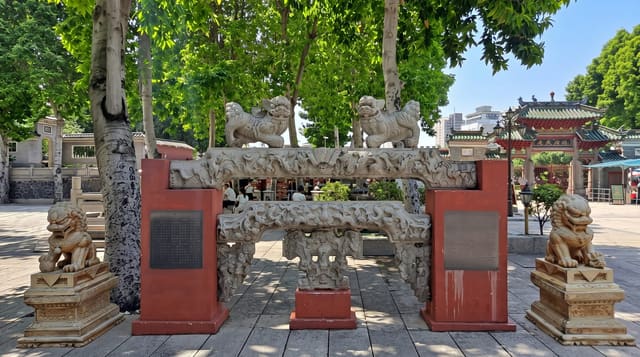
Banteay Samre
A compact Angkor Wat-style temple east of the main group, fully restored by anastylosis and rarely crowded.
Updated 20 October 2026
UNESCO World Heritage
Banteay Samre was built in the twelfth century in the same style as Angkor Wat, a Hindu temple enclosed by a high gallery wall with a central sanctuary and an inner moat that filled the courtyard, and it was rebuilt by Maurice Glaize between 1936 and 1944 using anastylosis, taking the collapsed structure apart and reassembling it with the original stone. The result is unusually complete: the galleries stand, the roofs are intact in places, and the carving on lintels and pediments is crisp. Because it lies several kilometres east of the main circuit near Pradak, it sees a fraction of the traffic, and it is common to have the courtyards to yourself. The name refers to the Samre, a people of the Kulen hills.
What you'll find
- Complete galleries - roofed corridors standing as reassembled.
- Crisp carving - lintels and pediments in good condition.
- The inner court - the enclosure that once held water around the shrine.
- Quiet - a major temple with very few visitors.
When to go
November to March. Any time of day works because crowds are light. It is usually reached on the way to or from Banteay Srei, and combining them makes a half-day.
Good to know
Getting there means a detour off the main circuits, so tuk-tuk drivers may charge more. The temple is compact and an hour covers it. Some of what stands is reassembled rather than original in position, which is what anastylosis means.
Nearby
Banteay Srei lies northeast; the East Baray is west.
Key facts
Source: Wikidata, item Q604708, read on 18 October 2026.
What to pack for Banteay Samre
Chosen from what this place is for. Tap a kit for the full checklist.
- Comfortable walking shoes - Sightseeing means kilometres of pavement and cobbles daily. Find on Amazon
- Modest clothing - Shoulders and knees covered - the single most common requirement. Find on Amazon
- A slim anti-theft daypack - Zips that close properly; keep it in front in crowds and on transit. Find on Amazon
- A scarf or shawl - To cover the head or shoulders on entry; women especially at mosques. Find on Amazon
Some links on this page are Amazon affiliate links - if you buy through them we may earn a small commission at no extra cost to you.
All packing kitsPlan your trip
Where to start if Banteay Samre is going on the list.
Booking links on this page are affiliate links - if you book through them we may earn a small commission at no extra cost to you. It never changes what we write about a place.
Opening times, ticket prices and seasonal closures change - check the official source before you go: official site.