Ouagadougou
The cultural capital of the Sahel - lively Ouagadougou, Burkina Faso's welcoming capital, famous across Africa for its film and arts festivals, bustling craft markets, music scene and the warm, creative spirit of the Burkinabé people.
Updated 19 October 2026
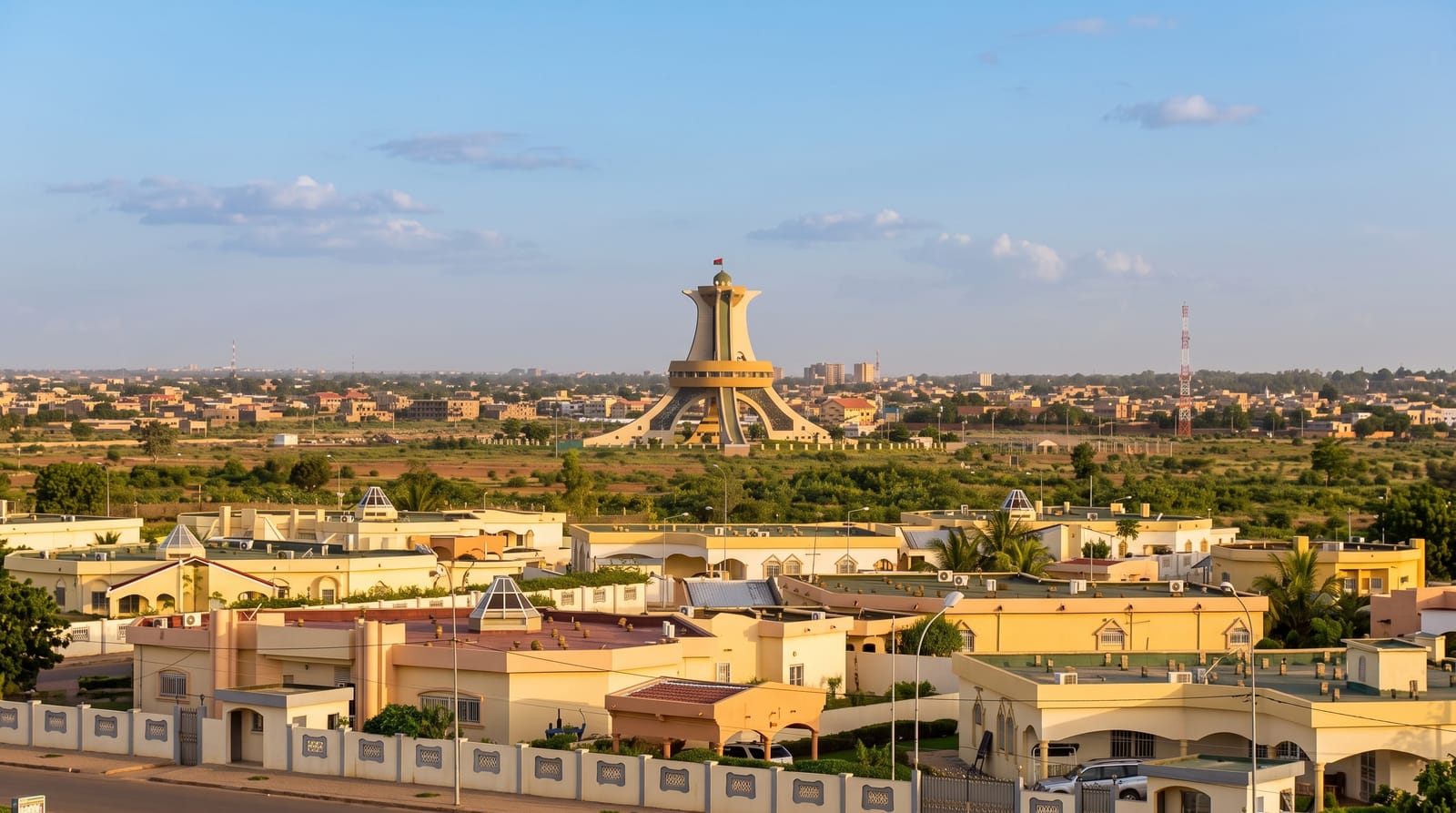
AI illustration
Ouagadougou, the capital of Burkina Faso, affectionately known as Ouaga, is a warm and lively city that punches far above its weight as a cultural hub of West Africa. It is world-famous as the home of FESPACO, the great pan-African film festival, and hosts important festivals of crafts, dance and the arts, reflecting the country's rich creative traditions. Its markets brim with the celebrated bronze work, textiles, leather and crafts of Burkinabé artisans, and its music, cinema and easygoing hospitality give the city a distinctive energy. A relaxed, sprawling Sahel capital, Ouagadougou offers a genuine and welcoming immersion in the culture of a country renowned for its artistic spirit.
History
Ouagadougou was founded perhaps as early as 1050 by the Soninke Wangara from the Ghana Empire, its name meaning home of the Wagu; the Mossi, moving north in the 14th century, took it, by legend under Oubri, grandson of Ouedraogo, and the Wagadugu kingdom founded in the 15th century became the centre of the Mossi states around 1495. The 10th Moro Naba, Nyadfo, was the first to live here, in the middle of the 17th century, it became the permanent capital under Zombre a century later, the 24th Moro Naba, Doulougou, built its first mosque early in the 19th century, and the Moro Naba ceremony is still held every Friday; in 1919 it became the capital of Upper Volta, and the railway from Ivory Coast arrived in 1954 (Wikipedia, Ouagadougou).
The main sights
- FESPACO - the great pan-African film festival.
- The craft markets - the bronze work, textiles and leather.
- The arts scene - the music, dance and cultural festivals.
- The National Museum - the cultures and heritage of Burkina Faso.
When to go
November to February, the cool dry season, is the most comfortable time to explore the city and its markets, avoiding the intense heat; it also coincides with the festival season, with FESPACO held every two years and craft fairs bringing extra energy to the capital. The mild months suit the lively outdoor culture.
Practical notes
Ouagadougou is a relaxed, sprawling Sahel capital rather than a city of grand monuments, so its appeal lies in its festivals, markets, crafts and warm creative culture more than famous sights. As the celebrated cultural capital of the region, home to Africa's great film festival and a wealth of arts and crafts, though, Ouaga is a genuinely welcoming and characterful place.
Nearby
The craft villages and the wider Mossi heartland lie around the capital.
Key facts
Source: Wikidata, item Q3777, read on 18 October 2026.
What to pack for Ouagadougou
Chosen from what this place is for. Tap a kit for the full checklist.
- Loose, light, long clothing - Covering up beats bare skin in the desert - and locals dress this way for a reason. Find on Amazon
- Comfortable walking shoes - Sightseeing means kilometres of pavement and cobbles daily. Find on Amazon
- Modest clothing - Shoulders and knees covered - the single most common requirement. Find on Amazon
- A wide-brim hat + sunglasses - Shade for your face and eyes where there is none overhead. Find on Amazon
Some links on this page are Amazon affiliate links - if you buy through them we may earn a small commission at no extra cost to you.
All packing kitsPlan your trip
Where to start if Ouagadougou is going on the list.
Booking links on this page are affiliate links - if you book through them we may earn a small commission at no extra cost to you. It never changes what we write about a place.
Opening times, ticket prices and seasonal closures change - check the official source before you go: official site.