Ouro Preto
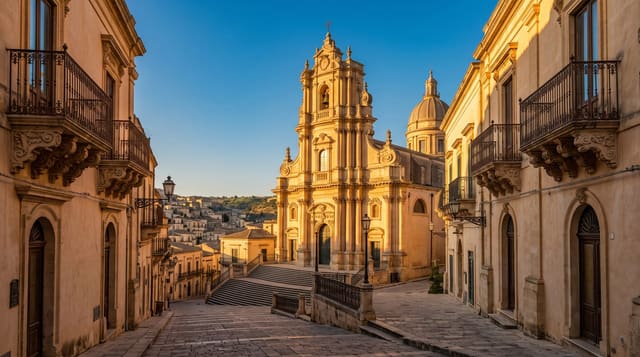
A UNESCO-listed baroque gold-rush town in the Minas Gerais hills, steep cobbled streets climbing between gilded churches and colonial mansions.
Updated 18 October 2026

AI illustration
UNESCO World Heritage
Ouro Preto, whose name means black gold, was the centre of an eighteenth-century gold rush that made it one of the richest towns in the Americas, and the wealth was poured into a dense cluster of baroque churches and mansions on the steep hills of Minas Gerais. When the gold ran out the town was left frozen in time, and it is now the finest ensemble of Brazilian baroque anywhere, a World Heritage Site of cobbled streets that plunge and climb between ornate facades. Its churches hold the sculpture and carving of Aleijadinho, the sculptor and carver whose work defines the period, and the town was also a cradle of Brazilian independence sentiment. Walking it is a workout on the near-vertical stone lanes, but every turn opens onto another gilded interior or hillside view.
History
Manuel Borba Gato found gold at Rio das Velhas in 1695, the start of the Brazilian gold rush; Vila Rica was established in 1698, several small settlements were united as the municipality of Villa Rica in 1711, and from 1720 to 1897 it was the capital of Minas Gerais. With about 40,000 people in 1730 and 80,000 in 1750 it was one of the most populous cities in Latin America, and officially 800 tonnes of gold were sent to Portugal during the 18th century. In 1789 the town was the birthplace of the Inconfidência Mineira, a failed attempt at independence whose leader, Tiradentes, was hanged; it took the name Ouro Preto on 20 May 1823, the Escola de Minas was founded in 1876, and in 1897 the state government moved to the new city of Belo Horizonte (Wikipedia, Ouro Preto).
What you'll find
- Igreja de São Francisco de Assis - the masterpiece church with Aleijadinho's carving and Ataíde's painted ceiling.
- The steep cobbled streets - the near-vertical colonial lanes between the churches.
- Praça Tiradentes - the central square, named for the independence martyr.
- The gold and mineral museums - the story of the rush that built the town.
When to go
April to September is drier and better for walking the steep stone streets, which are treacherous when wet. Holy Week processions are famous but crowded. The town's altitude keeps evenings cool. Weekdays are quieter than weekends.
Good to know
The streets are genuinely steep and cobbled, a real effort to walk and hard on those with limited mobility, and slippery in rain. Many churches charge separately and photography inside is often banned. It is popular with Brazilian tourists, busy at weekends and holidays. Two hours from Belo Horizonte on a winding road, it rewards an overnight rather than a rushed day trip.
Nearby
Mariana, another colonial town, is close; the Inhotim open-air art park is a longer drive away.
Key facts
Source: Wikidata, item Q188905, read on 18 October 2026.
What to pack for Ouro Preto
Chosen from what this place is for. Tap a kit for the full checklist.
- Comfortable walking shoes - Sightseeing means kilometres of pavement and cobbles daily. Find on Amazon
- Shelter suited to the place - Tent, tarp or hut booking - match it to the terrain and rules. Find on Amazon
- A slim anti-theft daypack - Zips that close properly; keep it in front in crowds and on transit. Find on Amazon
- A warm sleeping bag + mat - Rated a little colder than you expect the nights to be. Find on Amazon
Some links on this page are Amazon affiliate links - if you buy through them we may earn a small commission at no extra cost to you.
All packing kitsPlan your trip
Where to start if Ouro Preto is going on the list.
Booking links on this page are affiliate links - if you book through them we may earn a small commission at no extra cost to you. It never changes what we write about a place.
Opening times, ticket prices and seasonal closures change - check the official source before you go: official site.