Cabo Frio
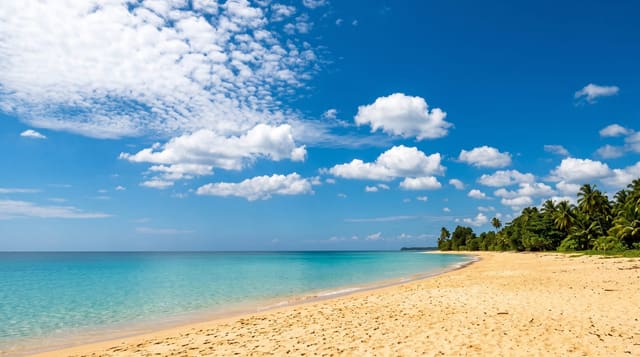
White quartz sand and cold clear water east of Rio, with salt lagoons behind and a seventeenth-century fort on the point.
Updated 29 August 2026
The sand at Praia do Forte is unusually white and fine because it is almost pure quartz, and the water is unusually cold and clear for this latitude because of the same upwelling that operates at Arraial do Cabo next door. Behind the town lies the Araruama lagoon, one of the largest hypersaline lagoons in the world, worked for salt since the colonial period and still producing. The Forte Sao Mateus stands on the rocks at the mouth of the channel, built from 1616 against French and Dutch raiding. Dunes separate the beaches from the lagoon and can be walked or sandboarded. It is a long-established Brazilian holiday town rather than an international one, and it fills completely in January.
Highlights
- Pure quartz sand - unusually white and fine along Praia do Forte.
- The Araruama lagoon - a hypersaline lagoon still worked for salt.
- Forte Sao Mateus - a 1616 fort on the rocks at the channel mouth.
- Dunes between sea and lagoon - walkable and used for sandboarding.
When to go
December to March. Two days.
Before you go
The sea is genuinely cold, which surprises people. In January the town is extremely crowded and traffic from Rio is heavy in both directions. Beaches near the centre are busy and noisy. The fort keeps limited hours.
Nearby
Arraial do Cabo is south; Buzios is east on the next peninsula.
Key facts
Source: Wikidata, item Q735025, read on 18 October 2026.
What to pack for Cabo Frio
Chosen from what this place is for. Tap a kit for the full checklist.
- Reef-safe sunscreen - High SPF that will not bleach the coral you are swimming over. Find on Amazon
- Loose, light, long clothing - Covering up beats bare skin in the desert - and locals dress this way for a reason. Find on Amazon
- Quick-dry towel - A microfibre towel packs small and dries in minutes. Find on Amazon
- A wide-brim hat + sunglasses - Shade for your face and eyes where there is none overhead. Find on Amazon
Some links on this page are Amazon affiliate links - if you buy through them we may earn a small commission at no extra cost to you.
All packing kitsPlan your trip
Where to start if Cabo Frio is going on the list.
Booking links on this page are affiliate links - if you book through them we may earn a small commission at no extra cost to you. It never changes what we write about a place.
Opening times, ticket prices and seasonal closures change - check the official source before you go: official site.