Aparecida Basilica
The national shrine of Brazil, built around a small dark clay statue three fishermen pulled from a river in 1717.
Updated 19 October 2026
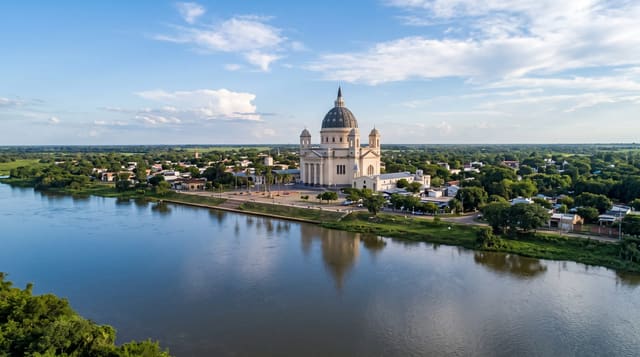
The story is specific: in 1717 three fishermen on the Paraiba do Sul, having caught nothing, pulled up first the body and then the head of a small terracotta figure of the Virgin, and afterwards filled their nets. The statue, dark and about forty centimetres tall, became the focus of a devotion that grew steadily through the eighteenth and nineteenth centuries, and Our Lady of Aparecida was declared patroness of Brazil in 1930. The present basilica, begun in 1955 and consecrated by John Paul II in 1980, is enormous - a Greek cross plan with four naves under a central dome, capable of holding tens of thousands, and it receives many millions of pilgrims a year, which makes it among the largest Marian shrines anywhere by both capacity and attendance.
History
By local tradition, in 1717 three fishermen on the Paraíba, fishing for a banquet for the visiting governor of São Paulo, Pedro de Almeida, netted first a headless clay statue of the Virgin and then its head, after which their catch filled their nets. The statue was kept at the home of one of them, Felipe Pedroso, whose family built a small chapel for the visitors; a larger chapel replaced it in 1734 and a first basilica, built between 1834 and 1888, followed, Pius X granted the image a canonical coronation on 8 December 1904, Pius XI declared it patroness of Brazil on 16 July 1930, and work on the present basilica began nearby in 1955 (Wikipedia, Basilica of Our Lady of Aparecida).
The main sights
- The 1717 statue - a dark terracotta figure about forty centimetres tall.
- A four-nave Greek cross - tens of thousands under one dome.
- Millions of pilgrims a year - among the most visited Marian shrines anywhere.
- A separate old basilica - the earlier eighteenth-century church nearby.
When to go
All year; 12 October is the feast and the busiest day by a wide margin. Half a day.
What to expect
The building is modern and functional rather than beautiful, and the commercial strip of religious shops around it is extensive. On the feast day and at weekends it is extremely crowded. The statue itself is small and viewed from a moving queue.
Nearby
Guaratingueta is next along the valley; Sao Paulo and Rio are at either end of the Dutra.
Key facts
Source: Wikidata, item Q2886950, read on 18 October 2026.
What to pack for Aparecida Basilica
Chosen from what this place is for. Tap a kit for the full checklist.
- Travel rod + reel - A packable multi-piece rod fits in a case and covers most holiday fishing. Find on Amazon
- Comfortable walking shoes - Sightseeing means kilometres of pavement and cobbles daily. Find on Amazon
- Modest clothing - Shoulders and knees covered - the single most common requirement. Find on Amazon
- A small tackle selection - Hooks, weights, line and a few lures or flies suited to local waters. Find on Amazon
Some links on this page are Amazon affiliate links - if you buy through them we may earn a small commission at no extra cost to you.
All packing kitsPlan your trip
Where to start if Aparecida Basilica is going on the list.
Booking links on this page are affiliate links - if you book through them we may earn a small commission at no extra cost to you. It never changes what we write about a place.
Opening times, ticket prices and seasonal closures change - check the official source before you go: official site.