Tuzla
A northeastern city built on salt, with artificial saltwater lakes in the middle of it and a lively central square.
Updated 18 October 2026
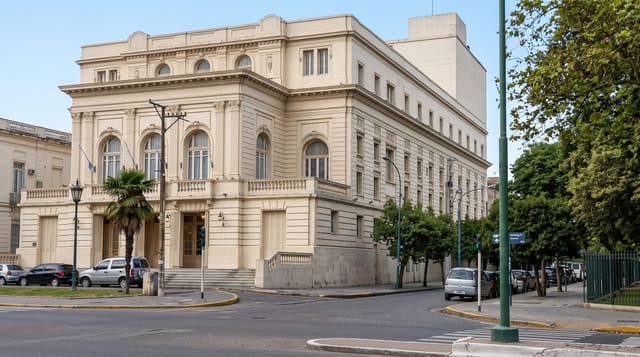
Tuzla takes its name from the Turkish word for salt, and salt has been extracted here since antiquity from underground brine, which is the fact behind everything about the city: the extraction caused large-scale subsidence that destroyed a substantial part of the old town in the twentieth century, and the response was to create the Panonska jezera, a set of saltwater lakes in the centre fed from the brine, with beaches, a reconstructed neolithic pile dwelling and a saltworks museum around them, opened from 2003. The central square and the pedestrian streets around it are among the livelier urban spaces in the country, and the city has a substantial student population.
History
Lived in for more than 6,000 years, Tuzla was a rich Neolithic settlement, and before the Roman conquest the Illyrian Breuci ruled it, then known as Salines; Constantine Porphyrogenitus named the fort Salines in 950, and in the Middle Ages, as Soli, salts, it belonged mostly to the Kingdom of Bosnia. After 1467 the House of Berislavić held the region until the Ottomans took the villages of Gornje and Donje Soli around 1512 and the whole of Usora in the 1530s, and for nearly 400 years the town, whose name is Turkish for salt mine, was part of the Sanjak of Zvornik, until Austria-Hungary took it in 1878 (Wikipedia, Tuzla).
What's there
- The Pannonian lakes - the saltwater bathing lakes in the city centre.
- The saltworks museum - the display on brine extraction and its effects.
- The central square - the pedestrian centre and its cafes.
- The pile dwelling - the reconstructed neolithic settlement by the lakes.
When to go
May to September, when the lakes are open for swimming; they close outside the season. The city works year round. Summer weekends fill the lakes with local families.
Before you go
The lakes are artificial and get very crowded in summer. Much of the historic centre was lost to subsidence and the city is largely modern. Facilities are those of a working city rather than a tourist town.
Nearby
Srebrenik lies north; Sarajevo is southwest.
Key facts
Source: Wikidata, item Q174684, read on 18 October 2026.
What to pack for Tuzla
Chosen from what this place is for. Tap a kit for the full checklist.
- Reef-safe sunscreen - High SPF that will not bleach the coral you are swimming over. Find on Amazon
- Head torch + spare batteries - Hands-free light is essential; caves are truly dark. Find on Amazon
- Comfortable walking shoes - Sightseeing means kilometres of pavement and cobbles daily. Find on Amazon
- Quick-dry towel - A microfibre towel packs small and dries in minutes. Find on Amazon
Some links on this page are Amazon affiliate links - if you buy through them we may earn a small commission at no extra cost to you.
All packing kitsPlan your trip
Where to start if Tuzla is going on the list.
Booking links on this page are affiliate links - if you book through them we may earn a small commission at no extra cost to you. It never changes what we write about a place.
Opening times, ticket prices and seasonal closures change - check the official source before you go: official site.