Amboró National Park
A park where the Andes, the Amazon and the Chaco meet, giving it one of the highest species counts anywhere.
Updated 18 October 2026
Real photos (1)
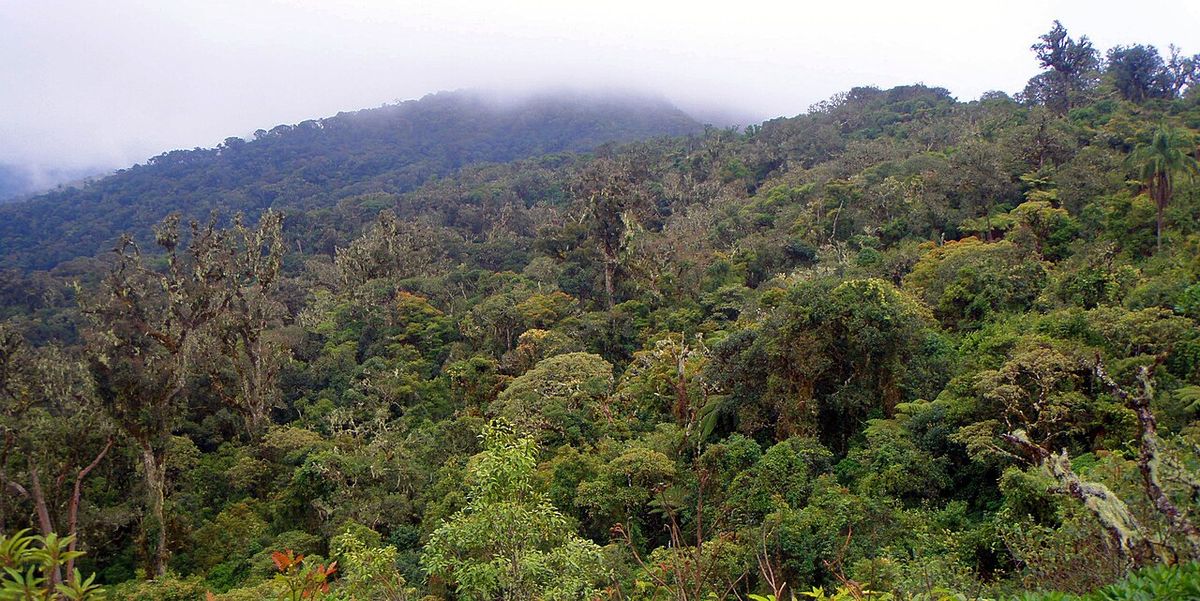
Amboró covers some 4,400 square kilometres at the point where three great biogeographic regions meet: the Andes coming down from the west, the Amazon basin to the north, and the dry Chaco to the south, with altitudes from three hundred to over three thousand metres. The result is an extraordinary species list, with well over eight hundred birds recorded, including the horned curassow found almost nowhere else, along with spectacled bears, jaguars and giant ferns and tree ferns in the cloud forest. The park has two faces: the humid northern lowlands reached from Buena Vista, and the cooler southern cloud forest from Samaipata. Colonisation pressure on the boundaries has been a long-running problem. Guides are compulsory and trips are arranged in the gateway towns.
History
The area was first protected in 1973 as the German Busch wildlife reserve, and in 1984, with the help of the Bolivian biologist Noel Kempff, the British zoologist Robin Clark and others, it became a national park of 1,800 square kilometres. In 1991 it was enlarged to 6,376 square kilometres without consulting the local people, which set off serious protests, and in 1995 a boundary known as the Red Line divided it into a national park of 4,425 square kilometres and a surrounding integrated management area, though local conflicts have kept redrawing the limits since (Wikipedia, Amboró National Park).
What you'll find
- Three regions meeting - Andean, Amazonian and Chaco species together.
- Cloud forest ferns - giant tree ferns on the southern slopes.
- The bird list - over eight hundred species including rare endemics.
- Two access areas - lowland from Buena Vista, highland from Samaipata.
When to go
April to October, the dry season, when tracks are passable and rivers crossable; the wet months bring floods and closures. Birds are most active in the early morning. Cloud is frequent on the southern side year round.
What to expect
Guides are compulsory and trips must be arranged in Buena Vista or Samaipata. Access roads are rough and river crossings can close them. Mammal sightings are very unlikely; this is a birding and forest destination. Facilities inside are camping or basic lodges.
Nearby
Samaipata lies south; Buena Vista is northeast.
Key facts
Source: Wikidata, item Q1631766, read on 18 October 2026.
What to pack for Amboró National Park
Chosen from what this place is for. Tap a kit for the full checklist.
- Broken-in walking shoes or boots - Grip and ankle support matter more than looks; never hike in brand-new boots. Find on Amazon
- Binoculars - The single best wildlife tool - even a compact pair transforms a sighting. Find on Amazon
- Strong insect repellent - DEET or picaridin; the jungle is where bites and disease risk are highest. Find on Amazon
- Layers for big temperature swings - Warm sun by day, near-freezing at night, even near the equator. Find on Amazon
Some links on this page are Amazon affiliate links - if you buy through them we may earn a small commission at no extra cost to you.
All packing kitsPlan your trip
Where to start if Amboró National Park is going on the list.
Booking links on this page are affiliate links - if you book through them we may earn a small commission at no extra cost to you. It never changes what we write about a place.
Opening times, ticket prices and seasonal closures change - check the official source before you go: official site.


