The Island That Turns Red
Once a year, tens of millions of crabs march across Christmas Island to the sea - roads close, rangers rake, and travellers plan around a crab forecast.
Illustrative image.
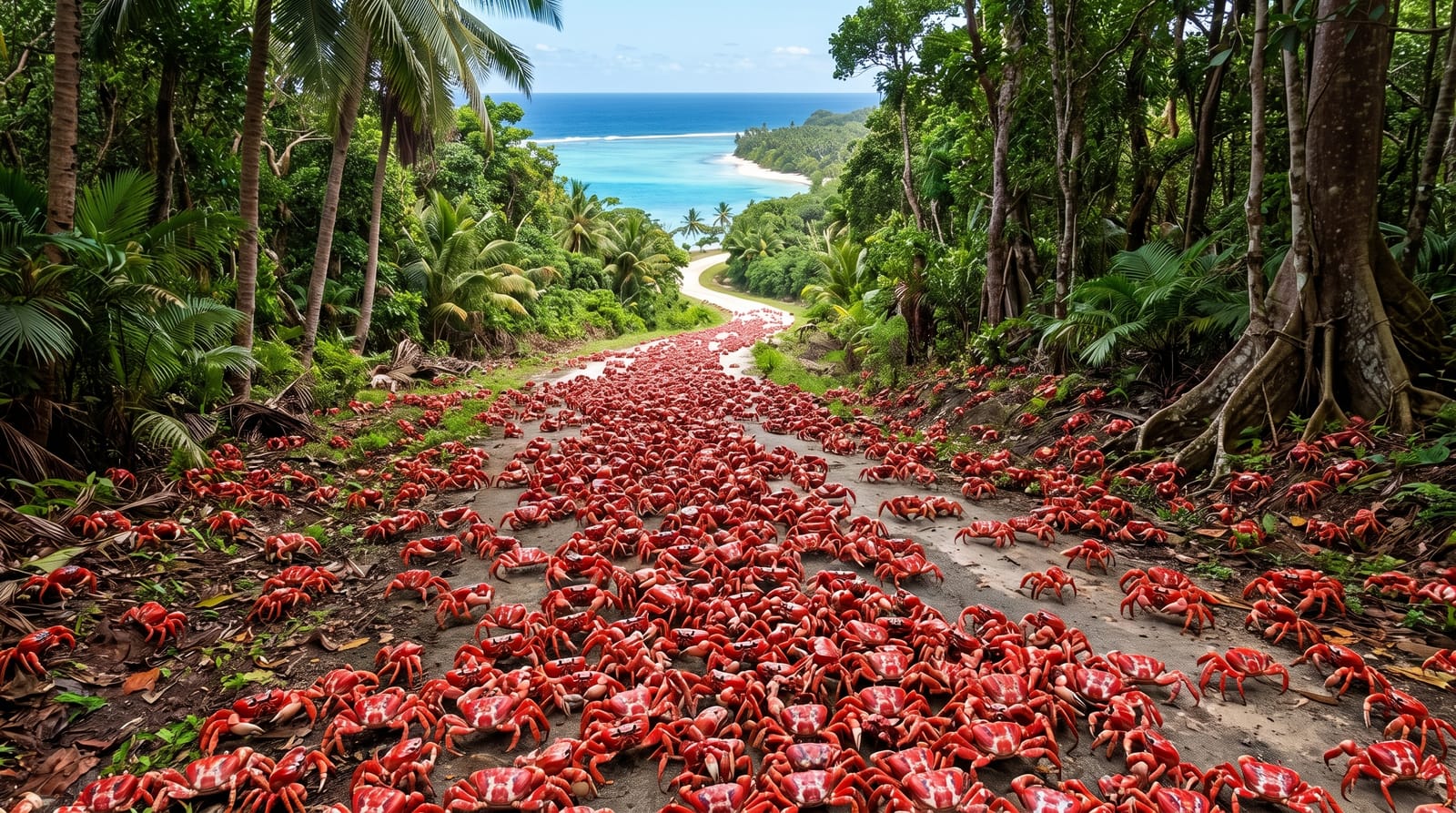
Every year, when the wet season's first rains hit a small Australian territory in the Indian Ocean, the forest floor stands up and walks to the sea. Tens of millions of red land crabs leave their burrows at once, and for about two weeks Christmas Island belongs to them.
What actually happens
The red crab migration is triggered by rain and timed by the moon: males lead the march to the coast, breed, and the females release eggs into the surf on a precise lunar schedule before the whole nation walks home again. Roads genuinely close; rangers rake crabs off the tarmac; residents fit their cars with crab-sweeping schedules and drive like chess players. Special crab bridges and underpasses - built seriously, used enthusiastically - carry the columns over the busiest roads.
Why it looks unreal
Density is the trick. A single red crab is a handsome animal; a hillside of them is a moving carpet, a red river pouring down cliffs into the sea. David Attenborough filmed it and called it one of his most memorable sequences, and drone-era footage has only raised the disbelief.
Then comes the sequel: weeks later, if currents cooperate, the surviving baby crabs - each a few millimetres of determination - march back inland in their millions, a pink tide flowing uphill.
Planning around a crab forecast
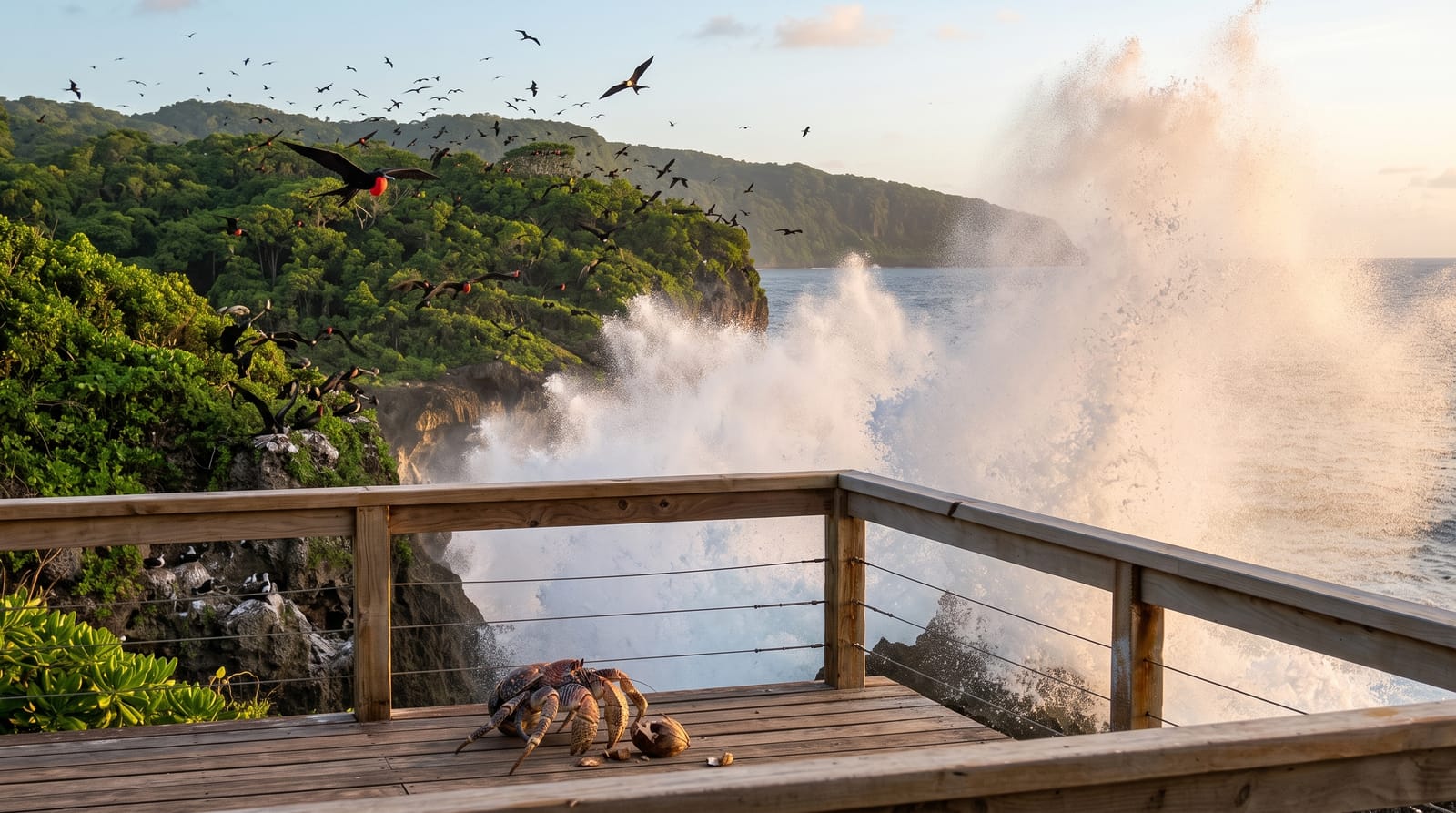
Timing is honest gambling: the migration usually runs with the first serious rains of the wet season, roughly November-December, with the exact spawning dates pinned to the moon's last quarter. The island publishes forecasts; flexible travellers who can move within a two-week window win. The rest of Christmas Island National Park fills the quiet days generously - seabird colonies, rainforest walks, whale sharks offshore in season.
The practical bit
This is remote-island travel: flights via Perth, accommodation limited, booking early essential. Pack for heat and rain together - the rainforest kit fits - plus reef-safe sunscreen and closed shoes for forest walking; the wildlife kit adds the binocular-and-patience layer. And accept the local ethic completely: crabs have right of way, always, everywhere. Browse our wildlife places for more spectacles that run on nature's own calendar - and November for what else peaks in crab season.