The Kraken of the Norwegian Sea
Norwegian sailors swore a beast the size of an island hunted their coast. The legend of the kraken, the whirlpool that inspired it, and where to see that sea today.

AI illustration.
Some links on this page are Amazon affiliate links - if you buy through them we may earn a small commission at no extra cost to you.
For centuries, Norwegian fishermen told of a creature so vast that sailors mistook its back for an island. They called it the kraken, and unlike most sea monsters, this one left an address: the deep, cold waters off northern Norway.
A monster with witnesses
The kraken enters written history in the 1700s, when the Norwegian bishop Erik Pontoppidan described it in his natural history of Norway as the largest creature in the sea, big enough to pull ships down and to make a whirlpool as it sank. Fishermen took it seriously in their own way: some said the best cod fishing was right above the kraken, because shoals of fish gathered over its back. The risk was part of the bargain.
The whirlpool that never went away
Strip away the tentacles and part of the legend is simply true. Northern Norway really does have waters that behave like something is stirring them from below. The most famous is the maelstrom, the tidal current between the Lofoten islands that gave every language its word for a giant whirlpool. Its smaller, fiercer cousin still runs today at Saltstraumen, where every six hours the tide forces an entire fjord through a narrow channel, spinning up whirlpools you can watch from the bridge. Standing over that churning water, the kraken feels less like a fantasy and more like a fair guess.
The squid behind the story
The other half of the answer surfaced in the 1800s, when giant squid began washing ashore in the North Atlantic. Armed with tentacles longer than a rowing boat and eyes the size of dinner plates, the giant squid is real, deep-dwelling and rarely seen alive. Science named it Architeuthis; the sailors had already named it centuries earlier. Today the kraken lives on in books and films, but it started as a working theory by people who knew this sea better than anyone.
Where the legend lives
- Saltstraumen - one of the strongest tidal currents in the world, whirlpools included, four times a day.
- The Lofoten Islands - the old maelstrom waters, cod-fishing villages and sea cliffs of the kraken's home coast.
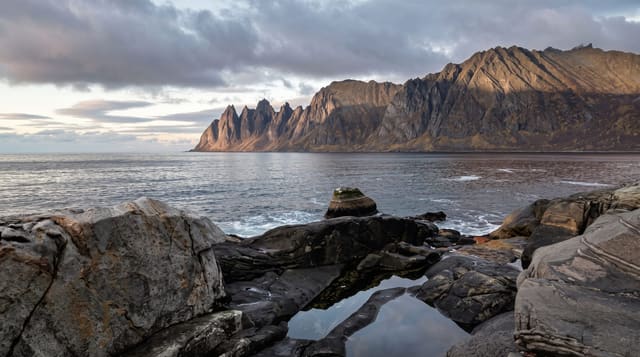
- Senja - wild, toothed coastal mountains above the same deep water, far from the crowds.
Fishing the kraken's waters
The fishermen who invented the kraken were after cod, and that fishery is still world class. If you fancy trying it yourself, the fishing kit covers the basics; a travel rod that packs small is enough for shore fishing, and polarised sunglasses help you read the water. Kayakers should treat the tide tables with the same respect the old sailors did; the paddling checklist starts with exactly that.
No kraken has ever been confirmed. But stand at Saltstraumen at full flow, and you will not entirely rule it out.
When to go and how long
- Saltstraumen Norway Best season Year-round; strongest at spring tides Time to allow One to two hours
- Lofoten Islands Norway Best season June to August for hiking; winter for aurora and cod Time to allow Several days
- Senja Norway Best season June to August; winter for aurora Time to allow Several days
Taken from each place page, where opening rules and the official link are kept.