Kyichu Lhakhang
One of Bhutan's oldest temples, traditionally dated to the seventh century and still full of pilgrims turning prayer wheels.
Updated 18 October 2026
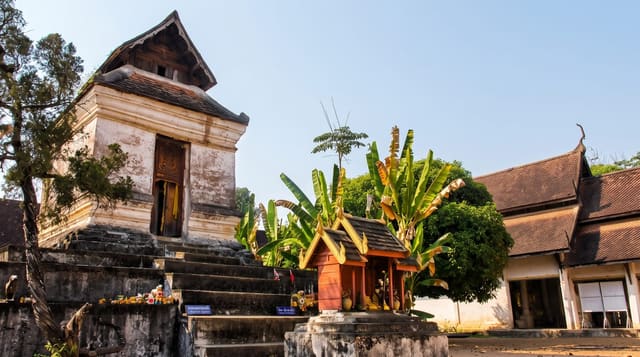
Kyichu Lhakhang is held by tradition to be one of the 108 temples built in a single night by the Tibetan king Songtsen Gampo in the seventh century to pin down a demoness lying across the Himalaya, with this one placed on her left foot. Whatever the dating, it is among the oldest religious buildings in the country and remains an active place of worship rather than a monument: pilgrims circle it turning the wheels in the outer gallery, and the inner sanctum holds a seventh-century Jowo Sakyamuni figure. A second temple was added in 1968 in matching style. In the courtyard are two orange trees said to fruit year round. The atmosphere is quiet and working, and the visit is short.
History
The Jowo temple is held to have been built in the 7th century by the Tibetan emperor Songtsen Gampo as one of his 108 border-taming temples, and in the 8th century Padmasambhava is believed to have visited and hidden spiritual treasures here. In the 12th century the Lhapa Kagyu looked after it and in the 13th it passed to a descendant of Phajo Drugom Zhigpo's son Nyima; Pema Lingpa, 1450-1521, is recorded as uncovering and restoring the lost temple, in 1644 Ngawang Namgyal took it over, and from 1836 to 1838 the 25th Je Khenpo, Sherab Gyaltshen, restored and reconsecrated it (Wikipedia, Kyichu Lhakhang).
What to look for
- The old temple - the seventh-century foundation and its sanctum.
- Prayer wheel gallery - pilgrims circumambulating the building.
- The Jowo figure - the ancient statue in the inner shrine.
- The orange trees - the courtyard trees of local tradition.
When to go
March to May and September to November for clear weather in the valley. Mornings bring the most pilgrims and the most atmosphere. The temple is open year round.
Good to know
Photography inside is forbidden and shoes come off at the door. The building is small and the visit takes under an hour. It is an active temple, so quiet and modest dress are expected. Access is with a guide as part of the standard package.
Nearby
Paro Rinpung Dzong lies south; Drukgyel Dzong is further up the valley.
Key facts
Source: Wikidata, item Q1795009, read on 18 October 2026.
What to pack for Kyichu Lhakhang
Chosen from what this place is for. Tap a kit for the full checklist.
- Comfortable walking shoes - Sightseeing means kilometres of pavement and cobbles daily. Find on Amazon
- Modest clothing - Shoulders and knees covered - the single most common requirement. Find on Amazon
- A slim anti-theft daypack - Zips that close properly; keep it in front in crowds and on transit. Find on Amazon
- A scarf or shawl - To cover the head or shoulders on entry; women especially at mosques. Find on Amazon
Some links on this page are Amazon affiliate links - if you buy through them we may earn a small commission at no extra cost to you.
All packing kitsPlan your trip
Where to start if Kyichu Lhakhang is going on the list.
Booking links on this page are affiliate links - if you book through them we may earn a small commission at no extra cost to you. It never changes what we write about a place.
Opening times, ticket prices and seasonal closures change - check the official source before you go: official site.