Limbourg
A fortified hilltop town above the Vesdre, once the capital of a duchy, now a cobbled square and a church.
Updated 18 October 2026
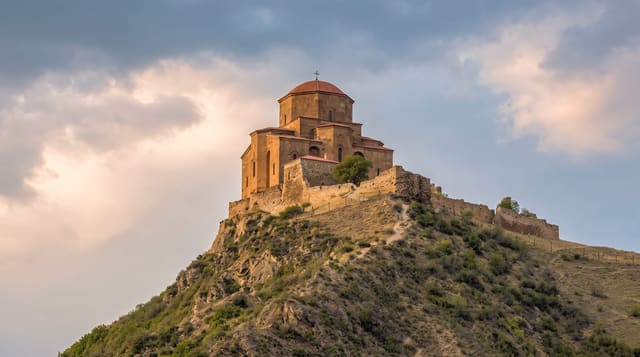
Limbourg stands on a rock spur above the Vesdre and was the capital of the Duchy of Limburg, a territory that gave its name to the modern Belgian and Dutch provinces even though it lay in neither, and it was fortified and fought over repeatedly before being dismantled by the French in 1675. What survives is a small walled town on the spur: a long cobbled square, the Place Saint-Georges, planted with lime trees and lined with stone and brick houses of the seventeenth and eighteenth centuries, the church of Saint George with a heavy tower, stretches of rampart and a gate. It is listed among the most beautiful villages of Wallonia. Almost nothing has been added since, and the modern town of Dolhain lies below in the valley.
History
The name ends in burg, a fortified town, and the first part may come from lint, dragon, from the Roman limes or from lime, or, as Jean-Louis Kupper proposes, from Limburg Abbey in Germany, chosen by the castle's founder, Frederick. Built on a hill ringed by the Vesdre, the town was easy to defend, became the seat of the dukes of Limburg in the Lower Lorraine of the Holy Roman Empire, and in 1703 fell to the English and Dutch under the Duke of Marlborough (Wikipedia, Limbourg).
Highlights
- The cobbled Place Saint-Georges - a long lime-planted square on the spur.
- Stretches of rampart and gate - what the 1675 dismantling left.
- The church of Saint George - the heavy tower over the town.
- The spur position - the Vesdre valley below on both sides.
When to go
April to October. Two hours. The square is open ground at all hours. Weekday mornings are almost empty. The climb from Dolhain station is steep.
Good to know
It is very small and two hours is generous; there is one square and a church. Facilities amount to a couple of cafes with limited hours. The climb from the valley is steep. Parking on the spur is very restricted.
Nearby
Verviers is south-west; Eupen and the High Fens lie east.
Key facts
Source: Wikidata, item Q506739, read on 18 October 2026.
What to pack for Limbourg
Chosen from what this place is for. Tap a kit for the full checklist.
- Comfortable walking shoes - Sightseeing means kilometres of pavement and cobbles daily. Find on Amazon
- A slim anti-theft daypack - Zips that close properly; keep it in front in crowds and on transit. Find on Amazon
- A refillable water bottle - Many cities have public fountains; save money and plastic. Find on Amazon
- A light layer + compact umbrella - For museum air-con and a sudden shower. Find on Amazon
Some links on this page are Amazon affiliate links - if you buy through them we may earn a small commission at no extra cost to you.
All packing kitsPlan your trip
Where to start if Limbourg is going on the list.
Booking links on this page are affiliate links - if you book through them we may earn a small commission at no extra cost to you. It never changes what we write about a place.
Opening times, ticket prices and seasonal closures change - check the official source before you go: official site.