Lavaux-Sainte-Anne Castle
A moated Famenne castle with three round towers, holding museums of rural life and a wetland reserve behind.
Updated 31 August 2026
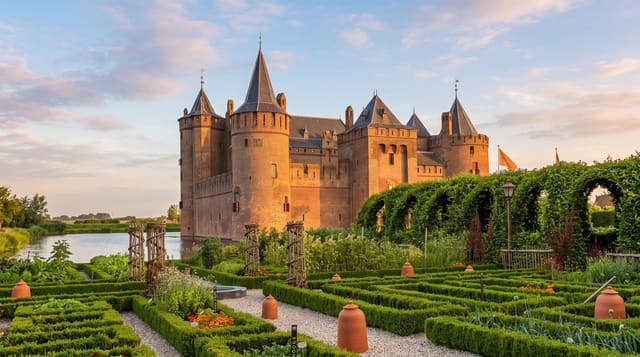
Lavaux-Sainte-Anne began as a fifteenth-century fortress on the flat Famenne, a square block with three heavy round towers and a moat, and was softened in the seventeenth century into a residence with mullioned windows and a courtyard, so the exterior reads as fortress and the inner face as house. It now holds three museums under one roof: a hunting and nature collection, a museum of rural life in the Famenne with reconstructed interiors and tools, and the castle rooms themselves. Behind the castle a wetland reserve has been created out of the surrounding fields, with ponds, reed beds and hides, grazed by Konik horses and Highland cattle, and it holds a good range of birds. The combination is unusual and the two halves work together.
The main sights
- Three round towers in a moat - the fifteenth-century fortress front.
- A museum of Famenne rural life - reconstructed interiors and tools.
- The wetland reserve behind - ponds, hides and grazing animals.
- The seventeenth-century courtyard - the residential face inside the walls.
When to go
April to October for the reserve at its best; the castle is open year round with reduced winter hours. Two to three hours for both. Spring and autumn for birds. Weekends are busy with families.
What to expect
The museums are aimed partly at school groups. Interpretation is in French with limited English. The reserve is small and the hides are basic. Winter opening is reduced. Public transport is poor.
Nearby
Rochefort and its cave are east; Han-sur-Lesse lies north-east.
What to pack for Lavaux-Sainte-Anne Castle
Chosen from what this place is for. Tap a kit for the full checklist.
- Head torch + spare batteries - Hands-free light is essential; caves are truly dark. Find on Amazon
- Comfortable walking shoes - Sightseeing means kilometres of pavement and cobbles daily. Find on Amazon
- Grippy closed shoes - Cave floors are wet, muddy and slick with formations. Find on Amazon
- A slim anti-theft daypack - Zips that close properly; keep it in front in crowds and on transit. Find on Amazon
Some links on this page are Amazon affiliate links - if you buy through them we may earn a small commission at no extra cost to you.
All packing kitsPlan your trip
Where to start if Lavaux-Sainte-Anne Castle is going on the list.
Booking links on this page are affiliate links - if you book through them we may earn a small commission at no extra cost to you. It never changes what we write about a place.
Opening times, ticket prices and seasonal closures change - check the official source before you go: official site.