Gaasbeek Castle
A medieval castle west of Brussels rebuilt in the nineteenth century as a romantic vision, with a large park.
Updated 18 October 2026
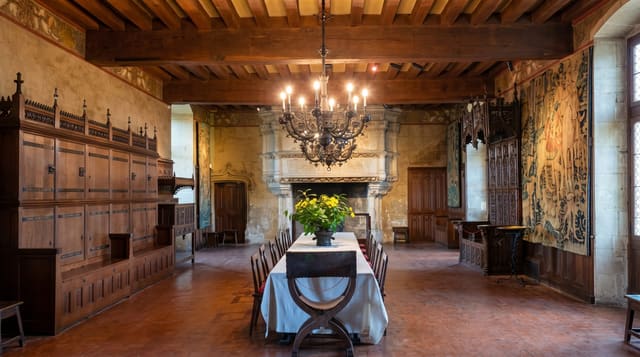
A castle has stood at Gaasbeek since the thirteenth century, but what you see is largely the work of the Marquise Arconati Visconti, who inherited it in the 1880s and remodelled it into an idea of what a medieval castle should look like, filling it with tapestries, furniture, silver, ivories and paintings bought across Europe, and then gave the whole thing to the Belgian state in 1921. The result is a nineteenth-century romantic construction rather than an authentic medieval interior, which is now presented as the point rather than hidden. Around it lies a park of about fifty hectares with beech avenues, a museum garden of historic vegetables and flowers, and long views over the Pajottenland, the rolling country Bruegel painted.
History
The fortified castle was built around 1240 to defend Brabant against Flanders, and Brussels troops destroyed it to avenge the murder of Everard t'Serclaes, said to have been ordered by its lord, Sweder of Abcoude. Early in the 16th century the Hornes family built a brick castle on the ruins, Lamoral, Count of Egmont, bought it in 1565 with rights over 17 villages, three years before he was beheaded on the Grand-Place of Brussels for treason against Philip II, and the castle took its pseudo-medieval look in a renovation of 1887-1898 by the architect Charles Albert for the Marquise Arconati Visconti, who left it with its collections and grounds to the Belgian state (Wikipedia, Gaasbeek Castle).
What to look for
- A romantic nineteenth-century reconstruction - the marquise's idea of a castle.
- Tapestries and collections - furniture, silver and ivories bought across Europe.
- The museum garden - historic vegetable and flower varieties in walled plots.
- Pajottenland views - the Bruegel country from the park.
When to go
April to October; the castle closes for the winter and the park stays open. Half a day. Contemporary art exhibitions are staged in the castle most summers. Weekends are busy with Brussels visitors.
What to expect
The interior is a nineteenth-century fantasy, not a medieval one, which disappoints visitors who do not read the label. Castle opening is seasonal and limited. The park is free but the castle and garden are separately ticketed. Public transport is a bus.
Nearby
Beersel Castle is south-east; the Pajottenland lies west.
Key facts
Source: Wikidata, item Q287806, read on 18 October 2026.
What to pack for Gaasbeek Castle
Chosen from what this place is for. Tap a kit for the full checklist.
- Comfortable walking shoes - Sightseeing means kilometres of pavement and cobbles daily. Find on Amazon
- A slim anti-theft daypack - Zips that close properly; keep it in front in crowds and on transit. Find on Amazon
- A refillable water bottle - Many cities have public fountains; save money and plastic. Find on Amazon
- A light layer + compact umbrella - For museum air-con and a sudden shower. Find on Amazon
Some links on this page are Amazon affiliate links - if you buy through them we may earn a small commission at no extra cost to you.
All packing kitsPlan your trip
Where to start if Gaasbeek Castle is going on the list.
Booking links on this page are affiliate links - if you book through them we may earn a small commission at no extra cost to you. It never changes what we write about a place.
Opening times, ticket prices and seasonal closures change - check the official source before you go: official site.