Long Island
A hundred and thirty kilometres of island split by the Tropic of Cancer, with one of the world's deepest blue holes at one end.
Updated 18 October 2026
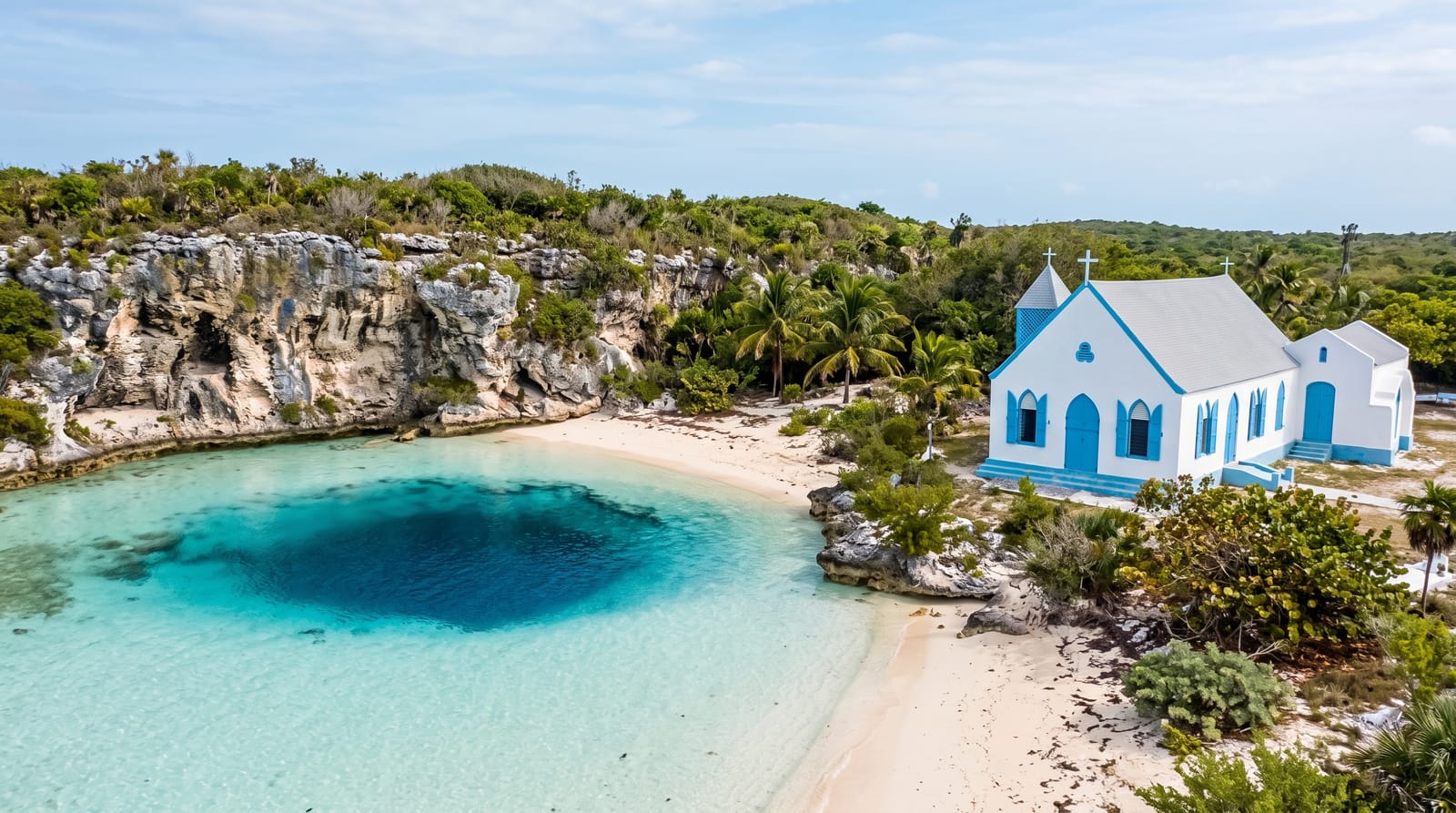
AI illustration
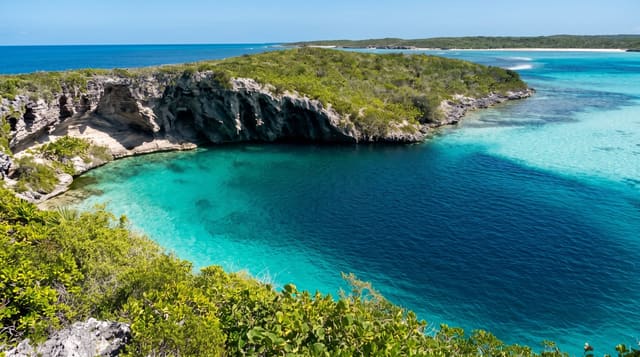
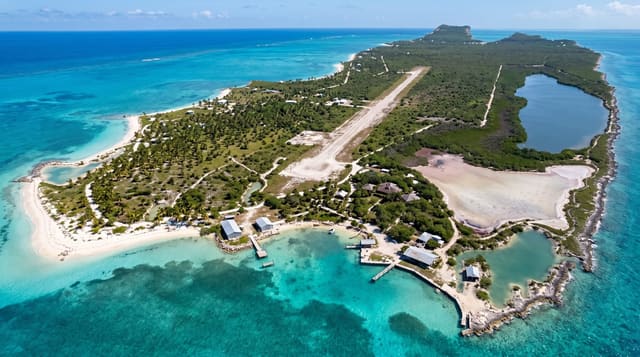
Long Island runs a hundred and thirty kilometres north to south, crossed near its middle by the Tropic of Cancer, and it has the most varied landscape of any Bahamian island: high limestone bluffs and Atlantic cliffs on the east side, shallow banks and quiet coves on the west, caves inland and salt flats at the south end. Dean's Blue Hole near Clarence Town drops over two hundred metres away from a shallow beach lagoon - the third deepest blue hole known, after Taam Ja' in Mexico and the Dragon Hole in the South China Sea - and it hosts the world's leading free-diving competition. Clarence Town has two churches built by the same priest-architect, one Catholic and one Anglican, on facing hills.
History
Some writers, among them Samuel Eliot Morison, identify Long Island with Fernandina, the third island Columbus visited in 1492, called Yuma by the Lucayans, while others place Fernandina elsewhere; ceremonial seats called duhos show that the Lucayans lived here, probably in the island's caves. After the Lucayans were taken as slaves to Hispaniola and Cuba there was no large settlement until the Simms family came in 1720, Loyalists from New England and New Jersey started cattle and sheep farms after the American Revolution, and settlers from the Carolinas set up cotton plantations in the 1790s, which mostly collapsed before the abolition of slavery in 1834 and survive as overgrown ruins (Wikipedia, Long Island, Bahamas).
The landscape
- Dean's Blue Hole - over two hundred metres deep, a few metres from shore.
- The Clarence Town churches - twin-towered rivals on facing hills.
- Columbus Point - the cliffs and monument at the northern tip.
- Cape Santa Maria - a long pale beach on the northwest shore.
When to go
December to May is the dry season. The free-diving competition at Dean's Blue Hole is usually in spring. Summer is hot with the hurricane season from June to November. Flights connect through Nassau and are limited, so plan around the schedule.
Things to know
There is very little infrastructure: a handful of small hotels, few restaurants, and shops with limited stock. A hire car is essential and fuel stations are far apart. Dean's Blue Hole has no facilities, no lifeguard and drops from waist-deep to two hundred metres within a few strides, which is genuinely dangerous for casual swimmers. Flights are infrequent and cancellations strand people.
Nearby
Conception Island is offshore; Exuma is a short flight northwest.
Key facts
Source: Wikidata, item Q890879, read on 18 October 2026.
What to pack for Long Island
Chosen from what this place is for. Tap a kit for the full checklist.
- Reef-safe sunscreen - High SPF that will not bleach the coral you are swimming over. Find on Amazon
- Your own mask + snorkel - A well-fitting mask is the single biggest comfort upgrade underwater. Find on Amazon
- Head torch + spare batteries - Hands-free light is essential; caves are truly dark. Find on Amazon
- Quick-dry towel - A microfibre towel packs small and dries in minutes. Find on Amazon
Some links on this page are Amazon affiliate links - if you buy through them we may earn a small commission at no extra cost to you.
All packing kitsPlan your trip
Where to start if Long Island is going on the list.
Booking links on this page are affiliate links - if you book through them we may earn a small commission at no extra cost to you. It never changes what we write about a place.
Opening times, ticket prices and seasonal closures change - check the official source before you go: official site.