Fort Charlotte
The largest fort in the Bahamas, built in the 1780s with a dry moat, dungeons and underground passages, and never fired on.
Updated 1 September 2026
AI illustration
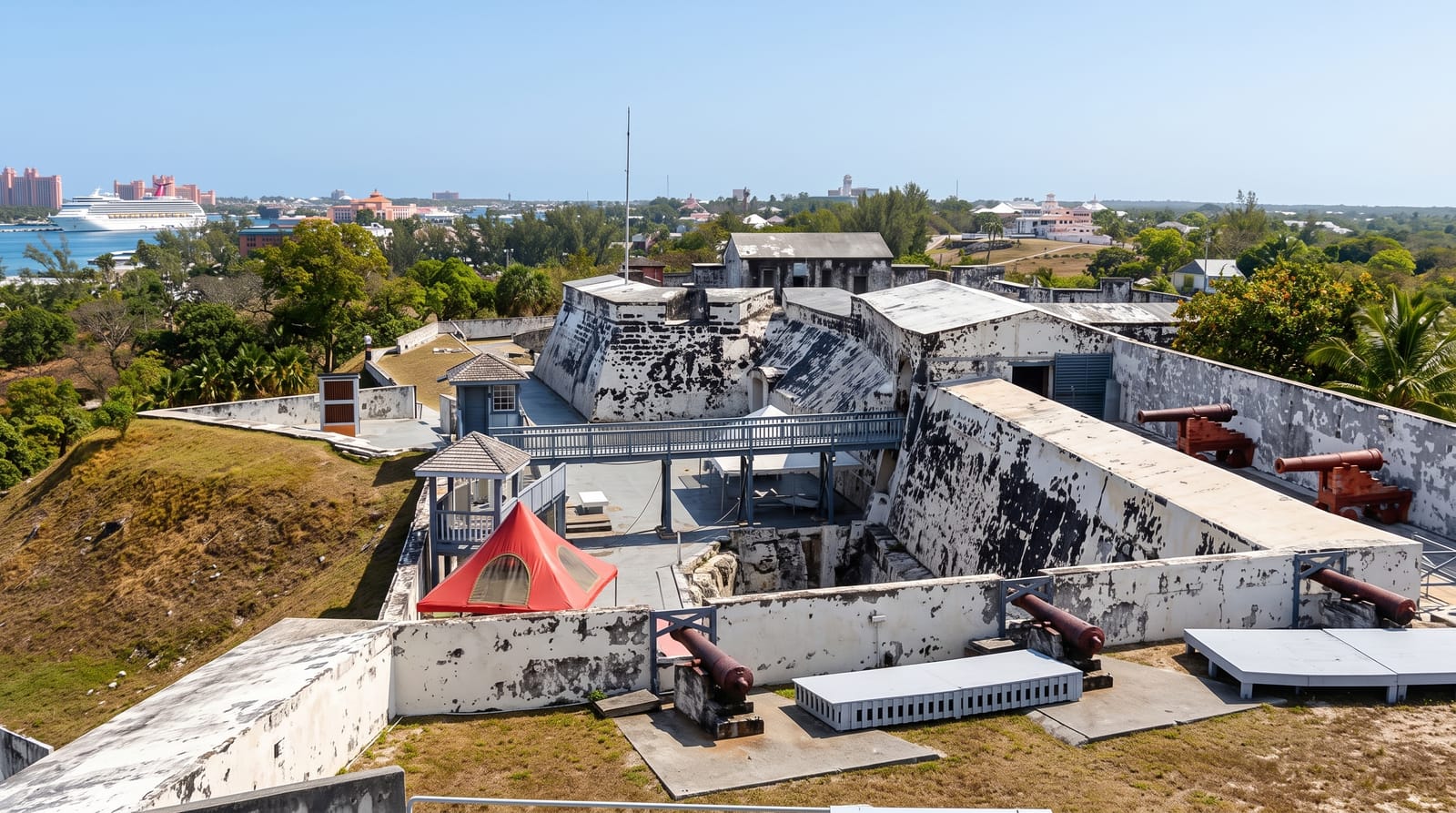
Fort Charlotte was built from 1787 on a rise west of Nassau, named for the wife of George III, and it is the largest fortification in the Bahamas: three sections, a dry moat cut into the rock, drawbridge, powder magazines, dungeons and a network of underground passages, with cannon facing the harbour approach. It cost far more than was budgeted, which caused a scandal at the time, and in the whole of its history not a shot was ever fired from it in anger. Guides take visitors through the passages and the dungeons, where the restraints on display make the point about who the fort was also used to hold. The view over Nassau harbour is the best in the city.
The main sights
- The dry moat and drawbridge - cut into the rock around the fort.
- The underground passages - tunnels and magazines beneath the walls.
- The dungeons - with restraints and cells on display.
- The harbour view - over Nassau and the cruise port.
When to go
December to May is the dry season. Mornings are cooler on the exposed ramparts. Cruise days bring groups through the middle of the day. Guided tours run continuously and are the only way into the passages.
Practical notes
Access to the interesting parts is by guide only, and guides work largely for tips, which are pressed for firmly at the end. There is little shade on the ramparts. The presentation is thin and much of the fort is empty stone. Getting here means a taxi or bus from downtown.
Nearby
Nassau's downtown is fifteen minutes east; Cable Beach is west.
Key facts
Source: Wikidata, item Q5470909, read on 18 October 2026.
What to pack for Fort Charlotte
Chosen from what this place is for. Tap a kit for the full checklist.
- Head torch + spare batteries - Hands-free light is essential; caves are truly dark. Find on Amazon
- Comfortable walking shoes - Sightseeing means kilometres of pavement and cobbles daily. Find on Amazon
- Grippy closed shoes - Cave floors are wet, muddy and slick with formations. Find on Amazon
- A slim anti-theft daypack - Zips that close properly; keep it in front in crowds and on transit. Find on Amazon
Some links on this page are Amazon affiliate links - if you buy through them we may earn a small commission at no extra cost to you.
All packing kitsPlan your trip
Where to start if Fort Charlotte is going on the list.
Booking links on this page are affiliate links - if you book through them we may earn a small commission at no extra cost to you. It never changes what we write about a place.
Opening times, ticket prices and seasonal closures change - check the official source before you go: official site.