Exuma Cays Land and Sea Park
The first land and sea park in the world, established in 1958, and a no-take reserve since 1986 that stocks the reefs around it.
Updated 18 October 2026
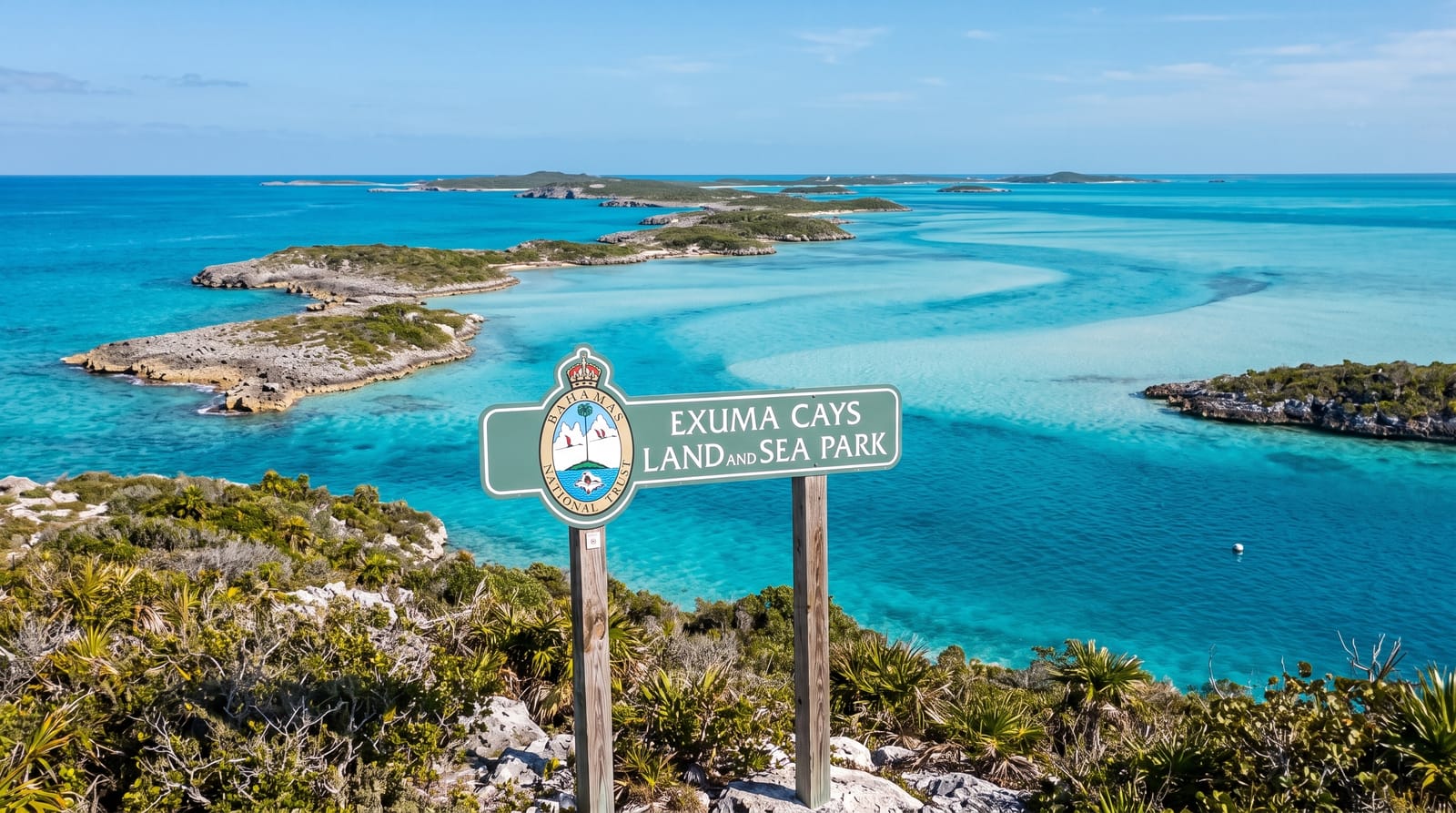
AI illustration
Set up in 1958, this was the first land and sea park anywhere in the world, and in 1986 it became a full no-take reserve where nothing at all may be caught or collected. That decision has been studied ever since, because the park now demonstrably restocks the fishing grounds around it: Nassau grouper and spiny lobster grow to sizes rarely seen elsewhere in the region and their larvae drift out to the wider chain. It covers around four hundred and fifty square kilometres of cays, sand banks and reef in the northern Exumas, with no settlements, no shops and no scheduled transport, reached by private boat or charter and used mostly by cruising sailors.
History
In 1953 Daniel Beard, superintendent of Everglades National Park, proposed setting aside part of the Exuma Cays as a park, an idea welcomed by the Nassau papers; a formal proposal followed in 1955, and on 13 February 1956 the Governor confirmed that 22 miles of the Exumas had been set aside, provided an organisation would recommend how to run and fund the park. A survey led by Carleton Ray of the New York Aquarium and Jack Gabow recommended founding the Bahamas National Trust to look after it, and the Exuma Cays Land and Sea Park was established in 1958 under the Trust (Wikipedia, Exuma Cays Land and Sea Park).
What you'll find
- The no-take reserve - large grouper, lobster and conch on the reefs.
- Warderick Wells - the park headquarters and its mooring field.
- Boo Boo Hill - the driftwood signs left by passing sailboats.
- Rocky Dundas - sea caves with stalactites, entered by dinghy.
When to go
December to May is the dry season with the calmest conditions; the moorings at Warderick Wells book out in the winter cruising season. Summer brings heat, calms and the hurricane risk from June to November.
Things to know
There is no way in without a boat, and no scheduled service exists; visiting means chartering or sailing. Nothing may be taken, including shells and lobster, and the rules are enforced. There are no supplies, no fuel and no medical help inside the park. Moorings are limited and anchoring is restricted to protect the seagrass.
Nearby
Staniel Cay is south; Highbourne Cay is at the northern end.
Key facts
Source: Wikidata, item Q5422508, read on 18 October 2026.
What to pack for Exuma Cays Land and Sea Park
Chosen from what this place is for. Tap a kit for the full checklist.
- Travel rod + reel - A packable multi-piece rod fits in a case and covers most holiday fishing. Find on Amazon
- Reef-safe sunscreen - High SPF that will not bleach the coral you are swimming over. Find on Amazon
- Head torch + spare batteries - Hands-free light is essential; caves are truly dark. Find on Amazon
- A small tackle selection - Hooks, weights, line and a few lures or flies suited to local waters. Find on Amazon
Some links on this page are Amazon affiliate links - if you buy through them we may earn a small commission at no extra cost to you.
All packing kitsPlan your trip
Where to start if Exuma Cays Land and Sea Park is going on the list.
Booking links on this page are affiliate links - if you book through them we may earn a small commission at no extra cost to you. It never changes what we write about a place.
Opening times, ticket prices and seasonal closures change - check the official source before you go: official site.