Sheki
A Silk Road town in the Caucasus foothills whose khan's palace is covered inside and out with fresco and shebeke stained glass, inscribed in 2019.
Updated 18 October 2026

AI illustration
UNESCO World Heritage
Sheki sits on a slope in the southern foothills of the Greater Caucasus, in a valley of hazelnut and mulberry, and it was a silk town: raw silk, dyeing, weaving and the trade that came with them. The historic centre was inscribed in 2019 together with the Khan's Palace, an eighteenth-century summer residence whose two floors are covered in painted fresco and fitted with shebeke, wooden lattice windows holding thousands of pieces of coloured glass assembled without nails or glue. Two caravanserais survive, one of them working as a hotel.
History
Traces of large settlements at Sheki go back more than 2,700 years, and in the 1st century it was one of the largest cities of Caucasian Albania. It was conquered by the Arabs in 654, captured by Timur in 1392 and brought under the Safavids in the 16th century, and in 1743 Haji Chelebi declared an independent Sheki Khanate, under which the townspeople lived by silkworm breeding, crafts and trade; after a flood of the river Kish partly ruined the old town, its people were resettled on the site of the present city. The town was known as Nukha until 1968, and in 2019 its historic centre and the Palace of the Sheki Khans were inscribed as a World Heritage Site for their architecture and their history as a trading centre on the Silk Road (Wikipedia, Shaki, Azerbaijan).
The main sights
- The Khan's Palace - a small two-floor summer residence, every surface frescoed, with shebeke windows.
- The shebeke - lattice frames of thousands of glass pieces held together without nails or glue.
- The caravanserais - the upper and lower Silk Road inns, one restored and operating as a hotel.
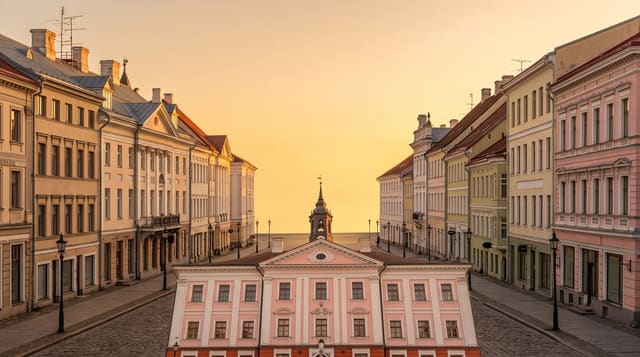
- The old quarter - stone houses with tiled roofs running up the slope, with the mountains behind.
When to go
May to October is the season, when the foothills are green and the passes are open. Autumn brings the hazelnut harvest and the best colour. Winter is cold and snowy but the palace is open and the town is empty.
Before you go
The palace is small and the visit takes twenty minutes; photography inside is restricted and enforced. Sheki is four to five hours from Baku on a road that is slow in places, so an overnight makes more sense than a day trip. The town is on a steep slope and walking it is hard work.
Nearby
Kish and its old church are five kilometres up the hill, Ilisu is northwest along the foothills beyond Qakh, and Lahij is southeast over the mountains.
Key facts
Source: Wikidata, item Q234783, read on 18 October 2026.
What to pack for Sheki
Chosen from what this place is for. Tap a kit for the full checklist.
- Comfortable walking shoes - Sightseeing means kilometres of pavement and cobbles daily. Find on Amazon
- Shelter suited to the place - Tent, tarp or hut booking - match it to the terrain and rules. Find on Amazon
- A slim anti-theft daypack - Zips that close properly; keep it in front in crowds and on transit. Find on Amazon
- A warm sleeping bag + mat - Rated a little colder than you expect the nights to be. Find on Amazon
Some links on this page are Amazon affiliate links - if you buy through them we may earn a small commission at no extra cost to you.
All packing kitsPlan your trip
Where to start if Sheki is going on the list.
Booking links on this page are affiliate links - if you book through them we may earn a small commission at no extra cost to you. It never changes what we write about a place.
Opening times, ticket prices and seasonal closures change - check the official source before you go: official site.