Vienna Central Cemetery
One of Europe's largest cemeteries, with graves of honour for Beethoven, Brahms and Schubert and its own bus route.
Updated 18 October 2026
The Zentralfriedhof opened in 1874 on land outside the city, and it is enormous - about two and a half square kilometres holding well over three million burials, more than the living population of Vienna, with internal roads, its own bus route and a scale that means walking between sections takes real time. The Ehrengräber, graves of honour, were an early marketing device to make the remote new cemetery acceptable: Beethoven and Schubert were moved here, and Brahms, Johann Strauss, Schoenberg, Salieri and later Falco were buried among them, with a Mozart memorial standing where no grave exists since his burial place is unknown. There are separate Jewish, Protestant, Orthodox and Muslim sections; the old Jewish part, damaged in 1938 and after, is deliberately left semi-wild.
History
The decision to build a large new cemetery came in 1863, when it was clear that industrial growth would outrun the existing ones; the city expected Vienna to reach four million people, chose a flat site in Simmering in 1869, and in 1870 adopted the design of the Frankfurt landscape architects Karl Jonas Mylius and Alfred Friedrich Bluntschli. Its burial of all faiths on the same ground met fierce opposition in conservative Catholic circles, so Mayor Cajetan von Felder and Cardinal Joseph Othmar Rauscher consecrated it almost unnoticed early on 31 October 1874, and it opened officially the next day, All Saints' Day, with the burial of Jacob Zelzer, whose grave still stands near the administration building (Wikipedia, Vienna Central Cemetery).
What to look for
- The graves of honour - Beethoven, Schubert, Brahms, Strauss and Schoenberg together.
- A cemetery with a bus route - two and a half square kilometres of grounds.
- The old Jewish section - overgrown by design after the damage of 1938.
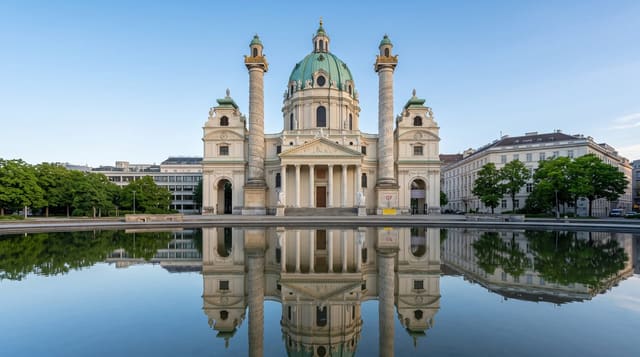
- The Art Nouveau church - Max Hegele's St Charles Borromeo at the centre.
When to go
All year; autumn for the atmosphere, 1 November for All Saints. Half a day.
Practical notes
Distances are long - take the internal bus or a bicycle. Sections close at different hours by season. It is a working cemetery with funerals in progress; behave accordingly.
Nearby
Simmering and the Gasometer buildings are close; central Vienna is twenty minutes by tram.
Key facts
Source: Wikidata, item Q240744, read on 18 October 2026.
What to pack for Vienna Central Cemetery
Chosen from what this place is for. Tap a kit for the full checklist.
- Padded shorts - The one thing that makes a full day in the saddle bearable. Find on Amazon
- Comfortable walking shoes - Sightseeing means kilometres of pavement and cobbles daily. Find on Amazon
- Helmet - Bring your own if you have a good one; rentals vary wildly. Find on Amazon
- A slim anti-theft daypack - Zips that close properly; keep it in front in crowds and on transit. Find on Amazon
Some links on this page are Amazon affiliate links - if you buy through them we may earn a small commission at no extra cost to you.
All packing kitsPlan your trip
Where to start if Vienna Central Cemetery is going on the list.
Booking links on this page are affiliate links - if you book through them we may earn a small commission at no extra cost to you. It never changes what we write about a place.
Opening times, ticket prices and seasonal closures change - check the official source before you go: official site.