St Paul's Abbey, Lavanttal
A Benedictine abbey in Carinthia holding one of the largest private art and manuscript collections in Austria.
Updated 18 October 2026
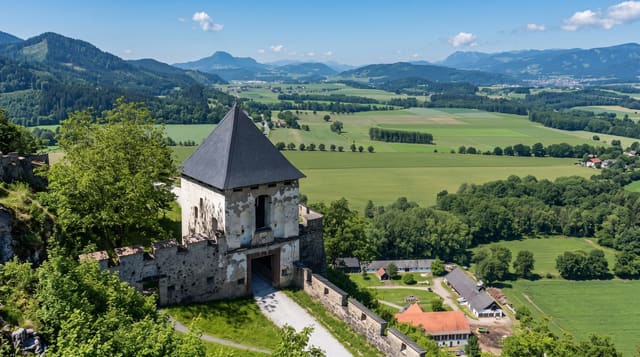
St Paul was founded in 1091 by Engelbert of Spanheim, dissolved by Joseph II in 1782, and refounded in 1809 by Benedictines expelled from St Blasien in the Black Forest - who arrived bringing their library and collections with them, which is why a rural Carinthian abbey holds material of European weight. The holdings run to something over a hundred and eighty thousand volumes with early manuscripts and incunabula, along with paintings attributed to or associated with Dürer, Rubens, Van Dyck, Kremser Schmidt and others, coins, textiles and a natural history cabinet, presented in a museum wing with a large annual themed exhibition. The Romanesque church survives with frescoes. The abbey runs a grammar school and calls itself the treasure house of Carinthia, which for once is not overstated.
History
Engelbert I of Sponheim, Margrave of Istria from 1090, founded the abbey on the site of a castle and of a church consecrated by Archbishop Hartwig of Salzburg in 991; a supporter of the pope in the Investiture Controversy, he had lost his county in the Puster valley and retired to the Carinthian lands his father Siegfried had gained by marrying Richgard. In 1085 he sent his son Engelbert II to Abbot William of Hirsau, who returned with twelve Benedictine monks, and on 1 May 1091 they received the church and monastery of St. Paul with large estates in the Lavant valley, Styria and Friuli; Engelbert himself joined the community in April 1095. The abbey was largely rebuilt in Baroque style in the 17th century, dissolved by Joseph II in 1782 and resettled in 1809 by monks from St. Blasien in the Black Forest (Wikipedia, Saint Paul's Abbey, Lavanttal).
The main sights
- A transplanted library - collections brought from St Blasien by refounding monks in 1809.
- Old master paintings - works associated with Dürer, Rubens and Van Dyck.
- A Romanesque church - twelfth-century fabric with surviving frescoes.
- A yearly themed exhibition - the museum wing's changing large show.
When to go
April to October; the museum has seasonal hours. Half a day.
Good to know
The museum closes in winter and the annual exhibition changes what is shown. Attributions on some paintings are debated. Much of the abbey is a working school and closed.
Nearby
Wolfsberg and the Lavanttal are north; the Styrian border is east.
Key facts
Source: Wikidata, item Q871657, read on 18 October 2026.
What to pack for St Paul's Abbey, Lavanttal
Chosen from what this place is for. Tap a kit for the full checklist.
- Comfortable walking shoes - Sightseeing means kilometres of pavement and cobbles daily. Find on Amazon
- Modest clothing - Shoulders and knees covered - the single most common requirement. Find on Amazon
- A slim anti-theft daypack - Zips that close properly; keep it in front in crowds and on transit. Find on Amazon
- A scarf or shawl - To cover the head or shoulders on entry; women especially at mosques. Find on Amazon
Some links on this page are Amazon affiliate links - if you buy through them we may earn a small commission at no extra cost to you.
All packing kitsPlan your trip
Where to start if St Paul's Abbey, Lavanttal is going on the list.
Booking links on this page are affiliate links - if you book through them we may earn a small commission at no extra cost to you. It never changes what we write about a place.
Opening times, ticket prices and seasonal closures change - check the official source before you go: official site.