Obir Dripstone Caves
Caves found by lead miners in 1870 under the Hochobir, entered through a mine tunnel and lit as a designed show.
Updated 2 October 2026
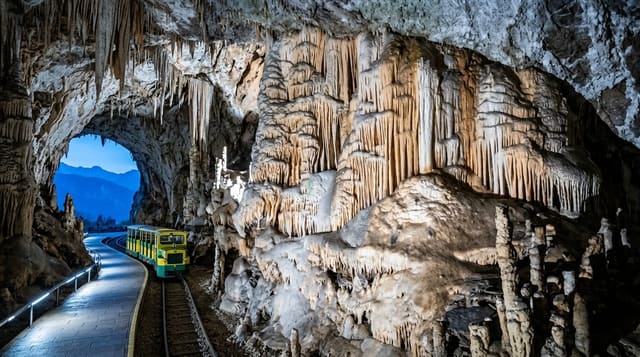
The Obir caves were found by accident: miners driving galleries for lead and zinc in the Hochobir in 1870 broke into a natural cavity, and further chambers were opened as the workings extended. The mine closed in 1903 and the caves were left until they were developed for visitors in the 1990s, which is why the entry is through a mine adit rather than a natural mouth - a bus takes you up the mountain road and you walk in through the tunnel. What was done inside distinguishes it from most show caves: the lighting was designed as a scheme rather than simply installed, with sequences that reveal chambers gradually and a section on the geology and on earthquakes, since a seismographic station operates in the stable conditions underground.
The landscape
- A mine tunnel entrance - the way in, driven for lead and zinc in the 1870s.
- Designed lighting - sequences revealing the chambers rather than flat floodlight.
- Dripstone formations - the flowstone and columns the caves were developed for.
- A seismographic station - working in the stable conditions underground.
When to go
April to October; the caves hold around eight degrees year-round. Half a day.
Practical notes
Guided tours only, running to a timetable, and it is cold inside - bring a jacket. Access is by shuttle bus from the ticket office, which adds time. Tours are largely in German.
Nearby
Bad Eisenkappel and the Trögerner Klamm are close; Slovenia is over the border.
Key facts
Source: Wikidata, item Q1303875, read on 18 October 2026.
What to pack for Obir Dripstone Caves
Chosen from what this place is for. Tap a kit for the full checklist.
- Head torch + spare batteries - Hands-free light is essential; caves are truly dark. Find on Amazon
- Grippy closed shoes - Cave floors are wet, muddy and slick with formations. Find on Amazon
- A warm layer - Many caves sit near 10°C year-round, even in a hot country. Find on Amazon
- Gloves - Protect your hands on rough rock and cold metal handrails. Find on Amazon
Some links on this page are Amazon affiliate links - if you buy through them we may earn a small commission at no extra cost to you.
All packing kitsPlan your trip
Where to start if Obir Dripstone Caves is going on the list.
Booking links on this page are affiliate links - if you book through them we may earn a small commission at no extra cost to you. It never changes what we write about a place.
Opening times, ticket prices and seasonal closures change - check the official source before you go: official site.