Seegrotte Hinterbruhl
Europe's largest underground lake, in a flooded gypsum mine that later built jet aircraft fuselages.
Updated 29 August 2026
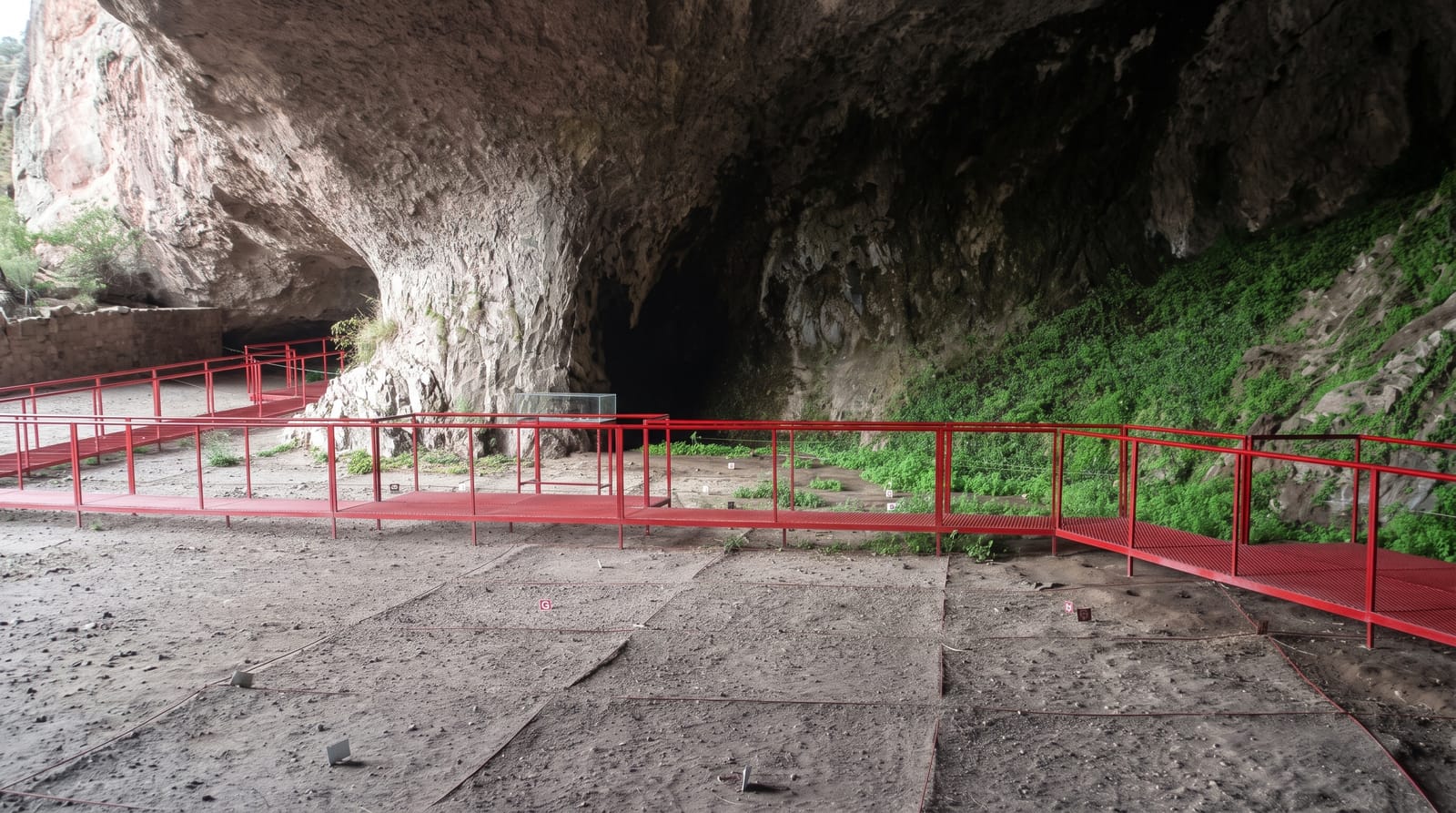
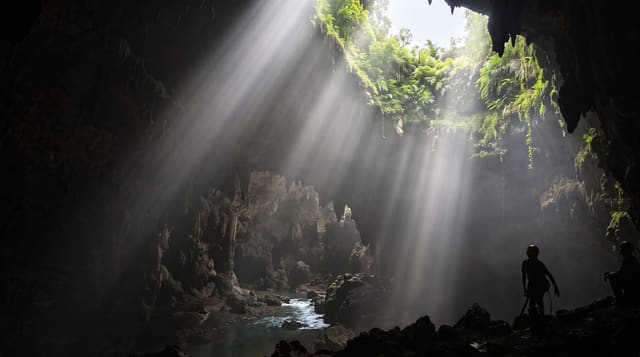
The Seegrotte is a gypsum mine worked from 1848 until 1912, when a blasting shot broke into a water-bearing layer and some twenty million litres flooded the lower workings overnight, creating what is described as the largest underground lake in Europe, about six thousand square metres of water in a rock chamber. Tours go through the galleries on foot and then out onto the lake in a flat-bottomed boat. The mine has a second history: in 1943 the Germans drained and used it as a dispersed factory, where forced labourers built fuselages for the Heinkel He 162, a late-war jet fighter, and a replica hangs in the chamber where the work was done. The temperature underground is around nine degrees year-round.
What to look for
- Europe's largest underground lake - the flooded lower gallery, crossed by boat.
- A gypsum mine - worked from 1848 until the 1912 flooding stopped it.
- A wartime aircraft factory - where forced labour built He 162 fuselages.
- A replica jet fighter - hanging in the chamber where they were assembled.
When to go
All year; around nine degrees inside in any season. Two hours.
What to expect
Guided tours only, running to a timetable, and it is cold - bring a jacket. The wartime forced-labour history is part of the tour and is grim. Boat trips can be suspended for water levels.
Nearby
Mödling and the Vienna Woods are alongside; Vienna is half an hour north.
What to pack for Seegrotte Hinterbruhl
Chosen from what this place is for. Tap a kit for the full checklist.
- Head torch + spare batteries - Hands-free light is essential; caves are truly dark. Find on Amazon
- Shelter suited to the place - Tent, tarp or hut booking - match it to the terrain and rules. Find on Amazon
- Grippy closed shoes - Cave floors are wet, muddy and slick with formations. Find on Amazon
- A warm sleeping bag + mat - Rated a little colder than you expect the nights to be. Find on Amazon
Some links on this page are Amazon affiliate links - if you buy through them we may earn a small commission at no extra cost to you.
All packing kitsPlan your trip
Where to start if Seegrotte Hinterbruhl is going on the list.
Booking links on this page are affiliate links - if you book through them we may earn a small commission at no extra cost to you. It never changes what we write about a place.
Opening times, ticket prices and seasonal closures change - check the official source before you go: official site.