Jenolan Caves
A large limestone cave system west of the Blue Mountains, with guided show caves, a natural rock arch and an unusually old dated karst.
Updated 18 October 2026
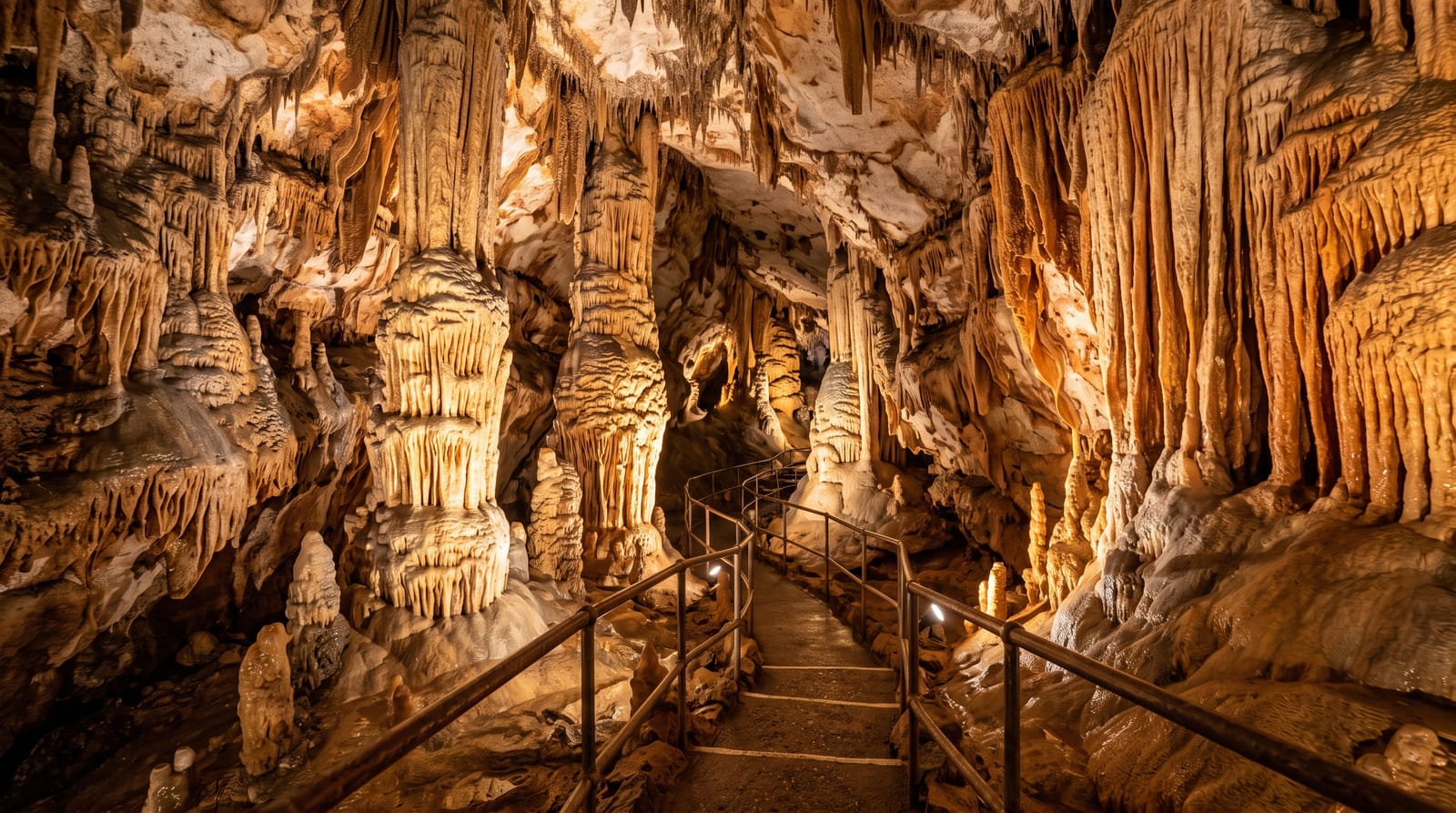
AI illustration
Jenolan is a limestone system in the ranges west of the Blue Mountains, and the clay deposits in it have been dated to an age that makes it one of the oldest open cave systems known. Above ground, the Grand Arch is a cavern so large that the access road once ran straight through it. The whole reserve has been closed to visitors since April 2024, when storm damage cut the access road, and reopening is planned for early 2027, so there is no visit to make until then. Below, around a dozen show caves are normally open, each on its own guided tour: Lucas with its high chambers, Orient with dense formations, River with pools and low passages, Imperial as the easiest option. Outside, the Blue Lake holds an unnaturally blue colour from dissolved limestone, and platypus are sometimes seen there in the early morning.
History
The area is significant to the Gundungurra and Wiradjuri peoples, and a Gundungurra creation story tells of a struggle between the eel-like Gurangatch and the quoll Mirrigan; they carried the sick into the caves to bathe in the underground water. James Whalan is generally said to have found the caves in 1838, or perhaps 1841, while tracking the cattle thief McKeown, and his brother Charles brought the first visitors in the 1840s; the Fish River Caves, as they were called, were reserved by the government of New South Wales in 1866, only the second area in the world set aside for conservation, and the first keeper, Jeremiah Wilson, appointed the next year, found the Imperial, Jersey and Jubilee caves among others (Wikipedia, Jenolan Caves).
What you'll find
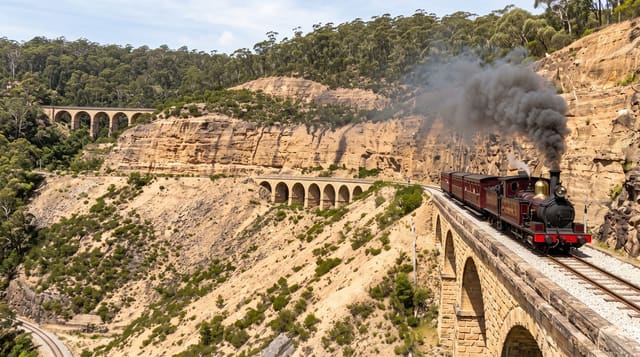
- The Grand Arch - a vast open cavern that the road once passed directly through.
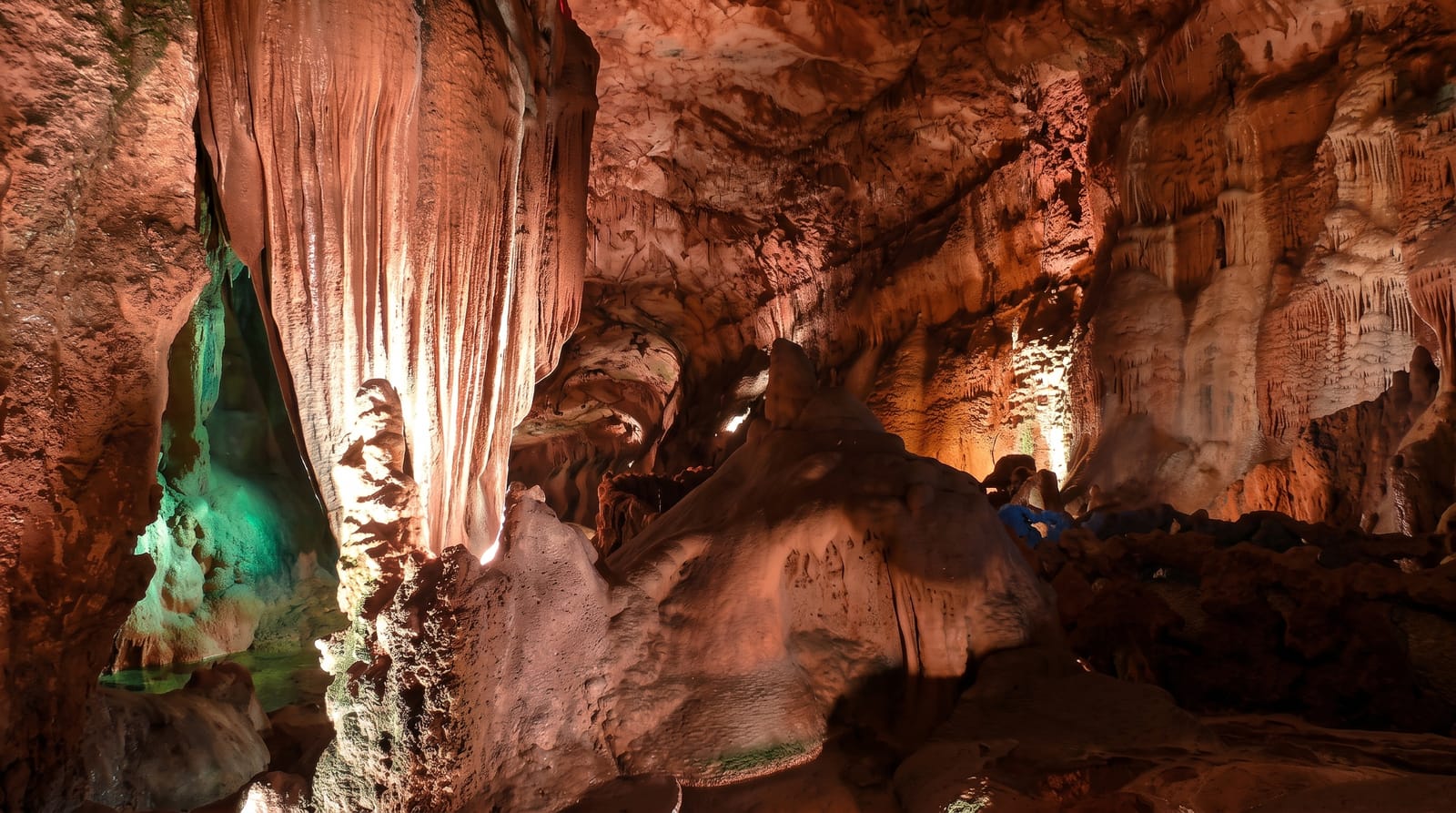
- Lucas Cave - the largest chambers and the most-taken tour, heavy on stairs.
- Orient Cave - dense columns and shawls on a slower, more decorated route.
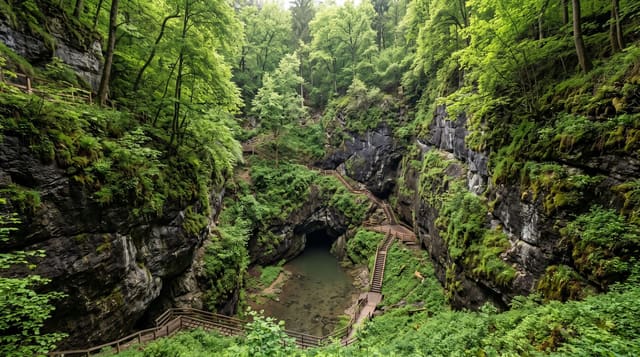
- The Blue Lake - a limestone-coloured pool outside where platypus occasionally surface.
When to go
The caves hold a steady cool temperature year-round, so the season matters mainly for the drive in. Weekends and school holidays sell out the popular tours, and midweek mornings are much quieter. Check road access before travelling, as the approach roads have been subject to closures for repair work at various times.
Practical notes
Every cave is guided and timed, so you go at the group's pace and cannot linger. Tours involve hundreds of steps, tight sections and low headroom, which rules out some visitors entirely. The access road is narrow and steep with sharp bends. Photography in the low light is harder than most people expect.
Nearby
Katoomba and the Blue Mountains lookouts are to the east, with Oberon and the Kanangra country to the west.
Key facts
Source: Wikidata, item Q1670250, read on 18 October 2026.
What to pack for Jenolan Caves
Chosen from what this place is for. Tap a kit for the full checklist.
- Head torch + spare batteries - Hands-free light is essential; caves are truly dark. Find on Amazon
- Grippy closed shoes - Cave floors are wet, muddy and slick with formations. Find on Amazon
- A warm layer - Many caves sit near 10°C year-round, even in a hot country. Find on Amazon
- Gloves - Protect your hands on rough rock and cold metal handrails. Find on Amazon
Some links on this page are Amazon affiliate links - if you buy through them we may earn a small commission at no extra cost to you.
All packing kitsPlan your trip
Where to start if Jenolan Caves is going on the list.
Booking links on this page are affiliate links - if you book through them we may earn a small commission at no extra cost to you. It never changes what we write about a place.
Opening times, ticket prices and seasonal closures change - check the official source before you go: official site.