Lurgrotte
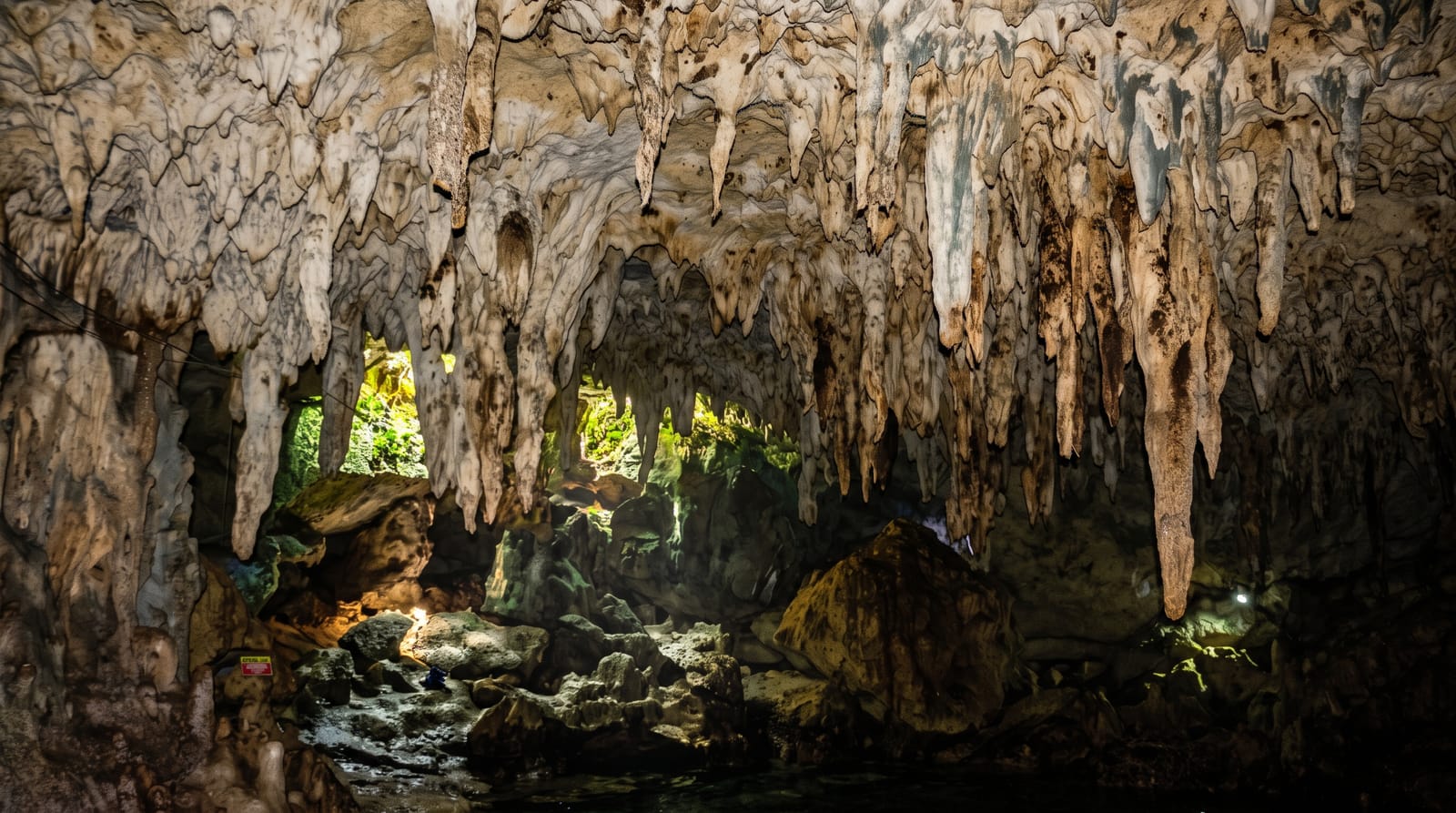
Austria's largest active water cave, running under a mountain between two villages, with a huge hanging stalactite.
Updated 18 October 2026
The Lurgrotte is a through-cave carved by the Lurbach, which sinks at Semriach, runs some five kilometres underground through limestone and emerges at Peggau in the Mur valley, and it is the largest active water cave in Austria - active meaning the stream is still in it and still working. Both ends are open for guided tours, running different sections. It is known for large chambers and for the Riesen, a stalactite of about thirteen metres described as among the biggest free-hanging in Europe. The cave has a history of drama: in 1894 an expedition led by Max Brunello was trapped by rising water for nine days before being rescued, and flooding has repeatedly damaged the paths and closed sections since, including the through-route between the two ends.
History
Finds in and around the cave show people here since the Palaeolithic, among them a reindeer bone with tool marks radiocarbon dated to about 52,000 years ago. The Italian caver Max Brunello first explored it scientifically on 1 April 1894, finding its lower part, and on 29 April seven cavers who went in despite heavy rain were trapped by a flash flood until a rescue approved by Emperor Franz Joseph pumped out the water; the Austrian Tourist Club surveyed 1,002 metres of passages in February 1905, Hermann Mayer and his father opened the Peggau part to visitors in the 1920s, a route between the two entrances was blasted on 26 November 1924, and the first through crossing was made in 1935 (Wikipedia, Lurgrotte).
What you'll find
- An active water cave - the Lurbach still running through the system.
- The Riesen stalactite - about thirteen metres, among Europe's largest hanging.
- Large chambers - the halls the tours from both ends pass through.
- Two entrances - Peggau and Semriach, running different sections.
When to go
All year; the cave holds a constant temperature around ten degrees. Half a day.
Practical notes
Bring a warm layer - it is cold inside year-round. Tours are guided only and run to a timetable. Flooding closes sections; the full through-trip between the ends has been unavailable at times.
Nearby
Peggau and the Mur valley are below; Graz is south.
Key facts
Source: Wikidata, item Q1275277, read on 18 October 2026.
What to pack for Lurgrotte
Chosen from what this place is for. Tap a kit for the full checklist.
- Head torch + spare batteries - Hands-free light is essential; caves are truly dark. Find on Amazon
- Shelter suited to the place - Tent, tarp or hut booking - match it to the terrain and rules. Find on Amazon
- Grippy closed shoes - Cave floors are wet, muddy and slick with formations. Find on Amazon
- A warm sleeping bag + mat - Rated a little colder than you expect the nights to be. Find on Amazon
Some links on this page are Amazon affiliate links - if you buy through them we may earn a small commission at no extra cost to you.
All packing kitsPlan your trip
Where to start if Lurgrotte is going on the list.
Booking links on this page are affiliate links - if you book through them we may earn a small commission at no extra cost to you. It never changes what we write about a place.
Opening times, ticket prices and seasonal closures change - check the official source before you go: official site.