Ars Electronica Center
A museum of digital art and science on the Danube bank in Linz, built around a projection room where images cover wall and floor.
Updated 18 October 2026
AI illustration
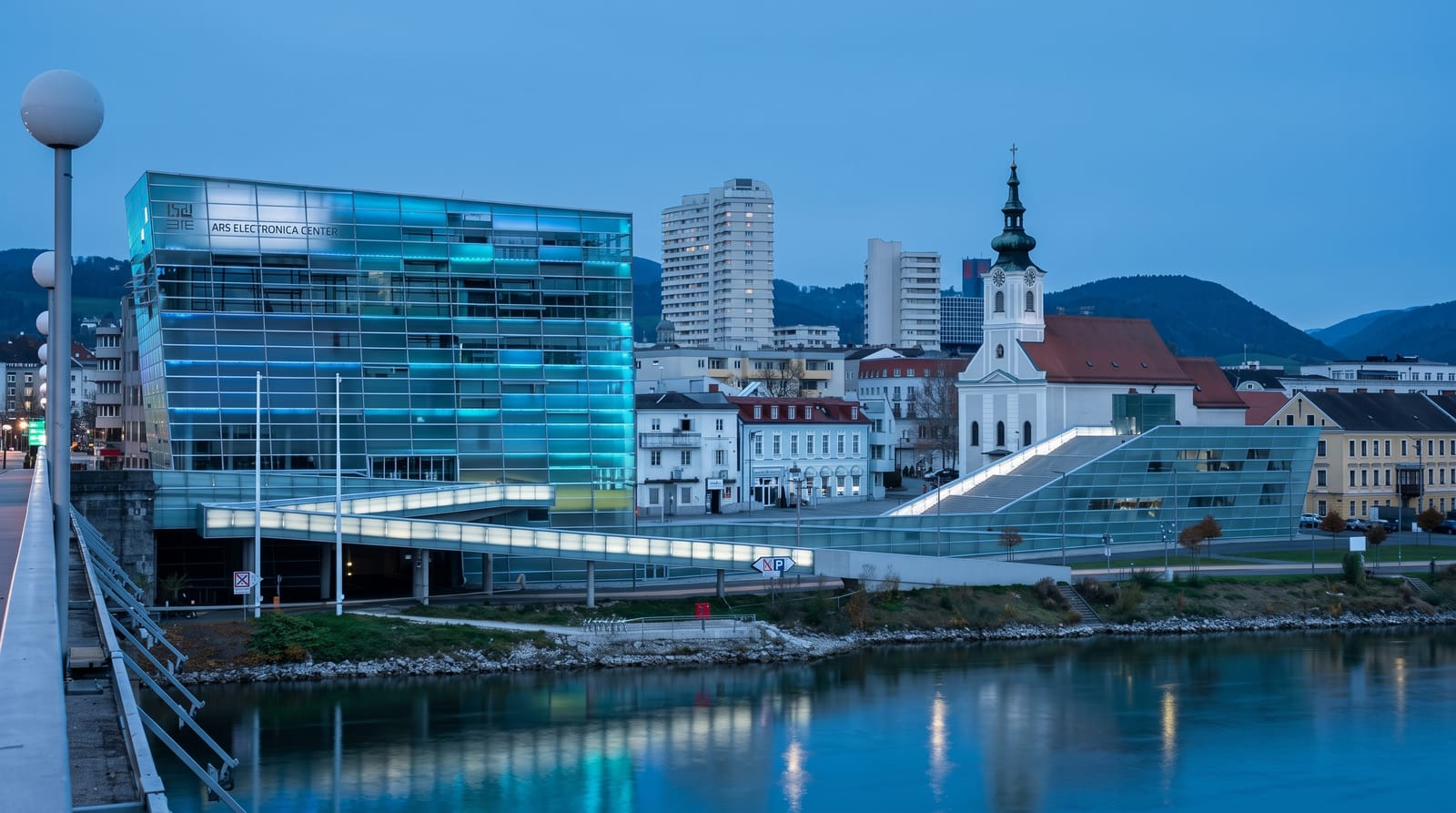
Ars Electronica began in Linz in 1979 as a festival about art and technology, and the museum that grew out of it opened in 1996 and was remodelled in 2009 as this glass box on the north bank of the Danube. The skin is covered in LEDs and changes colour after dark, which is how most people in Linz recognise it. Inside, the exhibits are hands-on and change often: robotics, machine learning, biotechnology, prosthetics, work made in the labs upstairs. The room people remember is Deep Space, where very large images are projected onto the wall and the floor at the same time, in scheduled sessions through the day.
History
Ars Electronica began with its first festival in September 1979, founded by Hannes Leopoldseder, Hubert Bognermayr, Herbert W. Franke and Ulrich Rützel; the festival was held every two years at first and every year since 1986, and the Prix Ars Electronica has been awarded since 1987. The Ars Electronica Center opened with its Futurelab in 1996 and was remodelled in 2009 (Wikipedia, Ars Electronica).
Highlights
- Deep Space - the double projection room, wall and floor, with timed sessions on art, space and microscopy.
- The lab floors - biotechnology, robotics and machine learning benches where things can be handled.
- The LED facade - the colour-shifting skin, best seen from the old town across the river.
- The festival week - the September programme that spreads out across venues in the city.
When to go
Open all year except Mondays. The building looks best after dark when the facade is lit, so a late afternoon visit covers both the exhibits and the exterior. Deep Space sessions run to a timetable posted at the entrance, so pick a slot on arrival. The festival takes over Linz for several days each September and needs separate booking.
Practical notes
Much of it is pitched at school groups and can be loud and crowded on weekday mornings. Interactive exhibits break and stay broken for a while. Deep Space content is repetitive if you sit through several sessions, and there is no seating in it, so you stand or lie on the floor. Labelling is thorough in German and thinner in English.
Nearby
The Lentos art museum and the Linz old town are across the Nibelungen bridge.
Key facts
Source: Wikidata, item Q703964, read on 18 October 2026.
What to pack for Ars Electronica Center
Chosen from what this place is for. Tap a kit for the full checklist.
- Comfortable walking shoes - Sightseeing means kilometres of pavement and cobbles daily. Find on Amazon
- A slim anti-theft daypack - Zips that close properly; keep it in front in crowds and on transit. Find on Amazon
- A refillable water bottle - Many cities have public fountains; save money and plastic. Find on Amazon
- A light layer + compact umbrella - For museum air-con and a sudden shower. Find on Amazon
Some links on this page are Amazon affiliate links - if you buy through them we may earn a small commission at no extra cost to you.
All packing kitsPlan your trip
Where to start if Ars Electronica Center is going on the list.
Booking links on this page are affiliate links - if you book through them we may earn a small commission at no extra cost to you. It never changes what we write about a place.
Opening times, ticket prices and seasonal closures change - check the official source before you go: official site.