The Albertina
A Habsburg palace above the Ring holding one of the largest graphic collections anywhere, plus modern painting and the original state rooms.
Updated 18 October 2026
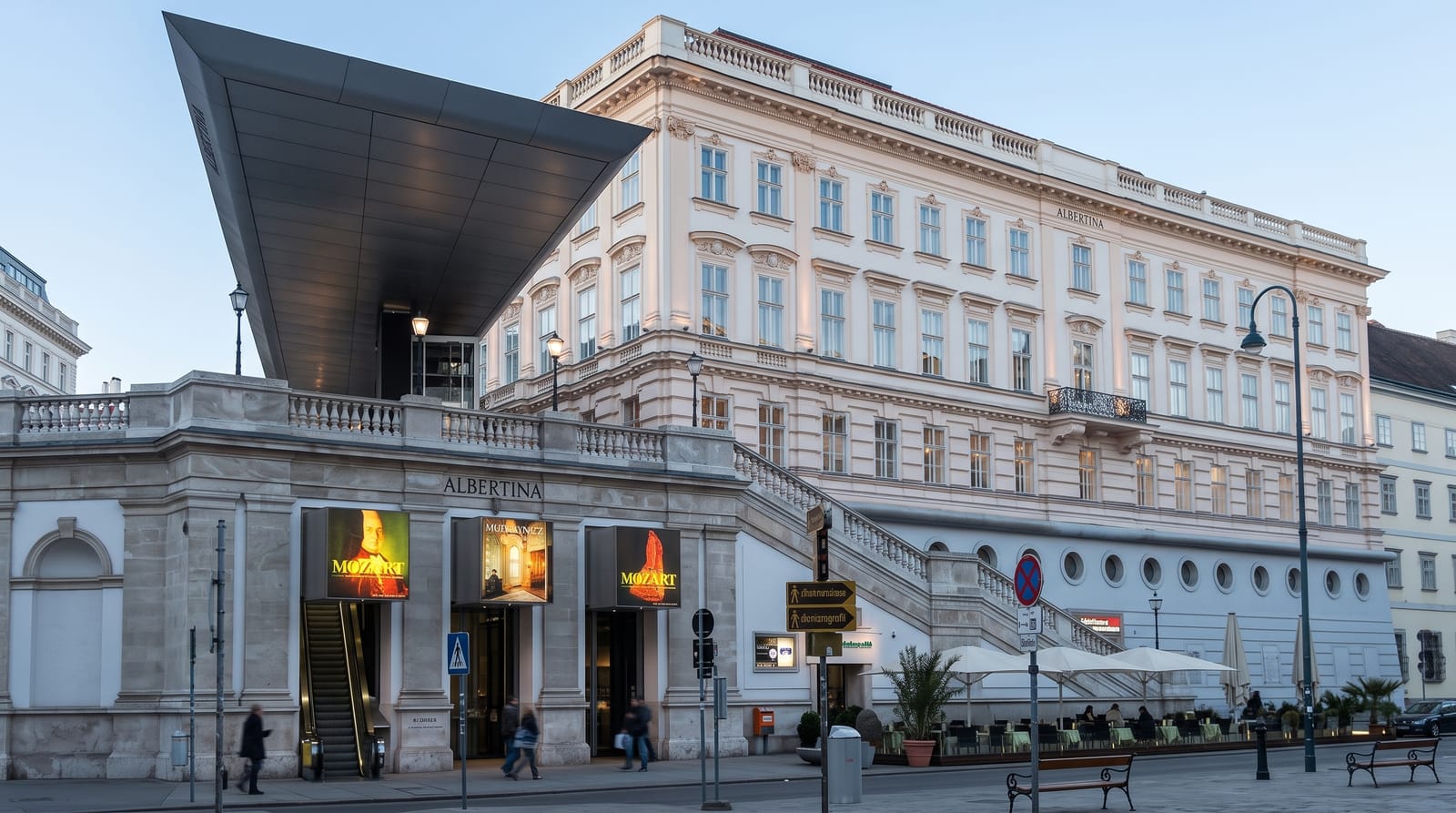
AI illustration
The Albertina sits on the last surviving section of Vienna's old bastion wall, in a palace given over to Duke Albert of Saxe-Teschen in the late eighteenth century. His print collection is the core of the place: around a million prints and tens of thousands of drawings, including Duerer's watercolour of a hare and his study of praying hands. Because paper cannot live under light, those sheets are shown rarely and in rotation, and what hangs permanently is the Batliner collection of painting, from Monet through to Picasso and the later twentieth century. The Habsburg state rooms on the first floor are open too, restored with their furniture back in place. A second site, Albertina Modern, opened at Karlsplatz in 2020.
History
The palace stands on the Augustinian Bastion, one of the last pieces of Vienna's fortifications, where the court building office of the later 17th century stood; in 1744 its director, Count Emanuel Teles Silva-Tarouca, refurbished it as his palace. Albert Casimir, Duke of Teschen, took it over as his residence and brought his collection of graphic art from Brussels, where he had governed the Habsburg Netherlands, a collection begun with Count Giacomo Durazzo, who in 1776 gave nearly 1,000 works to the duke and his wife Maria Christina. The state took over the building and collection in early 1919, united the prints and drawings with those of the former imperial court library in 1920, and named the building the Albertina in 1921 (Wikipedia, Albertina).
What to look for
- The Duerer sheets - the hare and the praying hands, shown only occasionally and otherwise as facsimiles.
- The Batliner collection - the permanent hang, French impressionism through to the later twentieth century.
- The state rooms - the Habsburg apartments on the first floor with their original furniture.
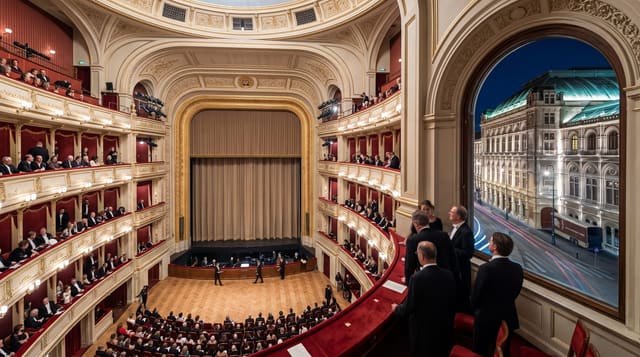
- The bastion terrace - the ramp over the old city wall, looking across to the opera house.
When to go
Open daily, with late opening on some evenings. Check what is actually on the walls before going, because the drawings rotate and the famous ones are usually in storage. Weekday mornings are calmest. Big temporary shows draw queues at weekends and in the school holidays, and the ticket desk backs up by midday.
Good to know
People come for the Duerer and find a facsimile on the wall; this is the normal condition of a works-on-paper museum, not bad luck. The permanent painting collection is good but not deep, and the ticket price sits at the top of the Vienna range. Rooms are small and congested when a headline exhibition is running.
Nearby
The opera house, the Hofburg and the Burggarten are all within a few minutes.
Key facts
Source: Wikidata, item Q371908, read on 18 October 2026.
What to pack for The Albertina
Chosen from what this place is for. Tap a kit for the full checklist.
- Comfortable walking shoes - Sightseeing means kilometres of pavement and cobbles daily. Find on Amazon
- A slim anti-theft daypack - Zips that close properly; keep it in front in crowds and on transit. Find on Amazon
- A refillable water bottle - Many cities have public fountains; save money and plastic. Find on Amazon
- A light layer + compact umbrella - For museum air-con and a sudden shower. Find on Amazon
Some links on this page are Amazon affiliate links - if you buy through them we may earn a small commission at no extra cost to you.
All packing kitsPlan your trip
Where to start if The Albertina is going on the list.
Booking links on this page are affiliate links - if you book through them we may earn a small commission at no extra cost to you. It never changes what we write about a place.
Opening times, ticket prices and seasonal closures change - check the official source before you go: official site.