Tower Hill Wildlife Reserve
A wildlife reserve inside a volcanic crater, replanted from a colonial painting after a century of clearing.
Updated 18 October 2026
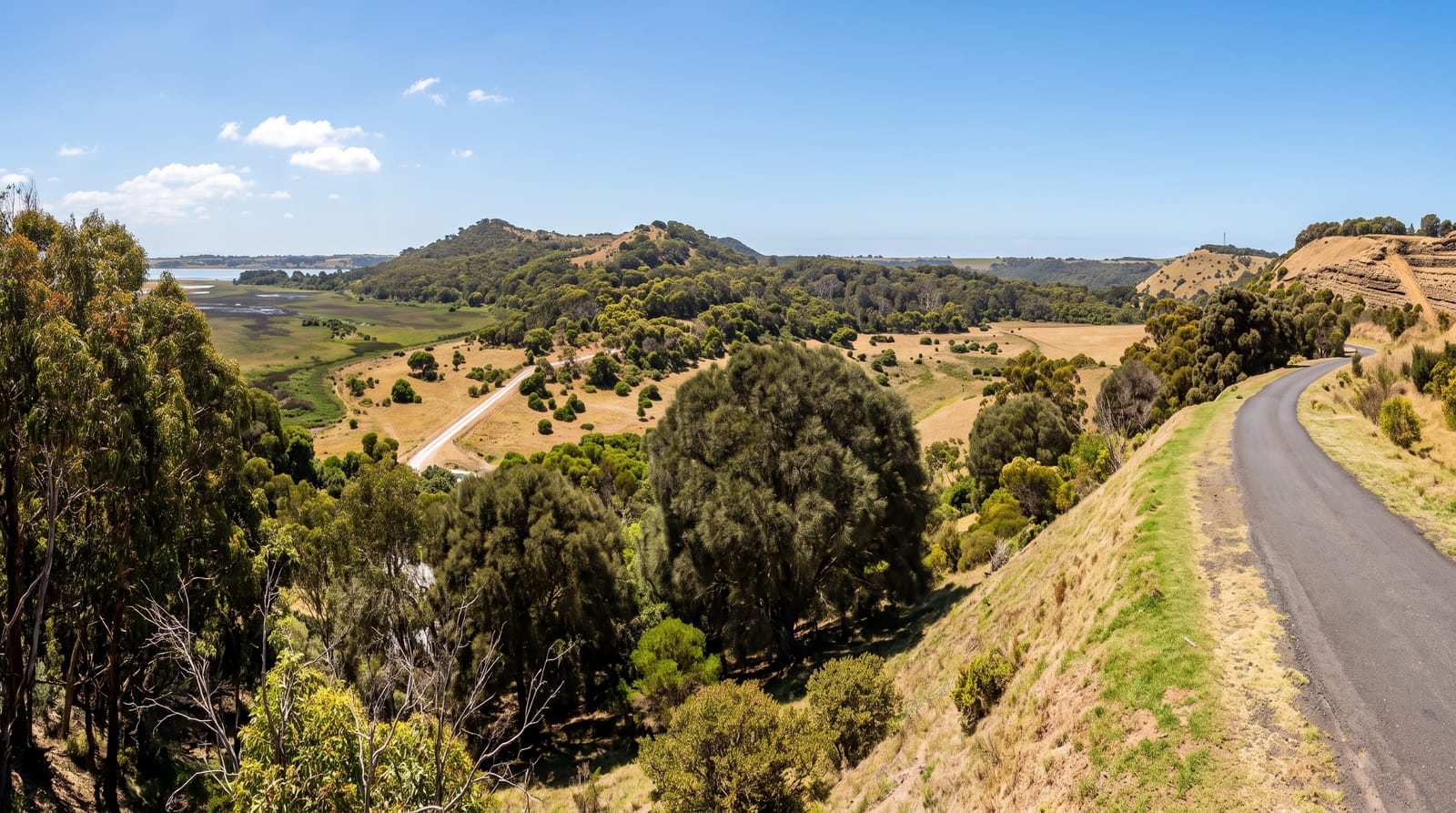
AI illustration
Tower Hill is a nested maar volcano that erupted at least thirty-four thousand years ago, and an axe head found beneath the ash shows that people were already living here. The crater holds a lake with islands, and by the twentieth century farming had stripped it bare. Replanting from the 1960s used an unusual reference: an 1855 painting by Eugene von Guerard showing the crater's original vegetation in enough botanical detail to guide the species list. The result is a restored bushland now dense with koalas, emus, kangaroos and waterbirds, walked on several short tracks. The visitor centre, designed by Robin Boyd, runs Aboriginal cultural tours with Worn Gundidj guides.
History
Kitchen middens at Tower Hill hold Tasmanian devil bones 5,000 years old, and dating published in 2020 showed that the volcano erupted at least 34,000 years ago, while an axe head found in 1947 shows that people were here before the eruptions; the Koroitgundidj people, for whom the area was a rich source of food, lived around it. Settlers cleared and quarried the land, and although the Tower Hill National Park Act of 1892 made it Victoria's first national park, it kept degrading until 1961, when it became a State Game Reserve and replanting began, guided by an 1855 painting by Eugene von Guerard; the English name may come from the hill's likeness to a castle in the 1840s, or from a sailor from Glasgow (Wikipedia, Tower Hill Wildlife Reserve).
What's there
- The crater and lake - the volcanic bowl with its islands and water.
- The wildlife - koalas, emus, kangaroos and waterbirds through the reserve.
- The replanting story - vegetation restored using an 1855 painting as the guide.
- The cultural tours - Worn Gundidj guides interpreting the country.
When to go
September to May; wildlife is most visible in the early morning and late afternoon. Emus wander the roads and car park. Cultural tours run on a schedule and should be booked. Winter is cold and wet but quiet.
Good to know
Emus approach vehicles and people looking for food, which can be intimidating and should not be encouraged. The tracks are short and the reserve can be seen in a couple of hours. Facilities are limited outside the visitor centre hours.
Nearby
Warrnambool lies east; Port Fairy is a short drive west.
Key facts
Source: Wikidata, item Q7829691, read on 18 October 2026.
What to pack for Tower Hill Wildlife Reserve
Chosen from what this place is for. Tap a kit for the full checklist.
- Broken-in walking shoes or boots - Grip and ankle support matter more than looks; never hike in brand-new boots. Find on Amazon
- Binoculars - The single best wildlife tool - even a compact pair transforms a sighting. Find on Amazon
- Layers + a waterproof shell - Mountain weather turns fast; a packable rain jacket saves the day. Find on Amazon
- A zoom camera or long lens - Animals rarely come close; reach beats megapixels. Find on Amazon
Some links on this page are Amazon affiliate links - if you buy through them we may earn a small commission at no extra cost to you.
All packing kitsPlan your trip
Where to start if Tower Hill Wildlife Reserve is going on the list.
Booking links on this page are affiliate links - if you book through them we may earn a small commission at no extra cost to you. It never changes what we write about a place.
Opening times, ticket prices and seasonal closures change - check the official source before you go: official site.


