St Kilda
Melbourne's bayside suburb of cake shops, a 1912 amusement park and a penguin colony living in the pier breakwater.
Updated 18 October 2026

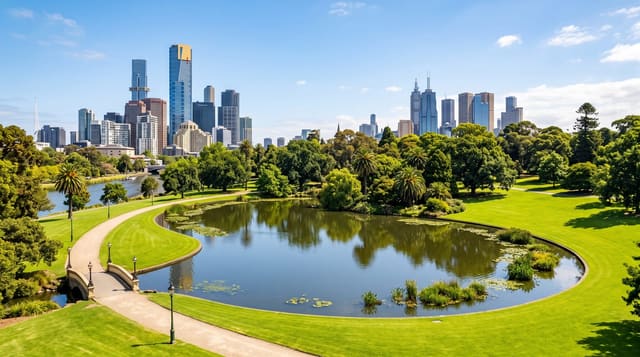
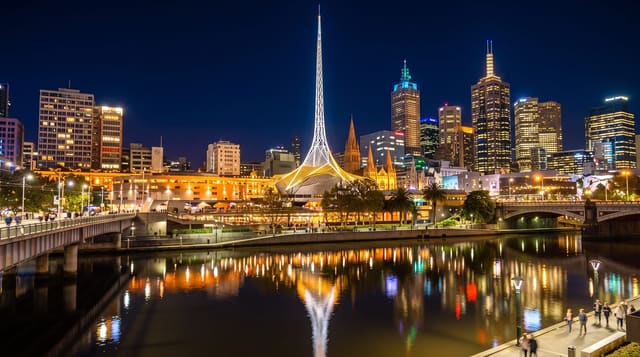
AI illustration
St Kilda was Melbourne's seaside resort in the nineteenth century, declined into a rough inner suburb through the twentieth, and has since gentrified without losing its edges. Luna Park, opened in 1912 and entered through a huge open mouth, still runs the Scenic Railway, a wooden roller coaster from the same year with a brakeman riding on board, claimed as the world's oldest continually operating roller coaster. Acland Street holds a row of central European cake shops from the postwar Jewish migration. At the end of the pier, a colony of little penguins has settled in the breakwater rocks and comes ashore at dusk, watched from a boardwalk with volunteer guides present.
History
People lived in the area, Euroe Yroke, an estimated 31,000 to 40,000 years ago, leaving middens and huts around Albert Park lake, and corroborees were held at a tree that still stands at St Kilda Junction. Benjamin Baxter, the first European settler, took up a grazing lease around 1839, Melbourne's first quarantine station was set up here in 1840 for Scottish immigrants, and Charles La Trobe named the place in 1842 after the schooner Lady of St Kilda; its former master, James Ross Lawrence, bought the first block at the first land sale on 7 December 1842 and named Acland Street after his old employer, and from the 1850s to the 1880s St Kilda was a favoured suburb of Melbourne's wealthy (Wikipedia, St Kilda, Victoria).
What to look for
- Luna Park - the 1912 park and its wooden Scenic Railway coaster.
- The pier penguins - little penguins in the breakwater at dusk, free to watch.
- Acland Street cake shops - central European patisseries from the postwar era.
- The foreshore - the beach, palms and bay promenade.
When to go
October to April for the beach and warm evenings; penguins come ashore at dusk year-round, later in summer. Sunday markets run along the Esplanade. Summer weekends are extremely busy on the foreshore.
Before you go
The penguin viewing is free and unstructured, so people crowd the boardwalk; flash photography is banned and volunteers enforce it. The beach is not the best in Melbourne and the water quality drops after rain. The area has a visible street-drinking and drug scene at night.
Nearby
Brighton and its bathing boxes lie south; the city centre is fifteen minutes by tram.
Key facts
Source: Wikidata, item Q823531, read on 18 October 2026.
What to pack for St Kilda
Chosen from what this place is for. Tap a kit for the full checklist.
- Binoculars - The single best wildlife tool - even a compact pair transforms a sighting. Find on Amazon
- Comfortable walking shoes - Sightseeing means kilometres of pavement and cobbles daily. Find on Amazon
- Shelter suited to the place - Tent, tarp or hut booking - match it to the terrain and rules. Find on Amazon
- A zoom camera or long lens - Animals rarely come close; reach beats megapixels. Find on Amazon
Some links on this page are Amazon affiliate links - if you buy through them we may earn a small commission at no extra cost to you.
All packing kitsPlan your trip
Where to start if St Kilda is going on the list.
Booking links on this page are affiliate links - if you book through them we may earn a small commission at no extra cost to you. It never changes what we write about a place.
Opening times, ticket prices and seasonal closures change - check the official source before you go: official site.