Royal Botanic Gardens Victoria
Thirty-eight hectares of nineteenth-century landscape gardening beside the Yarra, with lakes, lawns and a fern gully.
Updated 18 October 2026

AI illustration
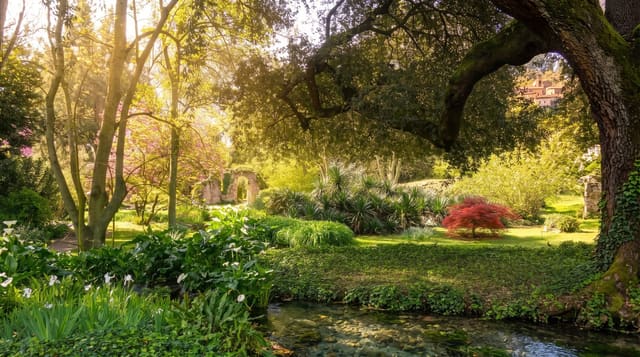
The Melbourne gardens were founded in 1846 and shaped from the 1870s by the director William Guilfoyle, who rejected the strict scientific grid then in fashion and laid out sweeping lawns, curving paths and vistas around an ornamental lake, a style that still governs the place. Around ten thousand species grow across thirty-eight hectares, including a fern gully, a cactus and succulent collection, a Californian garden and the Guilfoyle's Volcano water reservoir replanted with arid species. The Ian Potter Children's Garden, the Melbourne Observatory of 1863 and Aboriginal heritage walks run within the grounds. Outside the fence, the Tan running track circles the gardens and is a Melbourne institution.
History
In 1846 Charles La Trobe chose the site, marsh and swamp beside Government House and the Kings Domain, and the gardens, first given only two hectares, were greatly enlarged in 1857 when Ferdinand von Mueller became their first permanent director, founding the National Herbarium of Victoria. William Guilfoyle, director from 1873, reshaped them in the picturesque style of the time with tropical and temperate plants, and in 1877 Edmund Barton, later Australia's first prime minister, married Jane Ross here (Wikipedia, Royal Botanic Gardens Victoria).
What you'll find
- The ornamental lake - Guilfoyle's landscape with lawns, water and vistas.
- The fern gully - a shaded valley of tree ferns in the garden's centre.
- Guilfoyle's Volcano - the restored reservoir planted with arid species.
- The Melbourne Observatory - the 1863 buildings within the grounds.
When to go
September to May for the best display, with spring flowering and autumn colour; the gardens are open year-round from dawn to dusk with seasonal closing times. Summer evenings host outdoor cinema and theatre. Weekends bring crowds to the lawns.
Practical notes
The gardens are free but the grounds are large and take longer to walk than expected. Summer heat is intense on the open lawns. Events in summer close sections of the grounds and require tickets.
Nearby
The Shrine of Remembrance is across the road; the Yarra and the city centre lie north.
Key facts
Source: Wikidata, item Q101433843, read on 18 October 2026.
What to pack for Royal Botanic Gardens Victoria
Chosen from what this place is for. Tap a kit for the full checklist.
- Spare batteries + cards - Cold and long shoots drain power; never run out at the good light. Find on Amazon
- Loose, light, long clothing - Covering up beats bare skin in the desert - and locals dress this way for a reason. Find on Amazon
- Comfortable walking shoes - Sightseeing means kilometres of pavement and cobbles daily. Find on Amazon
- Modest clothing - Shoulders and knees covered - the single most common requirement. Find on Amazon
Some links on this page are Amazon affiliate links - if you buy through them we may earn a small commission at no extra cost to you.
All packing kitsPlan your trip
Where to start if Royal Botanic Gardens Victoria is going on the list.
Booking links on this page are affiliate links - if you book through them we may earn a small commission at no extra cost to you. It never changes what we write about a place.
Opening times, ticket prices and seasonal closures change - check the official source before you go: official site.