Maria Island
A car-free island of wombats, convict ruins and cliffs of naturally patterned sandstone called the Painted Cliffs.
Updated 18 October 2026
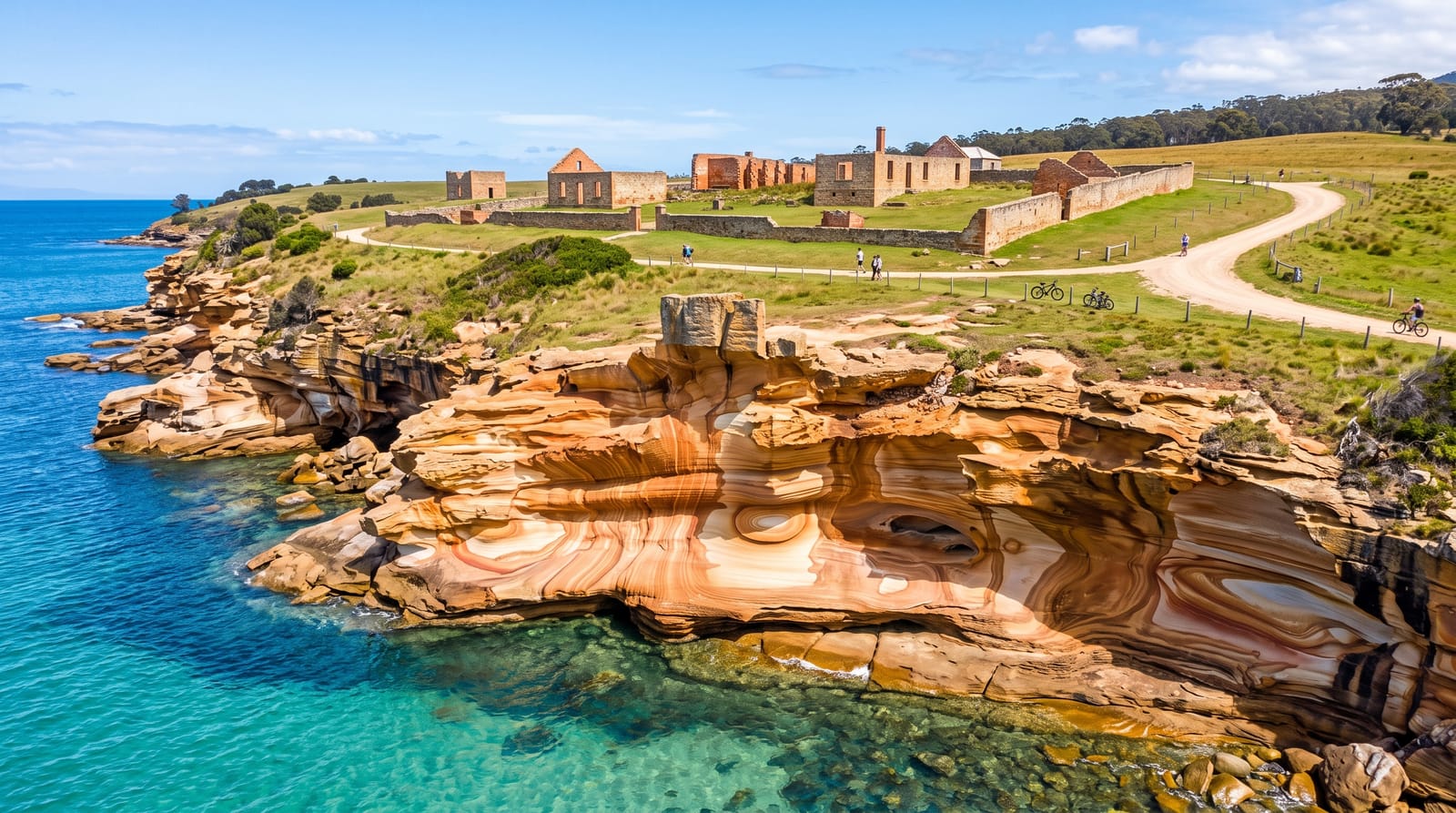
AI illustration
UNESCO World Heritage
Maria Island lies off Tasmania's east coast and has no cars, no shops and no permanent residents beyond staff, which gives it an unusual stillness. Darlington, the settlement at the ferry landing, was a convict probation station from 1825 and is inscribed on the UNESCO World Heritage list among the Australian Convict Sites, with its penitentiary, commissariat store and mess hall still standing and used as basic bunkhouse accommodation. The island functions as an ark for Tasmanian wildlife: wombats graze the old settlement lawns in numbers and are famously unbothered by people, along with Forester kangaroos, Cape Barren geese and a disease-free devil population introduced in 2012.
History
The Dutch explorer Abel Tasman named the island in 1642, after Maria van Diemen, wife of Anthony van Diemen, and the Tyreddeme band of the Oyster Bay people crossed to it regularly. Lieutenant Governor Arthur set up a penal settlement at Darlington in 1825, which was abandoned in 1832, and a second convict era began in 1842. In 1884 the Italian entrepreneur Diego Bernacchi took a long lease of the island, drawn by its promise for wine and silk, and set up a small cement works on its limestone; the National Portland Cement Company followed in 1920. The Tasmanian government bought back all the freehold land and proclaimed the national park in the early 1970s, and in November 2012 captive Tasmanian devils were released on the island (Wikipedia, Maria Island).
The landscape
- The wombats - grazing the settlement lawns, unusually approachable.
- The Painted Cliffs - sandstone patterned by iron oxide staining, best at low tide.
- The convict settlement - Darlington's World Heritage-listed buildings.
- Bishop and Clerk - a demanding climb to dolerite columns above the sea.
When to go
October to April for the best weather and ferry reliability; the Painted Cliffs need a low tide to walk to. Everything must be carried on, including food, and the ferry has luggage limits. Winter is cold with reduced sailings.
Before you go
There are no shops, cafés or vehicles; all food and supplies come with you. Accommodation is a bunkhouse in the old penitentiary or camping. Ferries are cancelled in rough weather. Wombats are wild and should not be touched or fed, despite how close they come.
Nearby
Triabunna is the ferry port; Freycinet lies north along the coast.
Key facts
Source: Wikidata, item Q2077754, read on 18 October 2026.
What to pack for Maria Island
Chosen from what this place is for. Tap a kit for the full checklist.
- Broken-in walking shoes or boots - Grip and ankle support matter more than looks; never hike in brand-new boots. Find on Amazon
- Binoculars - The single best wildlife tool - even a compact pair transforms a sighting. Find on Amazon
- Shelter suited to the place - Tent, tarp or hut booking - match it to the terrain and rules. Find on Amazon
- Layers + a waterproof shell - Mountain weather turns fast; a packable rain jacket saves the day. Find on Amazon
Some links on this page are Amazon affiliate links - if you buy through them we may earn a small commission at no extra cost to you.
All packing kitsPlan your trip
Where to start if Maria Island is going on the list.
Booking links on this page are affiliate links - if you book through them we may earn a small commission at no extra cost to you. It never changes what we write about a place.
Opening times, ticket prices and seasonal closures change - check the official source before you go: official site.


