Macquarie Island
A World Heritage island halfway to Antarctica, where the earth's mantle is being pushed up above sea level and penguins nest in millions.
Updated 18 October 2026
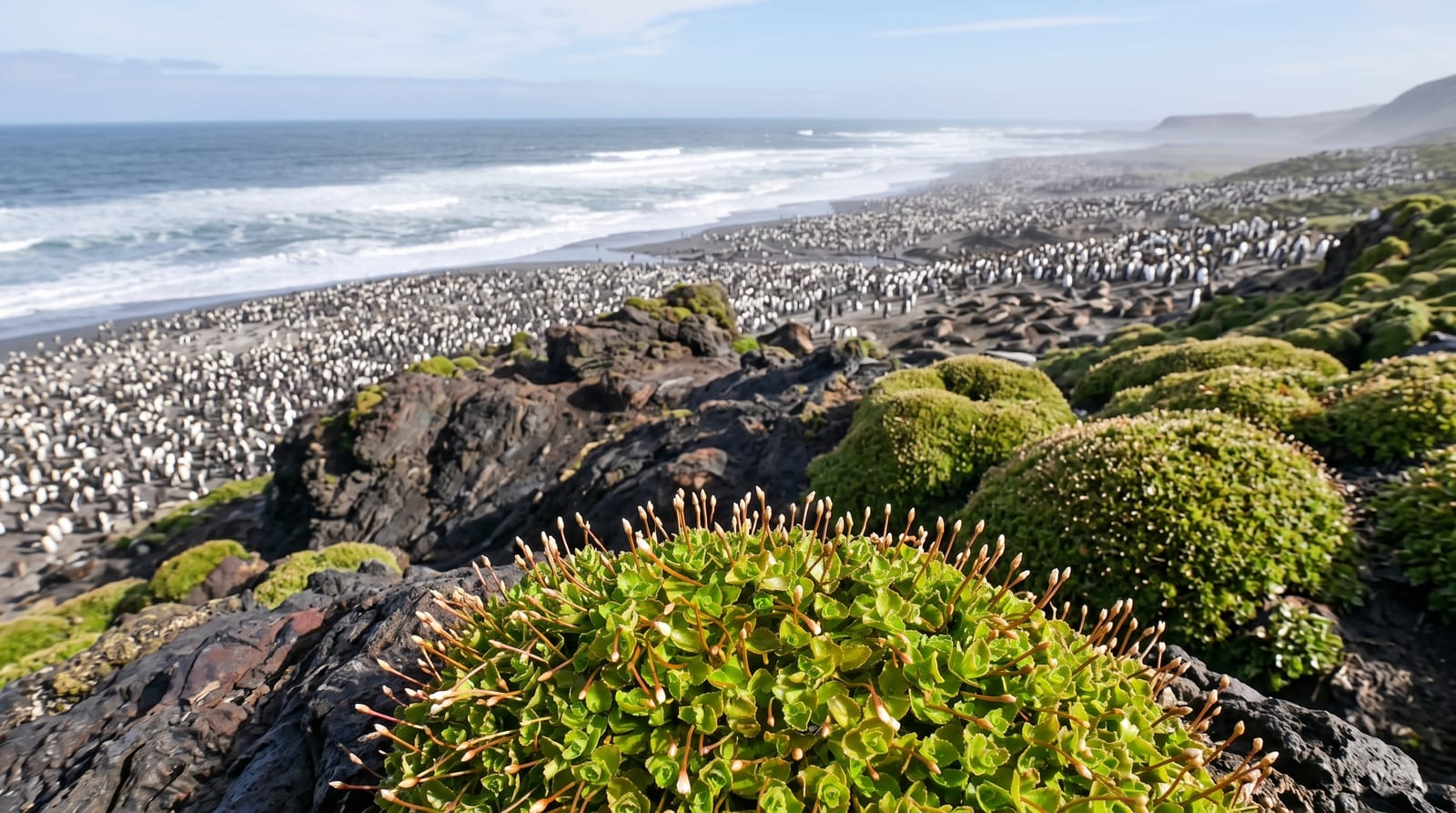
AI illustration
UNESCO World Heritage
Macquarie Island lies about fifteen hundred kilometres southeast of Tasmania, halfway to Antarctica, and it is geologically unique: the only place on earth where rocks from the mantle, six kilometres below the ocean floor, are still being actively pushed up above sea level, where two tectonic plates meet. That earned it World Heritage listing in 1997. It also holds enormous wildlife concentrations, including royal penguins, which breed nowhere else, along with king, gentoo and rockhopper penguins, elephant seals and fur seals in the hundreds of thousands. A pest eradication programme completed in 2014 removed rabbits, rats and mice, and the vegetation has recovered dramatically since.
History
Frederick Hasselborough discovered the uninhabited island on 11 July 1810, and it was named after Colonel Lachlan Macquarie. Seals and then penguins were hunted for their oil almost to extinction, latterly by Joseph Hatch, who leased the island from the Tasmanian government. From 1911 the island was a base for Sir Douglas Mawson's Australasian Antarctic Expedition, whose weather station closed in 1915; it was declared a wildlife sanctuary in 1933, and in 1948 the Australian National Antarctic Research Expeditions set up their headquarters here. Macquarie Island was inscribed on the World Heritage List on 5 December 1997, and after a long campaign against introduced rabbits, rats and mice it was officially declared pest-free on 8 April 2014 (Wikipedia, Macquarie Island).
What you'll find
- The royal penguins - a species that breeds only on this island.
- The king penguin colonies - vast rookeries along the beaches.
- The elephant seals - large breeding populations on the shore.
- The exposed mantle rock - the geology behind the World Heritage listing.
When to go
November to March, the subantarctic summer, when expedition cruises operate; there is no other season and no independent access. Landings depend entirely on weather and swell, and cruises budget for missed days.
What to expect
Access is only on expedition cruises costing many thousands of dollars, usually as part of a longer subantarctic itinerary. Landings are frequently cancelled by weather. The research station is not a tourist facility, and quarantine procedures before landing are strict.
Nearby
Hobart is the usual departure port; the New Zealand subantarctic islands lie east.
Key facts
Source: Wikidata, item Q46650, read on 18 October 2026.
What to pack for Macquarie Island
Chosen from what this place is for. Tap a kit for the full checklist.
- Broken-in walking shoes or boots - Grip and ankle support matter more than looks; never hike in brand-new boots. Find on Amazon
- Reef-safe sunscreen - High SPF that will not bleach the coral you are swimming over. Find on Amazon
- Binoculars - The single best wildlife tool - even a compact pair transforms a sighting. Find on Amazon
- Shelter suited to the place - Tent, tarp or hut booking - match it to the terrain and rules. Find on Amazon
Some links on this page are Amazon affiliate links - if you buy through them we may earn a small commission at no extra cost to you.
All packing kitsPlan your trip
Where to start if Macquarie Island is going on the list.
Booking links on this page are affiliate links - if you book through them we may earn a small commission at no extra cost to you. It never changes what we write about a place.
Opening times, ticket prices and seasonal closures change - check the official source before you go: official site.


