Little Desert National Park
Sandy heathland that is not a desert at all, holding malleefowl and spectacular spring wildflower displays.
Updated 18 October 2026
AI illustration
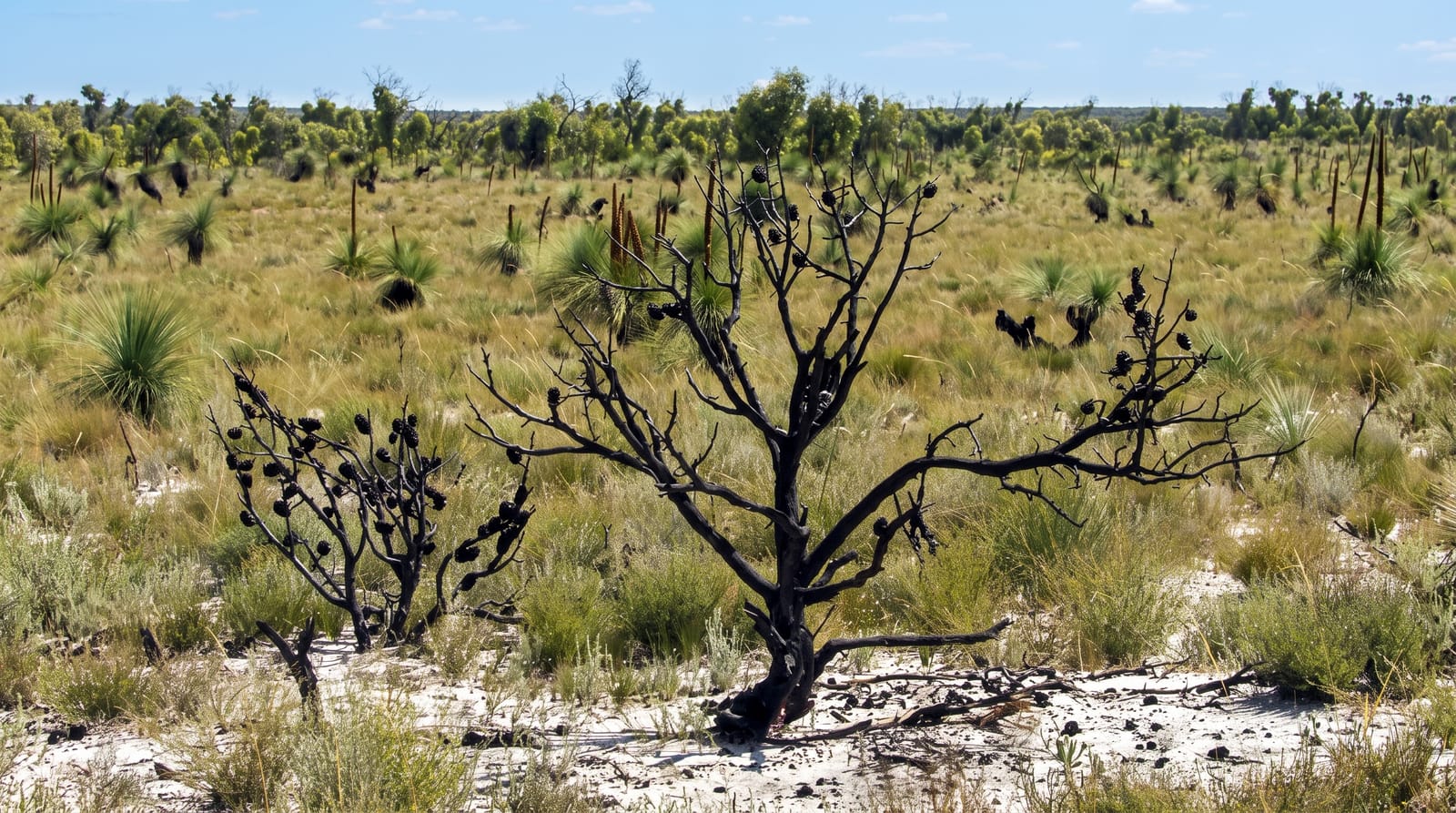
The Little Desert is a misnomer twice over: it receives enough rain to be classed as heathland rather than desert, and it covers more than a thousand square kilometres. What it does have is deep sandy soil that drains too fast for farming, which is why it survived, and a proposed subdivision here in the late 1960s triggered a campaign that is often cited as the start of the modern Victorian conservation movement. The park protects malleefowl, birds that build large incubating mounds of sand and vegetation and tend them for months, along with heath that flowers heavily in spring with orchids, wattles and banksias. Tracks range from easy walks to sandy four-wheel drive routes.
History
Small Aboriginal family groups camped along the Wimmera River, grazing began in the 1840s and had ended by the 1960s, and in the Second World War the central block was a bombing and gunnery range, its concrete observation bunkers still standing. In 1955 the Kiata Lowan Sanctuary was set up to protect the malleefowl in the eastern block, and when the state government planned to clear and sell land here for farming, public outrage cost the minister his seat in a by-election and drove Victoria's conservation movement to form the Conservation Council of Victoria; the sanctuary became the Little Desert National Park in 1969, and the central and western blocks were added in 1986 (Wikipedia, Little Desert National Park).
The landscape
- The malleefowl mounds - incubating nests built and tended by the birds.
- The spring wildflowers - heath in flower from August through November.
- The sandy heathland - deep sand country that resisted farming.
- The conservation story - the campaign that saved the park in the 1960s.
When to go
August to November for wildflowers and comfortable walking; summer is hot with fire danger and little shade. Malleefowl are active around their mounds in spring but are shy and rarely seen. Winter is cold and tracks can be soft.
Things to know
Sandy tracks bog conventional vehicles easily, and the western sections need four-wheel drive. There is no water in the park. Malleefowl sightings are uncommon, and the mounds themselves are unremarkable to look at without interpretation.
Nearby
Dimboola and Nhill are the gateway towns; the Grampians lie southeast.
Key facts
Source: Wikidata, item Q441890, read on 18 October 2026.
What to pack for Little Desert National Park
Chosen from what this place is for. Tap a kit for the full checklist.
- Broken-in walking shoes or boots - Grip and ankle support matter more than looks; never hike in brand-new boots. Find on Amazon
- Binoculars - The single best wildlife tool - even a compact pair transforms a sighting. Find on Amazon
- Loose, light, long clothing - Covering up beats bare skin in the desert - and locals dress this way for a reason. Find on Amazon
- Layers + a waterproof shell - Mountain weather turns fast; a packable rain jacket saves the day. Find on Amazon
Some links on this page are Amazon affiliate links - if you buy through them we may earn a small commission at no extra cost to you.
All packing kitsPlan your trip
Where to start if Little Desert National Park is going on the list.
Booking links on this page are affiliate links - if you book through them we may earn a small commission at no extra cost to you. It never changes what we write about a place.
Opening times, ticket prices and seasonal closures change - check the official source before you go: official site.