The Great Barrier Reef
The largest living structure on earth - a vast marine wonderland of coral reefs, islands and turquoise waters teeming with life off the Queensland coast, a UNESCO site.
Updated 4 August 2026
AI illustration
UNESCO World Heritage
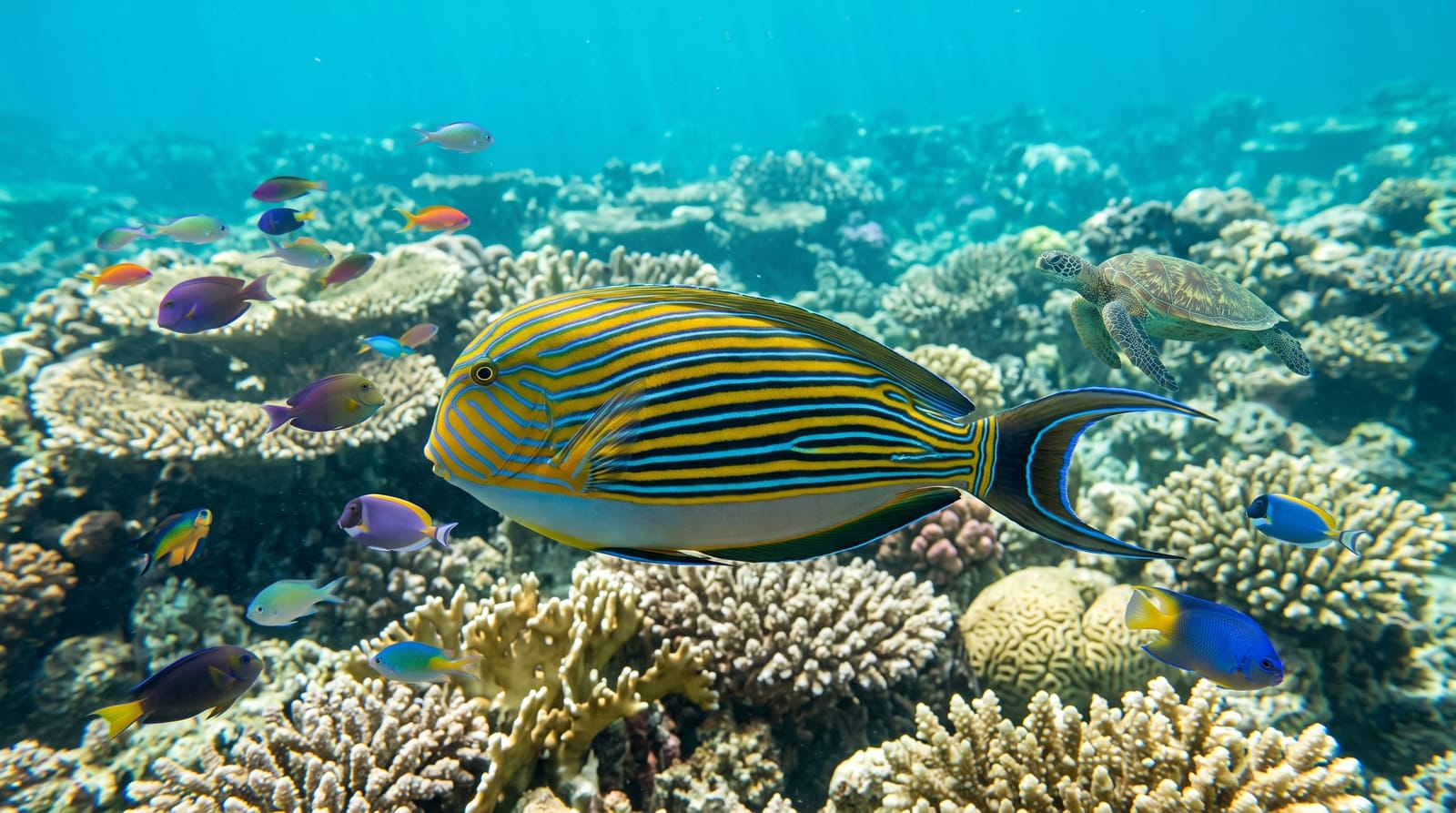
The Great Barrier Reef is the largest living structure on earth, a vast marine wonderland stretching over 2,300 kilometres off the coast of Queensland, so immense it can be seen from space. A UNESCO site of thousands of individual reefs and hundreds of islands, its warm, clear turquoise waters teem with corals, fish, turtles, rays and sharks, making it one of the world's premier destinations for snorkelling and diving.
What you'll find
- The coral gardens - the vibrant reefs and their teeming marine life.
- Snorkelling and diving - the clear water alive with fish and turtles.
- The islands - the Whitsundays and their white silica beaches.
- A scenic flight - the aerial view of the reef and the Heart Reef.
When to go
June to October for the dry season, calmest seas, best visibility and the absence of the dangerous marine stingers that require caution in the summer months. Coral spawning and whale migration bring extra wonder in the cooler season.
Before you go
The reef is under serious threat from warming seas and coral bleaching, so choose eco-certified operators and treat it gently; the reef is still spectacular but not the untouched paradise of old in every spot. In summer, dangerous stinger jellyfish mean swimming in a stinger suit or netted areas. Sea sickness on boats affects some.
Nearby
The Daintree Rainforest, Cairns and the Whitsunday Islands are along the Queensland coast.
Key facts
Source: Wikidata, item Q7343, read on 18 October 2026.
What to pack for The Great Barrier Reef
Chosen from what this place is for. Tap a kit for the full checklist.
- Broken-in walking shoes or boots - Grip and ankle support matter more than looks; never hike in brand-new boots. Find on Amazon
- Reef-safe sunscreen - High SPF that will not bleach the coral you are swimming over. Find on Amazon
- Your own mask + snorkel - A well-fitting mask is the single biggest comfort upgrade underwater. Find on Amazon
- Binoculars - The single best wildlife tool - even a compact pair transforms a sighting. Find on Amazon
Some links on this page are Amazon affiliate links - if you buy through them we may earn a small commission at no extra cost to you.
All packing kitsPlan your trip
Where to start if The Great Barrier Reef is going on the list.
Booking links on this page are affiliate links - if you book through them we may earn a small commission at no extra cost to you. It never changes what we write about a place.
Opening times, ticket prices and seasonal closures change - check the official source before you go: official site.