Gloucester Tree
A karri tree pegged with steel spikes for a fire lookout in 1947, once climbable to a platform in the crown and, since July 2026, only to a new platform at 37 metres.
Updated 18 October 2026
AI illustration
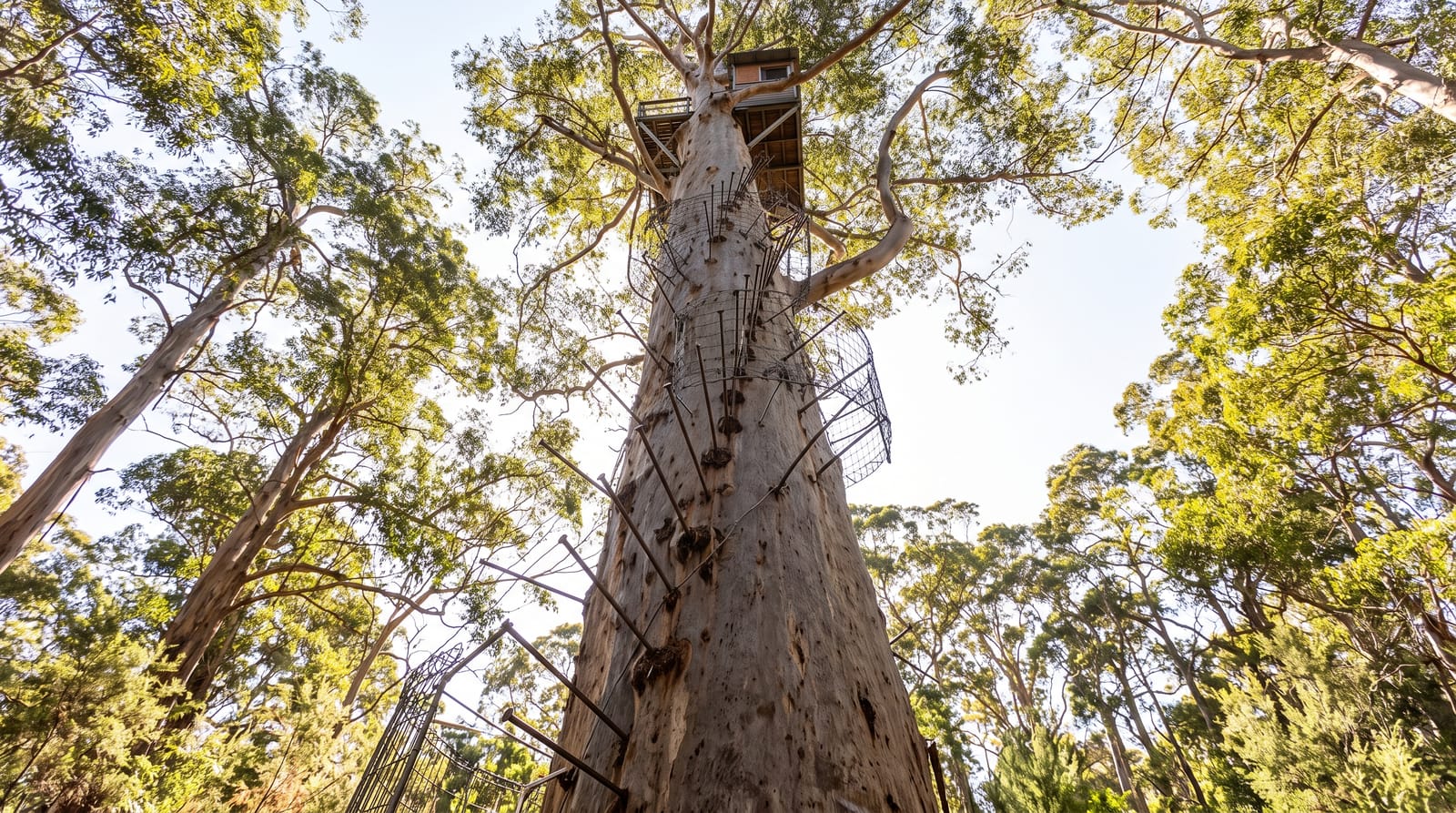
In 1947 foresters chose this karri, one of the tallest in the area, as a fire lookout, and a climber drove one hundred and fifty-three steel pegs into the trunk in a spiral to reach a cabin built at fifty-eight metres. The lookout was used until aerial spotting replaced it, and the tree was then left open for the public to climb, which people have done ever since: no harness, no cage beyond a light wire mesh, just the pegs and the drop. It is one of three climbing trees in the Pemberton district along with the Diamond Tree and the taller Dave Evans Bicentennial Tree. The climb was closed from November 2023 and reopened in July 2026 only as far as a new viewing platform at thirty-seven metres, so the full ascent to the old lookout is no longer open; access also closes for safety inspections and after storms.
History
In 1947 foresters chose the tree as a fire lookout, one of eight built in the south-west between 1937 and 1952; the forester Jack Watson, a Gallipoli veteran, took six hours to climb 58 metres to test it, and George Reynolds pegged the ladder and lopped branches for a wooden cabin at 58 metres. The Governor-General, Prince Henry, Duke of Gloucester, watched the work and bored holes for pegs himself, and the tree and the national park are named after him. The wooden cabin was replaced by a steel and aluminium one in 1973, the climb was closed from November 2023 for safety work, and it reopened in July 2026 to a new platform at 37 metres (Wikipedia, Gloucester Tree).
Highlights
- The peg climb - a spiral of steel pegs up fifty-eight metres of trunk.
- The lookout platform - the cabin in the crown with views over karri forest.
- The karri forest - tall smooth-trunked trees around the base.
- The other climbing trees - the Diamond and Bicentennial trees nearby.
When to go
October to April for dry conditions; wet pegs are slippery and the tree closes in rain, high wind and after storms. Summer is warm but the forest is shaded. Closures for inspection happen without much notice.
Things to know
The climb is genuinely exposed with no harness, and many people stop partway; going down is harder than going up. It is not suitable for children unaccompanied, anyone unfit or anyone uneasy with heights. The tree closes regularly, so checking before travelling is worthwhile.
Nearby
Pemberton is minutes away; the Bicentennial Tree and Warren National Park are close.
Key facts
Source: Wikidata, item Q257151, read on 18 October 2026.
What to pack for Gloucester Tree
Chosen from what this place is for. Tap a kit for the full checklist.
- Comfortable walking shoes - Sightseeing means kilometres of pavement and cobbles daily. Find on Amazon
- A slim anti-theft daypack - Zips that close properly; keep it in front in crowds and on transit. Find on Amazon
- A refillable water bottle - Many cities have public fountains; save money and plastic. Find on Amazon
- A light layer + compact umbrella - For museum air-con and a sudden shower. Find on Amazon
Some links on this page are Amazon affiliate links - if you buy through them we may earn a small commission at no extra cost to you.
All packing kitsPlan your trip
Where to start if Gloucester Tree is going on the list.
Booking links on this page are affiliate links - if you book through them we may earn a small commission at no extra cost to you. It never changes what we write about a place.
Opening times, ticket prices and seasonal closures change - check the official source before you go: official site.