Glass House Mountains
Thirteen volcanic plugs standing abruptly from the coastal plain north of Brisbane, sacred to the Jinibara and Gubbi Gubbi.
Updated 21 October 2026
AI illustration
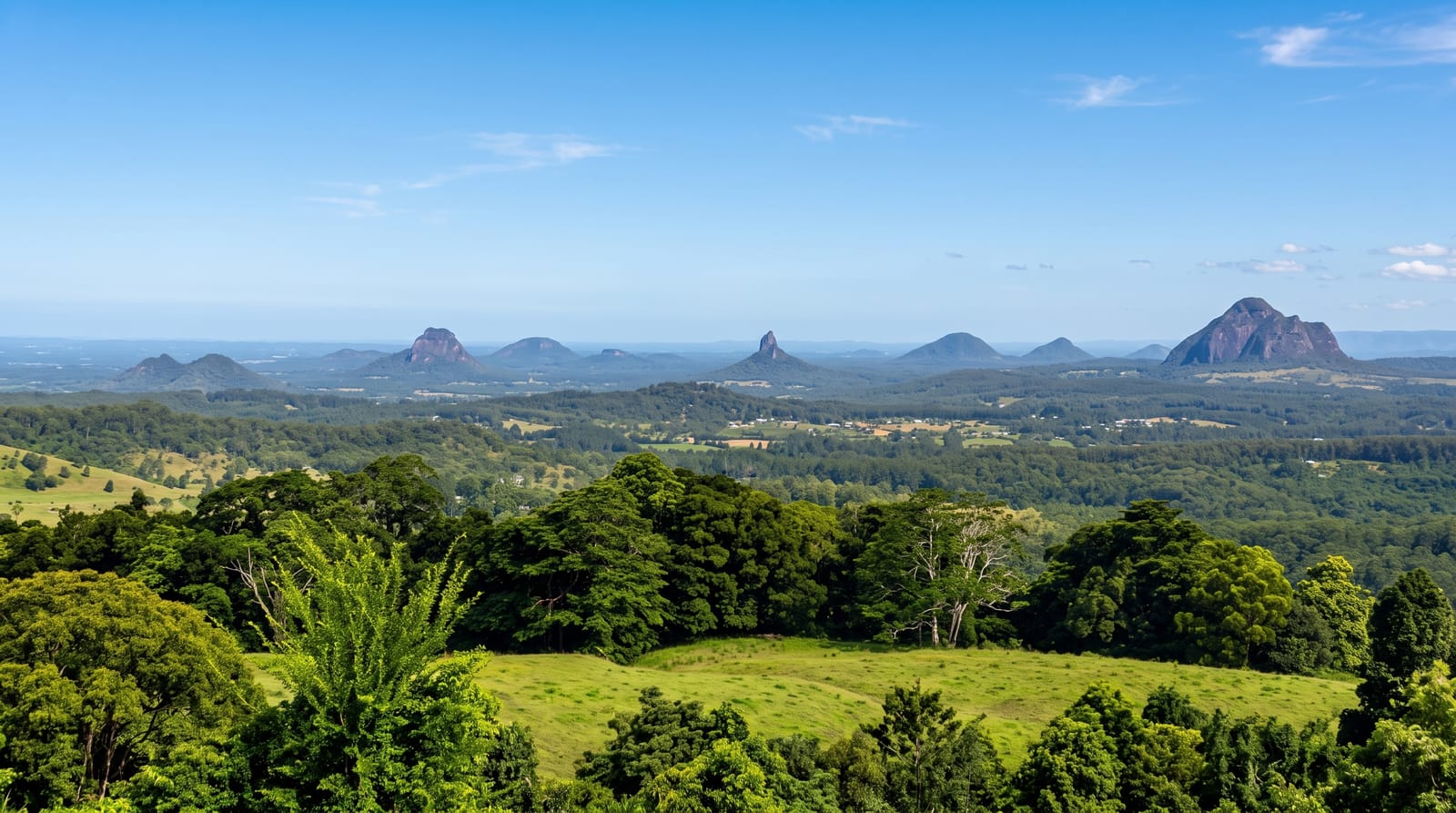
The Glass House Mountains are the eroded cores of volcanoes active around twenty-six million years ago, thirteen rhyolite and trachyte plugs left standing when the softer rock around them wore away, rising in isolation from flat pineapple country. James Cook named them in 1770 from a resemblance to glass furnaces in Yorkshire. The peaks are of high significance to the Jinibara and Gubbi Gubbi peoples, and their stories describe the mountains as a family. Mount Ngungun offers the most accessible summit walk, about two and a half kilometres return; Mount Tibrogargan is a steep scramble; and Mount Beerwah, the highest at 556 metres, has been closed for extended periods due to rockfall.
The landscape
- The volcanic plugs - thirteen peaks standing alone from flat farmland.
- Mount Ngungun - the most accessible summit with wide views over the group.
- The lookout - the Glass House Mountains lookout with interpretive signage.
- The pineapple country - the plains and farms around the peaks.
When to go
April to October for cooler climbing; summer is hot and humid and the rock heats badly. Early morning is best for light and temperature. Several peaks close after rain or rockfall, and closures can last months.
What to expect
Tibrogargan and Beerwah are scrambles requiring hands, not walks. Climbing is discouraged on peaks of particular cultural significance, and Beerwah has faced long official closures. Parking at the popular trailheads fills at weekends.
Nearby
Australia Zoo is at Beerwah; the Sunshine Coast beaches lie east.
Key facts
Source: Wikidata, item Q1529753, read on 18 October 2026.
What to pack for Glass House Mountains
Chosen from what this place is for. Tap a kit for the full checklist.
- Broken-in walking shoes or boots - Grip and ankle support matter more than looks; never hike in brand-new boots. Find on Amazon
- Reef-safe sunscreen - High SPF that will not bleach the coral you are swimming over. Find on Amazon
- Strong insect repellent - DEET or picaridin; the jungle is where bites and disease risk are highest. Find on Amazon
- Modest clothing - Shoulders and knees covered - the single most common requirement. Find on Amazon
Some links on this page are Amazon affiliate links - if you buy through them we may earn a small commission at no extra cost to you.
All packing kitsPlan your trip
Where to start if Glass House Mountains is going on the list.
Booking links on this page are affiliate links - if you book through them we may earn a small commission at no extra cost to you. It never changes what we write about a place.
Opening times, ticket prices and seasonal closures change - check the official source before you go: official site.