Coalseam Conservation Park
A river valley in the Midwest where everlasting daisies carpet the ground in white, pink and yellow each spring.
Updated 18 October 2026
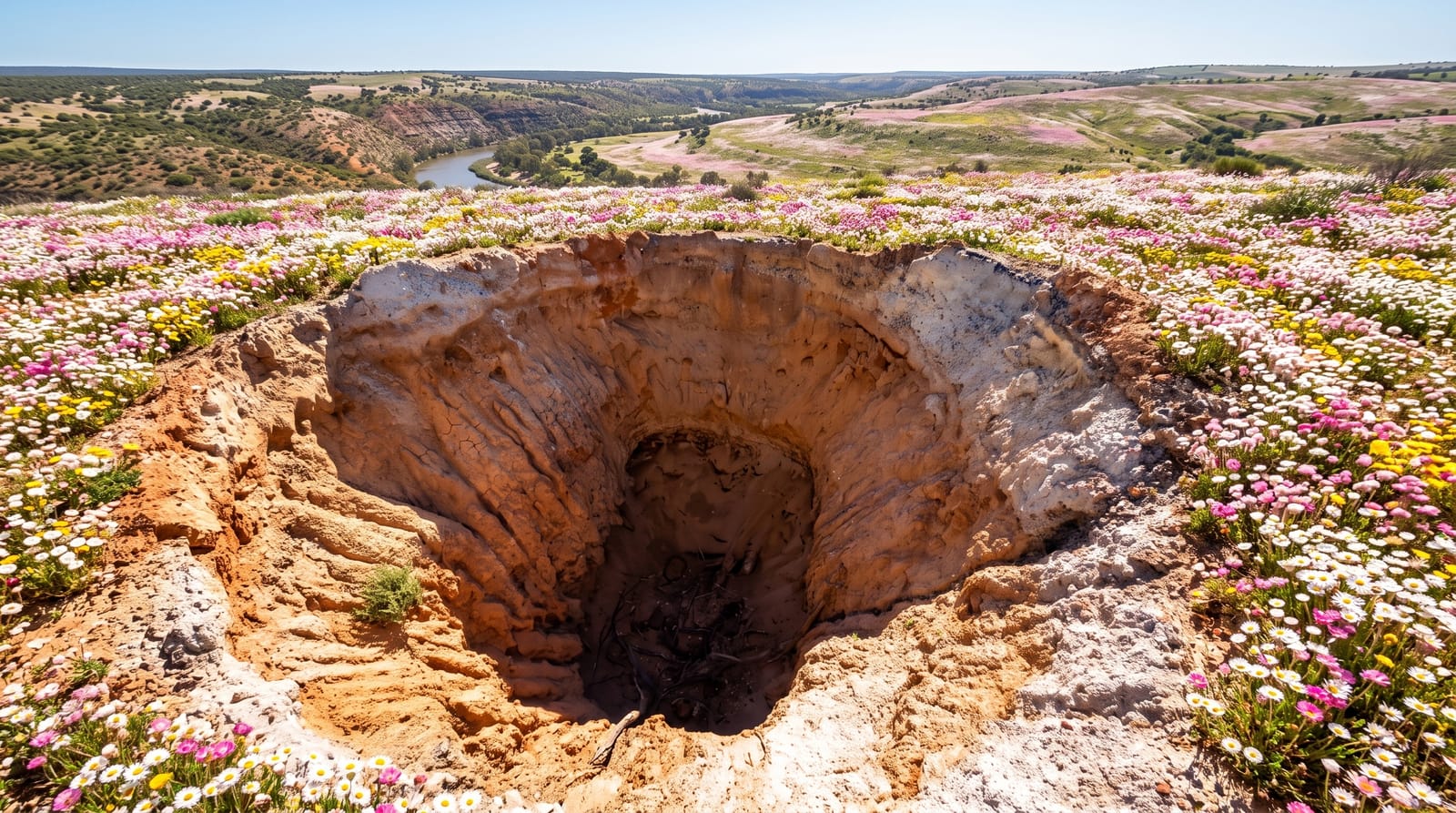
AI illustration
Coalseam takes its name from a seam of low-grade coal exposed in the banks of the Irwin River, discovered in 1846 and the first coal found in Western Australia, though the coal proved too poor to mine at a profit and the colony's first coal mine here was soon abandoned. The park's reputation now rests on flowers: in a good season, from late July into September, everlasting daisies cover the valley floor and slopes in dense sheets of white, pink and yellow, thick enough to change the colour of the landscape entirely. Marine fossils are visible in the river cliffs, laid down when this was seabed some 250 million years ago. Lookouts overlook the valley, and there are two small campgrounds and picnic areas along the river.
History
The area holds strong traditional value for Aboriginal people as a source of food and medicine, and artefacts of their occupation lie in the park. In 1846 the surveyor Augustus Charles Gregory, exploring with his brothers, found Western Australia's first coal seam on the banks of the Irwin River, and the area became a mining reserve and the site of the colony's first coal mine, soon abandoned because the coal was poor, with one shaft, the Johnson shaft, still visible. Farmers took up the land around it, forcibly displacing the local Aboriginal people, but this ground suited neither wheat nor sheep, and it became a nature reserve in 1978 and a conservation park in 1994 (Wikipedia, Coalseam Conservation Park).
What you'll find
- The everlasting carpets - dense sheets of daisies across the valley in spring.
- The coal seam - the exposed layer in the river bank, the state's first coal find.
- The marine fossils - shells and remains in the cliffs from an ancient seabed.
- The river valley - the Irwin cutting through low hills with lookouts above.
When to go
July to September for the wildflowers, with the peak usually in August; the display depends entirely on winter rainfall and poor seasons produce little. Outside spring there is not much to see. Summer is hot and dry.
Things to know
Flower displays vary enormously between years and can fail. The last access road is unsealed. Facilities are basic campgrounds and toilets, and the park is a long drive from Perth for a seasonal display.
Nearby
Mingenew and Mullewa lie close; Geraldton is on the coast west.
Key facts
Source: Wikidata, item Q21929241, read on 18 October 2026.
What to pack for Coalseam Conservation Park
Chosen from what this place is for. Tap a kit for the full checklist.
- Broken-in walking shoes or boots - Grip and ankle support matter more than looks; never hike in brand-new boots. Find on Amazon
- Layers + a waterproof shell - Mountain weather turns fast; a packable rain jacket saves the day. Find on Amazon
- Daypack with rain cover - 20-30 litres holds water, snacks, layers and a first-aid kit. Find on Amazon
- Offline maps + a power bank - Download the trail before you lose signal; carry backup charge. Find on Amazon
Some links on this page are Amazon affiliate links - if you buy through them we may earn a small commission at no extra cost to you.
All packing kitsPlan your trip
Where to start if Coalseam Conservation Park is going on the list.
Booking links on this page are affiliate links - if you book through them we may earn a small commission at no extra cost to you. It never changes what we write about a place.
Opening times, ticket prices and seasonal closures change - check the official source before you go: official site.