Cape Range National Park
Limestone canyons meeting Ningaloo Reef, where a fringing reef lies close enough to swim to from the beach.
Updated 4 September 2026
AI illustration
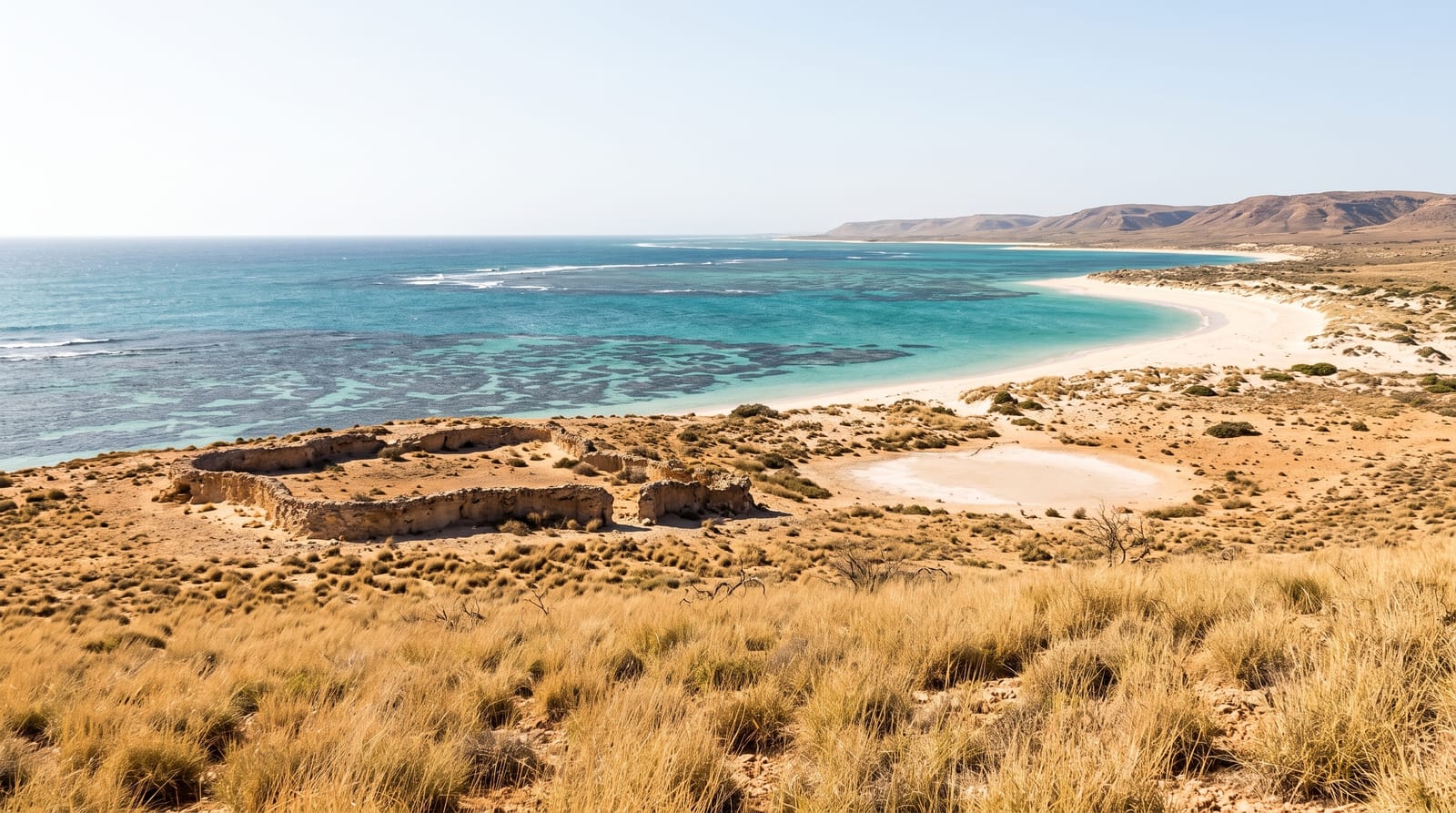
Cape Range covers the western side of the North West Cape, where a limestone range cut by deep gorges runs down to a coast fringed by Ningaloo Reef, part of the same World Heritage listing. What makes it unusual is proximity: at Turquoise Bay and Oyster Stacks the reef sits within a short swim of the sand, so snorkelling reaches coral, turtles and reef fish without a boat, and the Turquoise Bay drift snorkel carries swimmers along the reef edge on the current. Inland, Yardie Creek is a gorge with a boat tour and black-footed rock-wallabies on the walls, and Mandu Mandu Gorge has a rim walk. Whale sharks pass offshore from March to July.
Highlights
- Turquoise Bay - a drift snorkel over reef reached directly from the beach.
- Yardie Creek - a gorge with rock-wallabies and a boat tour.
- The Ningaloo reef - coral, turtles and fish close to shore along the coast.
- The limestone range - canyons and gorges behind the beaches.
When to go
April to October for the dry season; whale sharks are offshore from March to July and humpbacks from July to November. Summer is very hot with cyclone risk. Campsites are limited, book out months ahead and cannot be secured on arrival.
Practical notes
Camping inside the park requires online booking well in advance and there is no water supply. The Turquoise Bay drift has a strong current and swimmers must exit before the sandbar or risk being carried out. Shade is minimal and summer heat severe.
Nearby
Exmouth is the base town; Coral Bay lies south along the Ningaloo coast.
Key facts
Source: Wikidata, item Q586786, read on 18 October 2026.
What to pack for Cape Range National Park
Chosen from what this place is for. Tap a kit for the full checklist.
- Broken-in walking shoes or boots - Grip and ankle support matter more than looks; never hike in brand-new boots. Find on Amazon
- Reef-safe sunscreen - High SPF that will not bleach the coral you are swimming over. Find on Amazon
- Your own mask + snorkel - A well-fitting mask is the single biggest comfort upgrade underwater. Find on Amazon
- Binoculars - The single best wildlife tool - even a compact pair transforms a sighting. Find on Amazon
Some links on this page are Amazon affiliate links - if you buy through them we may earn a small commission at no extra cost to you.
All packing kitsPlan your trip
Where to start if Cape Range National Park is going on the list.
Booking links on this page are affiliate links - if you book through them we may earn a small commission at no extra cost to you. It never changes what we write about a place.
Opening times, ticket prices and seasonal closures change - check the official source before you go: official site.