Luján Basilica
A vast neo-Gothic basilica on the pampas, destination of Argentina's largest pilgrimage and home of its patron virgin.
Updated 18 October 2026
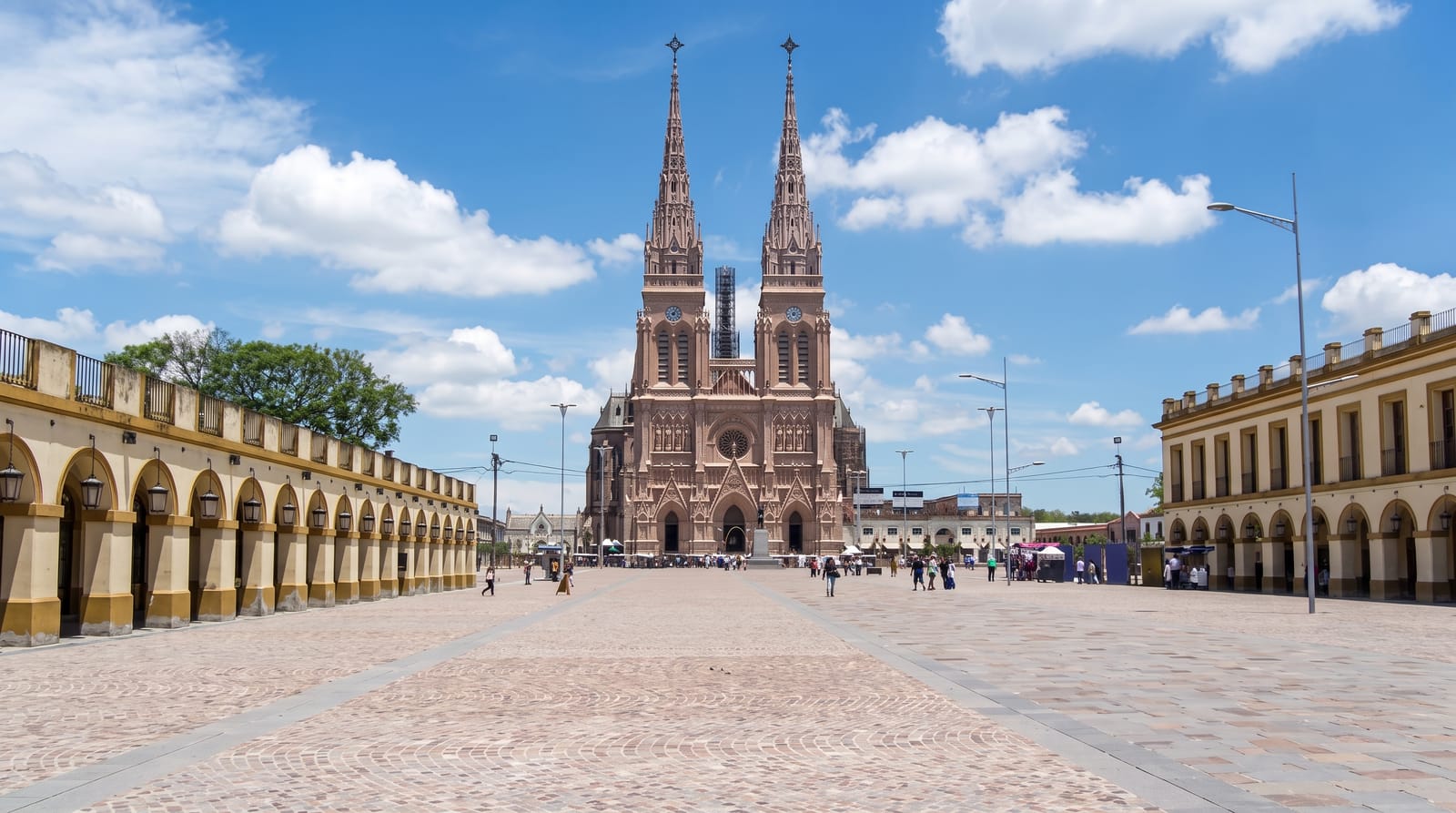
AI illustration
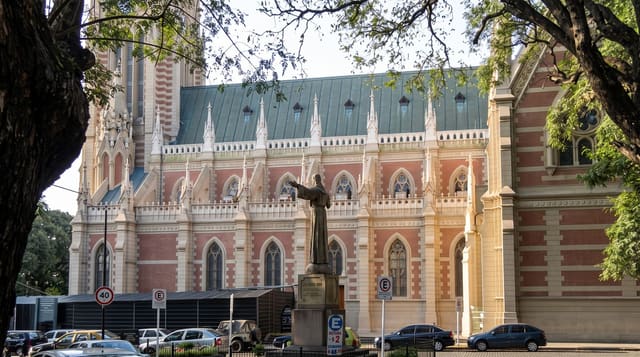
The Basílica de Luján rises abruptly from the flat pampas, a neo-Gothic church of two towers each over a hundred metres high, built between 1887 and 1935 in stone brought from Uruguay and designed by a French architect. It houses a small terracotta image of the Virgin, tradition holding that in 1630 a cart carrying it toward Córdoba could not be moved until the figure was left here, and the site has drawn pilgrims ever since. The largest pilgrimage, the youth walk from Buenos Aires each October, brings roughly a million people over sixty kilometres of road. Around the basilica the town has a colonial museum complex in the old Cabildo, riverside parks and rows of stalls selling religious souvenirs and picnic food.
History
Luján has been a place of devotion since at least the 17th century, when a shrine was built by the Luján River, a larger one followed in 1685, and the first known official pilgrimage came in 1871. In 1874 the priest Jorge Salvaire, held captive by native people, prayed to Our Lady of Luján and was spared by the chief's son, and in gratitude he set out to build a great church, approved by Pope Leo XIII; the Archbishop of Buenos Aires laid the first stone on 16 April 1887. Salvaire's side won the argument to pull down the old shrine and build in Gothic style on its site, the work was led by a French architect who had studied under Viollet-le-Duc, and it lasted until 1935 (Wikipedia, Basilica of Our Lady of Luján).
What's there
- The twin towers - the neo-Gothic facade rising over the flat pampas.
- The image of the Virgin - the small terracotta figure above the altar.
- The October pilgrimage - roughly a million walkers arriving from the capital.
- The Cabildo museum - colonial buildings and collections beside the basilica.
When to go
Year-round; the basilica is busiest on Sundays and overwhelming during the October pilgrimage weekend. Weekday mornings are calm. The interior is cool in summer heat.
What to expect
The town outside the religious core is unremarkable and heavily geared to pilgrim traffic. During the big pilgrimage, roads and transport are saturated. The basilica has undergone long structural restoration, with parts sometimes screened.
Nearby
Buenos Aires lies east; San Antonio de Areco is north on the RN8.
Key facts
Source: Wikidata, item Q2607636, read on 18 October 2026.
What to pack for Luján Basilica
Chosen from what this place is for. Tap a kit for the full checklist.
- Comfortable walking shoes - Sightseeing means kilometres of pavement and cobbles daily. Find on Amazon
- Modest clothing - Shoulders and knees covered - the single most common requirement. Find on Amazon
- A slim anti-theft daypack - Zips that close properly; keep it in front in crowds and on transit. Find on Amazon
- A scarf or shawl - To cover the head or shoulders on entry; women especially at mosques. Find on Amazon
Some links on this page are Amazon affiliate links - if you buy through them we may earn a small commission at no extra cost to you.
All packing kitsPlan your trip
Where to start if Luján Basilica is going on the list.
Booking links on this page are affiliate links - if you book through them we may earn a small commission at no extra cost to you. It never changes what we write about a place.
Opening times, ticket prices and seasonal closures change - check the official source before you go: official site.