Cariló
An upscale coastal village of unpaved sandy lanes through dense planted forest, where houses hide among the pines.
Updated 18 October 2026
AI illustration
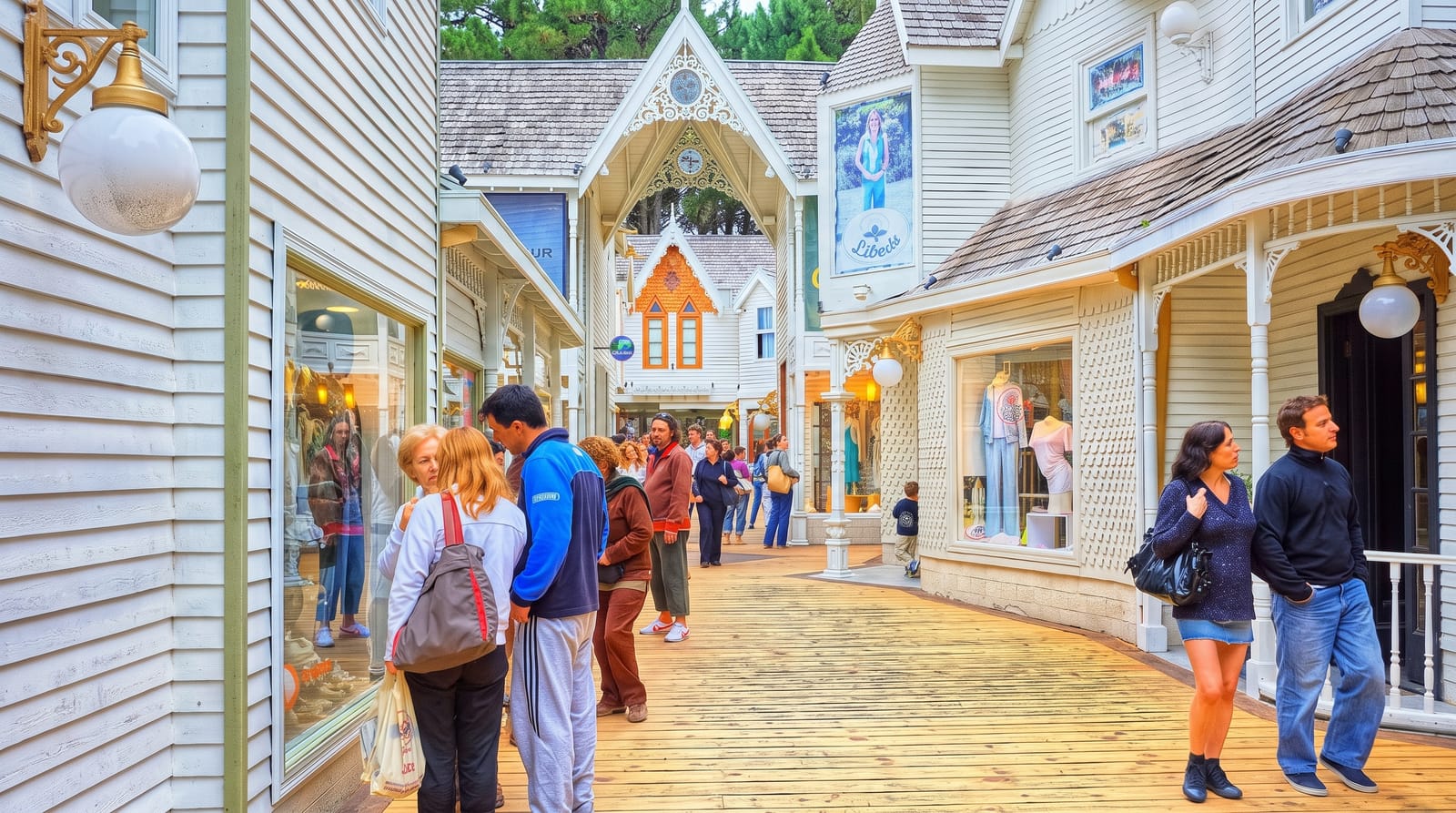
Cariló was planted from the 1920s onward on bare dunes, first with pines and later with a wide mixture of conifers and broadleaf species, and the village that grew inside the forest kept unusual rules: streets are unpaved sand, there are no traffic lights or street numbers, houses are set among the trees rather than in rows, and building density is deliberately kept low. Streets running inland are named after native plants and trees, and those parallel to the coast after local birds, each set in alphabetical order. The effect is a quiet, expensive enclave where the beach lies at the end of the forest and the noise of the coast road never reaches. A small commercial centre holds boutiques, cafes and restaurants aimed squarely at the summer crowd from Buenos Aires.
History
The name is Mapuche for green dune, and the land was once bare shifting dunes used for cattle until, in the early 1920s, Héctor Manuel Guerrero began planting his 1,700-hectare estate, Dos Montes, with pines and fruit trees to fix the sand and draw native birds, despite poor access and little local experience of the work. The planted area was named Cariló by 1935, the nurseries moved to Dos Montes in 1938, over 660,000 trees had been prepared by 1947, and the main house, Divisadero, went up on a dune facing the sea in 1948; by the 1970s the family had turned the estate into a mature coastal forest, and its streets were named, in alphabetical order, after native plants for those running inland and local birds for those along the coast (Wikipedia, Cariló).
What you'll find
- The sand streets - unpaved lanes winding through dense planted forest.
- The forest houses - low-density homes hidden among pines and broadleaf trees.
- The beach - Atlantic sand at the forest's edge, quieter than neighbouring towns.
- The village centre - a compact cluster of boutiques and cafes.
When to go
December to March for the season, and January if you want the village at full life, which also means peak prices. March and December are calmer with warm water. Winter is very quiet with limited services.
Before you go
Cariló is expensive by any Argentine measure, in accommodation, food and shops. The sand streets are hard going for ordinary cars after rain. Outside high summer much of the village shuts down.
Nearby
Pinamar adjoins to the north; Villa Gesell lies south along the coast.
Key facts
Source: Wikidata, item Q5039578, read on 18 October 2026.
What to pack for Cariló
Chosen from what this place is for. Tap a kit for the full checklist.
- Loose, light, long clothing - Covering up beats bare skin in the desert - and locals dress this way for a reason. Find on Amazon
- Comfortable walking shoes - Sightseeing means kilometres of pavement and cobbles daily. Find on Amazon
- A wide-brim hat + sunglasses - Shade for your face and eyes where there is none overhead. Find on Amazon
- A slim anti-theft daypack - Zips that close properly; keep it in front in crowds and on transit. Find on Amazon
Some links on this page are Amazon affiliate links - if you buy through them we may earn a small commission at no extra cost to you.
All packing kitsPlan your trip
Where to start if Cariló is going on the list.
Booking links on this page are affiliate links - if you book through them we may earn a small commission at no extra cost to you. It never changes what we write about a place.
Opening times, ticket prices and seasonal closures change - check the official source before you go: official site.