Campo del Cielo
A field of craters in the Chaco where an iron meteorite broke up thousands of years ago, leaving some of the largest masses ever found.
Updated 18 October 2026

AI illustration
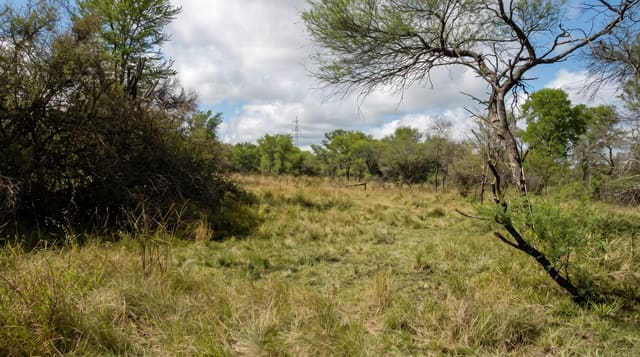
Campo del Cielo, the field of the sky, is a strewn field of around thirty craters spread across some twenty kilometres of Chaco scrub, where an iron meteorite entered the atmosphere roughly four thousand years ago and broke into fragments before impact. Indigenous peoples knew the iron long before Europeans, and Spanish expeditions searched for its source from the sixteenth century. The fragments recovered here are among the heaviest meteorites ever found anywhere: the mass known as Gancedo weighs over thirty tonnes and is displayed at the site, alongside El Chaco, of comparable size. Visits take in the display, the craters and an interpretation area, in flat dry forest that gives no hint of what fell here.
History
The craters were made four to five thousand years ago, and the native peoples, who used the iron for weapons, said it had fallen from the sky at a place they called Piguem Nonralta, which the Spanish translated as Campo del Cielo; in 1576 a provincial governor sent soldiers to find it, and they brought back samples of unusual purity, but his report to the Archive of the Indies in Seville was soon forgotten. In 1774 Bartolomé Francisco de Maguna found the great mass again, calling it the Mesón de Fierro, the table of iron, and in 1783 Rubín de Celis cleared it with explosives, judged it a single stone of some 15 tonnes formed by a volcano and left it, but sent samples to the Royal Society in London that proved to be 90 per cent iron and 10 per cent nickel, of meteoritic origin. About 100 tonnes of fragments have since been recovered, more than from any other meteorite find (Wikipedia, Campo del Cielo).
What's there
- The great iron masses - Gancedo and other multi-tonne meteorite fragments on display.
- The craters - shallow impact depressions scattered through the scrub.
- The interpretation area - the story of the fall and its long human history.
- The Chaco forest - dry thorn woodland surrounding the field.
When to go
April to October, when the Chaco heat eases; summer temperatures here regularly pass forty degrees and the site has little shade. Guided visits run to a schedule, so arriving mid-morning is safest. Rain can make tracks between craters difficult.
What to expect
The craters are shallow and unimpressive to the eye; the meteorite masses are the real sight. The area is remote, with few services and long drives from any city. Collecting fragments is illegal and enforced.
Nearby
Gancedo is the nearest village; Resistencia lies far northeast across the Chaco.
Key facts
Source: Wikidata, item Q1031478, read on 18 October 2026.
What to pack for Campo del Cielo
Chosen from what this place is for. Tap a kit for the full checklist.
- Broken-in walking shoes or boots - Grip and ankle support matter more than looks; never hike in brand-new boots. Find on Amazon
- Shelter suited to the place - Tent, tarp or hut booking - match it to the terrain and rules. Find on Amazon
- Layers + a waterproof shell - Mountain weather turns fast; a packable rain jacket saves the day. Find on Amazon
- A warm sleeping bag + mat - Rated a little colder than you expect the nights to be. Find on Amazon
Some links on this page are Amazon affiliate links - if you buy through them we may earn a small commission at no extra cost to you.
All packing kitsPlan your trip
Where to start if Campo del Cielo is going on the list.
Booking links on this page are affiliate links - if you book through them we may earn a small commission at no extra cost to you. It never changes what we write about a place.
Opening times, ticket prices and seasonal closures change - check the official source before you go: official site.