The National Park of American Samoa
A jewel of the South Pacific - the National Park of American Samoa, spread across rainforested volcanic islands, protecting lush jungle, coral reefs, dramatic sea cliffs and flying foxes, the only US national park south of the equator.
Updated 18 October 2026
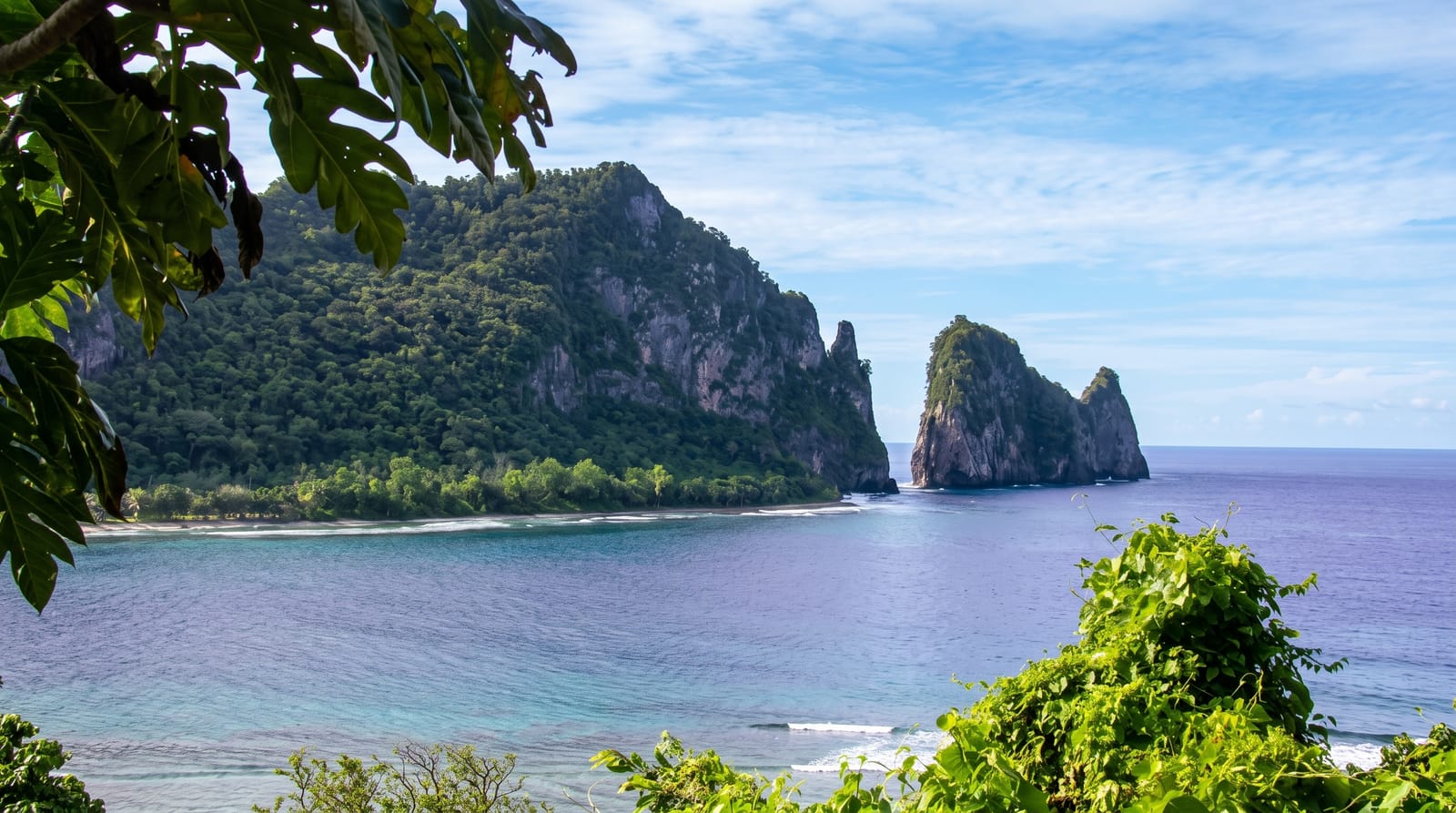
AI illustration
The National Park of American Samoa, uniquely spread across three of the territory's volcanic islands, is a magnificent and little-visited jewel of the South Pacific, and the only US national park south of the equator. It protects a glorious blend of lush tropical rainforest cloaking steep volcanic mountains, vibrant coral reefs teeming with fish and turtles, and dramatic sea cliffs plunging to the ocean, some among the highest in the world. Rare Pacific wildlife includes fruit bats, or flying foxes, and colourful birds. Deeply intertwined with traditional Samoan culture and villages, the park offers rainforest hikes, snorkelling over pristine reefs, and, on the remote island of Ofu, one of the most beautiful and unspoiled beaches anywhere.
History
In 1984 the delegate Fofō Iosefa Fiti Sunia introduced a bill, at the request of a bat conservation group and the scientist Paul Cox, to protect the habitat of the flying fox and the old rainforest, the first step towards a national park, and the National Park Service began work in July 1987. The park was established on 31 October 1988, but the Service could not buy the land because it is held communally, and on 10 September 1993 it signed a 50-year lease with the Samoan village councils instead; in 2002 Congress approved a thirty per cent expansion on Olosega and Ofu. The earthquake and tsunami of September 2009, which killed 34 people in the territory, badly damaged the park and wrecked its visitor centre and main office (Wikipedia, National Park of American Samoa).
The landscape
- The rainforest - the lush jungle cloaking volcanic peaks.
- The coral reefs - the vibrant reefs teeming with fish and turtles.
- The sea cliffs - the dramatic cliffs plunging to the ocean.
- Ofu Beach - the remote, unspoiled beach on Ofu island.
When to go
May to September, the drier and cooler season, brings the most pleasant weather for hiking and snorkelling, avoiding the wetter, stormier months; the tropical climate is warm year-round. Calm, clear conditions are best for exploring the reefs.
Practical notes
American Samoa is remote and the park spread across several islands with modest facilities, so exploring it fully, especially the sublime beach on far-flung Ofu, takes time, planning and inter-island travel. As a magnificent, unspoiled national park of rainforest, coral reef and dramatic cliffs, the only one south of the equator, deeply tied to Samoan culture, though, it is a genuine and rewarding South Pacific treasure.
Nearby
The capital Pago Pago and the villages of Tutuila lie nearby.
Key facts
Source: Wikidata, item Q843075, read on 18 October 2026.
What to pack for The National Park of American Samoa
Chosen from what this place is for. Tap a kit for the full checklist.
- Broken-in walking shoes or boots - Grip and ankle support matter more than looks; never hike in brand-new boots. Find on Amazon
- Reef-safe sunscreen - High SPF that will not bleach the coral you are swimming over. Find on Amazon
- Your own mask + snorkel - A well-fitting mask is the single biggest comfort upgrade underwater. Find on Amazon
- Binoculars - The single best wildlife tool - even a compact pair transforms a sighting. Find on Amazon
Some links on this page are Amazon affiliate links - if you buy through them we may earn a small commission at no extra cost to you.
All packing kitsPlan your trip
Where to start if The National Park of American Samoa is going on the list.
Booking links on this page are affiliate links - if you book through them we may earn a small commission at no extra cost to you. It never changes what we write about a place.
Opening times, ticket prices and seasonal closures change - check the official source before you go: official site.


