The Hoggar and Assekrem
The Sahara's volcanic cathedral - basalt spires around Tamanrasset and the Assekrem plateau, where sunrise is a pilgrimage and silence the liturgy.
Updated 31 August 2026
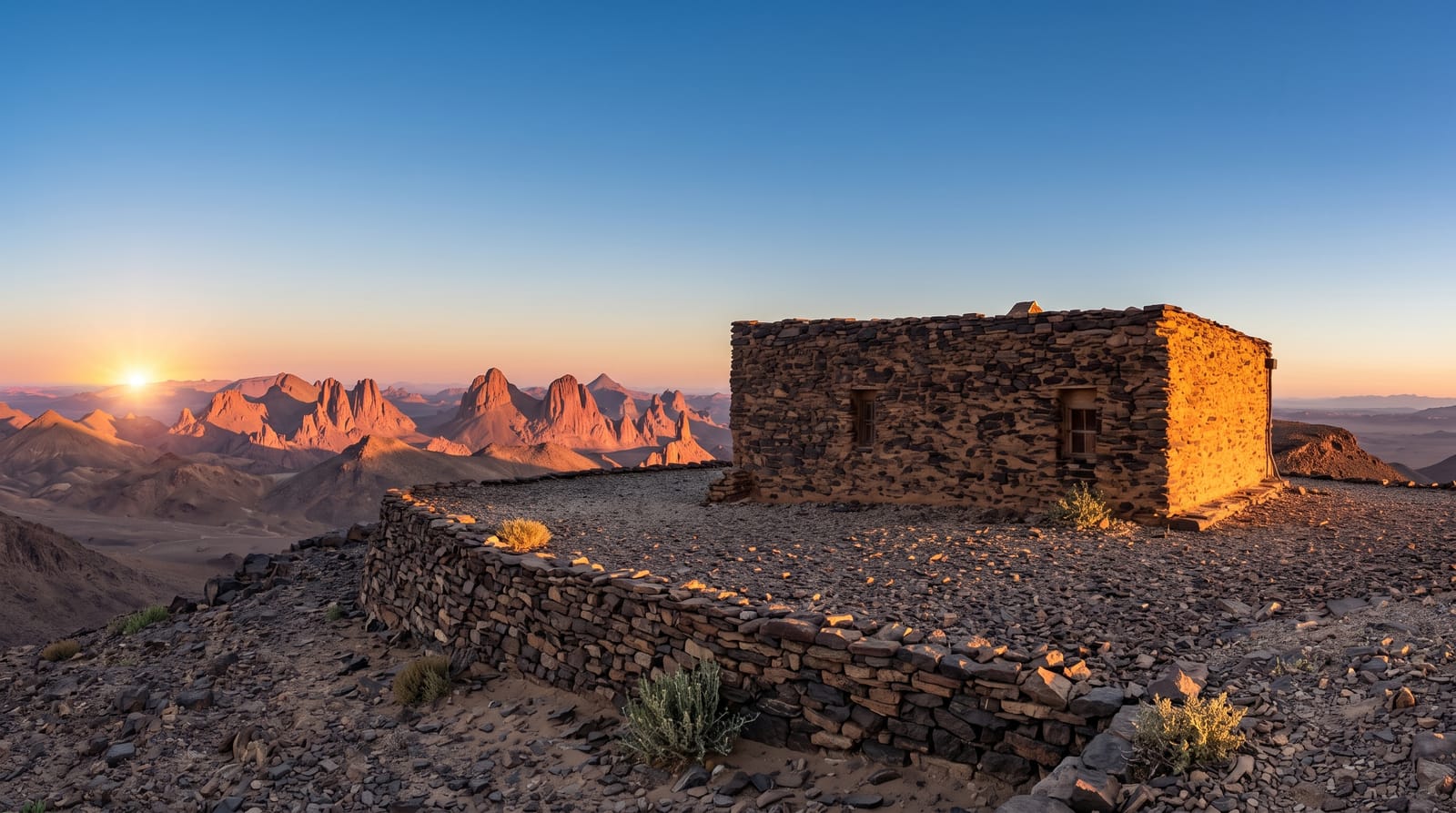
AI illustration
In the deep south, the Sahara rises into the Hoggar - a highland of volcanic plugs and organ-pipe basalt where erosion has left a skyline of spires more Gothic than geological. Its high altar is Assekrem, the plateau at some 2,700 metres where Charles de Foucauld built his hermitage in 1911 seeking the emptiest silence available; the small refuge and chapel remain, and the walk to the rim for sunrise - peaks igniting one by one across a hundred kilometres of ranges - is among the desert world's great rituals. Tuareg guides run the routes from Tamanrasset, camps under star fields that city eyes disbelieve.
The landscape
- Assekrem sunrise - the basalt ranges igniting from the hermitage rim.
- The hermitage - de Foucauld's 1911 refuge and chapel, still kept.
- The spire fields - volcanic plugs and organ-pipes along the pistes.
- Tuareg camps - tea, bread in the sand and the deep-desert night.
When to go
October to March for cold-clear desert days - nights drop below freezing on the heights, and that is the trade for the sharpest light. Summer is dangerous heat at lower elevations.
What to expect
Travel here runs exclusively through licensed local operators and permits - the framework that makes the deep south visitable; plan weeks ahead, and check current arrangements when booking. Comforts are camp-level, roads are pistes, and the altitude chills harder than deserts are supposed to. The reward is scale and silence nothing else matches.
Nearby
Tamanrasset's Tuareg market town and the pistes toward the Tassili ranges.
What to pack for The Hoggar and Assekrem
Chosen from what this place is for. Tap a kit for the full checklist.
- Broken-in walking shoes or boots - Grip and ankle support matter more than looks; never hike in brand-new boots. Find on Amazon
- Loose, light, long clothing - Covering up beats bare skin in the desert - and locals dress this way for a reason. Find on Amazon
- Layers for big temperature swings - Warm sun by day, near-freezing at night, even near the equator. Find on Amazon
- Modest clothing - Shoulders and knees covered - the single most common requirement. Find on Amazon
Some links on this page are Amazon affiliate links - if you buy through them we may earn a small commission at no extra cost to you.
All packing kitsPlan your trip
Where to start if The Hoggar and Assekrem is going on the list.
Booking links on this page are affiliate links - if you book through them we may earn a small commission at no extra cost to you. It never changes what we write about a place.
Opening times, ticket prices and seasonal closures change - check the official source before you go: official site.