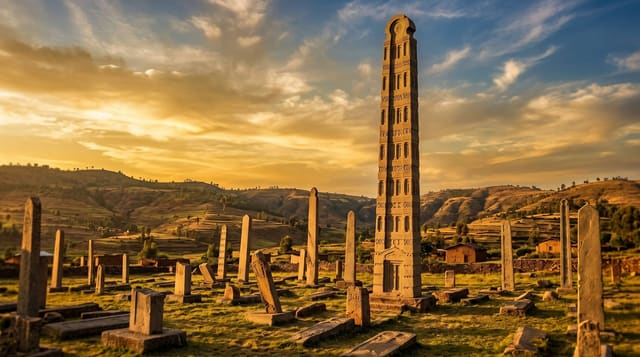
Hippo Regius
The excavated Roman city where Augustine was bishop, below the hill at Annaba.
Updated 18 October 2026
Hippo Regius was a Punic port that became one of the larger Roman cities of North Africa, and its excavated remains lie on the southern edge of modern Annaba: a forum, streets, cisterns, a theatre, the plan of a large Christian basilica, and residential quarters with mosaic floors, several of them left in place and others moved to the site museum. Its fame rests on Augustine, who was bishop here from 396 until his death in 430 during the Vandal siege, and who wrote much of his major work in this city. The museum holds mosaics, sculpture and inscriptions from the excavations, and the nineteenth-century basilica dedicated to him stands on the hill directly above.
History
Phoenicians from Tyre first settled here around the 12th century BC, and the name is a Latin form of the Punic word probably meaning harbour; the Romans called it Hippo Regius, royal Hippo, because Numidian kings lived here, to tell it from Hippo Diarrhytus, today's Bizerte. It became a prosperous Roman colonia and a major city of the province of Africa, and Augustine was its bishop in his later years. In 430 the Vandals laid siege to the walled city, and Augustine, aged 75, died on 28 August, three months into the siege, while hunger and disease spread inside and outside the walls; the Vandals lifted the siege after 14 months, and under the peace of 435 Geiseric made Hippo the first capital of the Vandal Kingdom until he took Carthage in 439 (Wikipedia, Hippo Regius).
What to look for
- Mosaic floors in place - pavements left in the excavated houses.
- The forum and street plan - the Roman city laid out on the ground.
- The Christian basilica plan - the church of Augustine's time.
- The site museum - mosaics, sculpture and inscriptions from the digs.
When to go
October to May; summer is hot with no shade on the site. Half a day including the museum. Check opening days, which can be irregular. A guide adds a great deal here.
Before you go
The site is exposed with almost no shade and gets very hot. Interpretation on the ground is thin and mostly in French and Arabic. Some areas are fenced off. The museum has limited and changeable hours.
Nearby
The Basilica of Saint Augustine is on the hill above; Annaba lies north.
Key facts
Source: Wikidata, item Q858024, read on 18 October 2026.
What to pack for Hippo Regius
Chosen from what this place is for. Tap a kit for the full checklist.
- Comfortable walking shoes - Sightseeing means kilometres of pavement and cobbles daily. Find on Amazon
- Modest clothing - Shoulders and knees covered - the single most common requirement. Find on Amazon
- A slim anti-theft daypack - Zips that close properly; keep it in front in crowds and on transit. Find on Amazon
- A scarf or shawl - To cover the head or shoulders on entry; women especially at mosques. Find on Amazon
Some links on this page are Amazon affiliate links - if you buy through them we may earn a small commission at no extra cost to you.
All packing kitsPlan your trip
Where to start if Hippo Regius is going on the list.
Booking links on this page are affiliate links - if you book through them we may earn a small commission at no extra cost to you. It never changes what we write about a place.
Opening times, ticket prices and seasonal closures change - check the official source before you go: official site.