Tirana
A capital reborn in colour - a lively, fast-changing city that has transformed from grey communist drabness into a vibrant hub of brightly painted buildings, buzzing cafes and a fascinating recent history.
Updated 18 October 2026
AI illustration
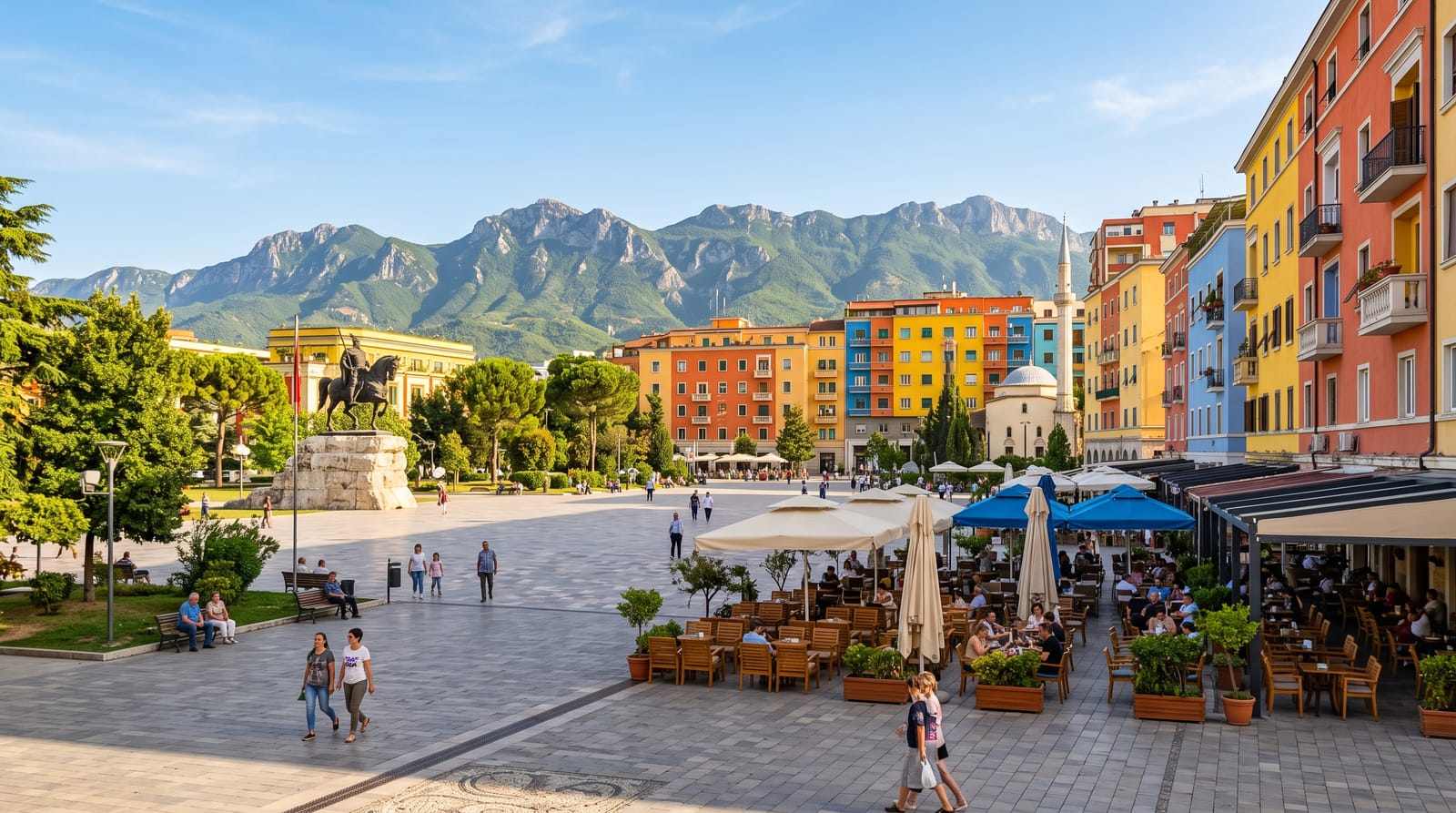
Tirana, the capital of Albania, is a lively, colourful and fast-changing city that has reinvented itself since the fall of one of Europe's most isolated communist regimes. Once grey and drab, its buildings were famously painted in bold colours and patterns, and its buzzing centre around Skanderbeg Square now brims with cafes, bars and energy. Its fascinating recent history is told at sites like Bunk'Art, a vast former nuclear bunker turned museum, and the House of Leaves museum of surveillance, amid a youthful, optimistic buzz.
History
People have lived here since the Palaeolithic, as finds in the Cave of Pëllumbas show, and the area was probably the core of the Illyrian kingdom of the Taulantii before Rome took it after the Illyrian Wars; a Roman house of the 3rd century later became a church with a mosaic floor, and a castle, possibly called Tirkan, was built under the Byzantine emperor Justinian I. Tirana appears in Venetian documents in the 1350s and in 1418, Ottoman land registers of 1431-1432 count 60 inhabited places with about 7,300 people, and in 1510 Marin Barleti called it a small village. In 1614 the local ruler Sulejman Pasha Bargjini built the Old Mosque, a small commercial centre and a hammam, the traditional founding of the city, which stayed fairly unimportant until the 20th century (Wikipedia, Tirana).
What you'll find
- Skanderbeg Square - the grand central square.
- The colourful buildings - the brightly painted facades of the city.
- Bunk'Art - the huge communist-era bunker turned history museum.
- The Blloku district - the once-forbidden elite quarter, now cafes and nightlife.
When to go
Spring and autumn for the mildest weather; the city is lively year-round, with its cafe and nightlife culture buzzing, and the cable car up to Mount Dajti offering a cool escape and views over the city and plain.
Before you go
Tirana is chaotic, gritty and still developing, its charm the energy, colour, affordable buzz and fascinating recent history rather than grand old monuments; the traffic is hectic. Its communist-era sites, the painted buildings and the youthful cafe culture are the draw. It is mainly a lively, characterful gateway and introduction to a country whose greatest sights lie beyond, in the towns, coast and mountains.
Nearby
Mount Dajti, the town of Kruja and the road to Berat are within reach.
Key facts
Source: Wikidata, item Q19689, read on 18 October 2026.
What to pack for Tirana
Chosen from what this place is for. Tap a kit for the full checklist.
- Head torch + spare batteries - Hands-free light is essential; caves are truly dark. Find on Amazon
- Comfortable walking shoes - Sightseeing means kilometres of pavement and cobbles daily. Find on Amazon
- Modest clothing - Shoulders and knees covered - the single most common requirement. Find on Amazon
- Grippy closed shoes - Cave floors are wet, muddy and slick with formations. Find on Amazon
Some links on this page are Amazon affiliate links - if you buy through them we may earn a small commission at no extra cost to you.
All packing kitsPlan your trip
Where to start if Tirana is going on the list.
Booking links on this page are affiliate links - if you book through them we may earn a small commission at no extra cost to you. It never changes what we write about a place.
Opening times, ticket prices and seasonal closures change - check the official source before you go: official site.