Casabe
A large thin flatbread pressed from bitter cassava, made by a process that removes the plant's own poison.
Updated 2 September 2026
UNESCO Intangible Cultural Heritage
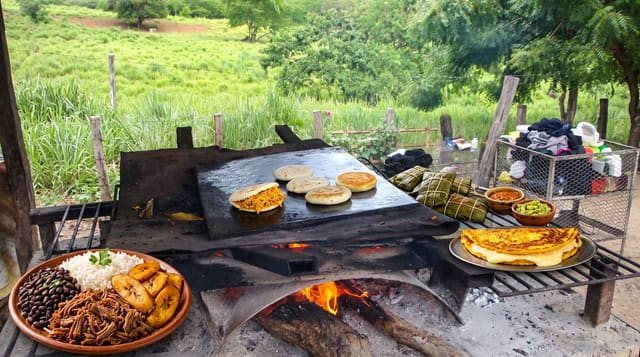
Casabe is made from bitter cassava, a root that contains enough cyanogenic compound to be dangerous raw, and the whole point of the technique is removing it: the root is grated, the pulp squeezed in a woven tubular press called a sebucán to drive out the liquid, then sieved and spread on a hot flat griddle to cook as a large thin disc. The knowledge is indigenous and very old, and it was inscribed by UNESCO in 2024 in a nomination shared with several Caribbean countries.
The main sights
- The sebucan - the woven tube press that squeezes the poison out with the liquid.
- The budare griddle - the flat hot plate the bread is cooked on.
- The grating and sieving - the stages that turn root into workable flour.
- The finished disc - a large thin brittle bread, eaten plain or with toppings.
When to go
Year round; it is sold in markets and by roadside everywhere. Casabe houses in the eastern states and the Orinoco region are where the process is seen. It keeps for a long time, which is part of its purpose.
Good to know
Plain casabe is dry and almost flavourless and is meant to be eaten with something. It goes stale and soft quickly once opened in humid weather. The process cannot be shortcut safely, which is why it is worth understanding.
Nearby
The Orinoco Delta and the eastern states are where it is most made.
What to pack for Casabe
Chosen from what this place is for. Tap a kit for the full checklist.
- A reusable bag or container - For market produce and cutting down on packaging. Find on Amazon
- Strong insect repellent - DEET or picaridin; the jungle is where bites and disease risk are highest. Find on Amazon
- Wet wipes + hand sanitiser - Street food and washbasins do not always go together. Find on Amazon
- Long, light, quick-dry clothing - Covers skin from insects and sun without cooking you in the humidity. Find on Amazon
Some links on this page are Amazon affiliate links - if you buy through them we may earn a small commission at no extra cost to you.
All packing kitsPlan your trip
Where to start if Casabe is going on the list.
Booking links on this page are affiliate links - if you book through them we may earn a small commission at no extra cost to you. It never changes what we write about a place.
Opening times, ticket prices and seasonal closures change - check the official source before you go: official site.